Editorial self-study SET for 2027; not an official SASMO 2027 examination. Known source years remain in individual attributions. Time: 90 minutes. Platform scoring starts at 0: Q1–15 are worth 2 points each; Q16–25 are worth 4 points each; wrong and blank answers score 0; maximum 70. Official SASMO scoring instead starts at 15, deducts 1 for an incorrect Section A answer and has a maximum of 85. Verified means editorially checked; assumptions, source errors and mathematical uncertainty are disclosed where relevant.
Basil writes “TITAN EDUCATION” on paper. Different letters must have different colors, and repeated copies of the same letter must have the same color. How many colors are needed?
Find a two-digit multiple of 6 which is exactly 1 more than a multiple of 13.
The first source English sentence omits the numeral 1; its Vietnamese wording and the second occurrence both specify exactly 1 more. That complete condition is used here.
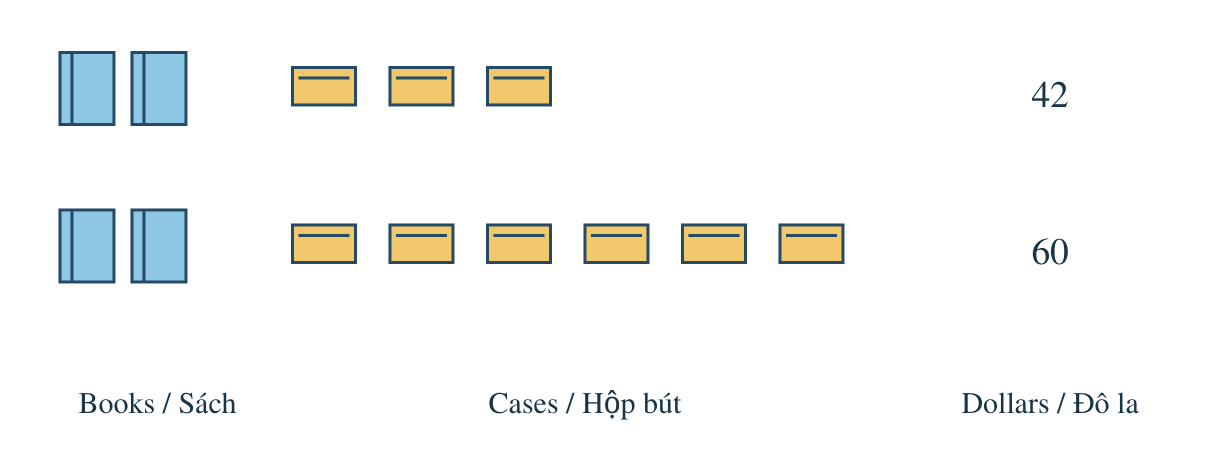
Two identical books and three identical pencil cases cost 42 dollars. Two of the same books and six of the same pencil cases cost 60 dollars. How much does each pencil case cost, in dollars?
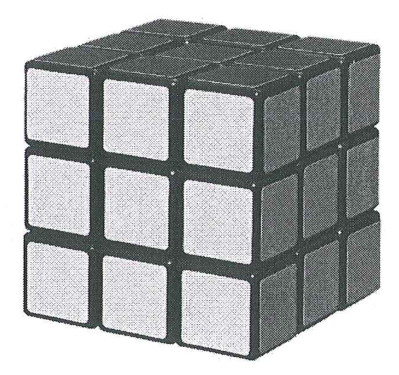
A large cube is made of 27 identical small cubes, arranged 3×3×3. Its entire outside surface is painted. How many small cubes have (a) exactly one painted face, (b) exactly two, (c) exactly three, and (d) no painted face? Enter the four counts in order, separated by commas.
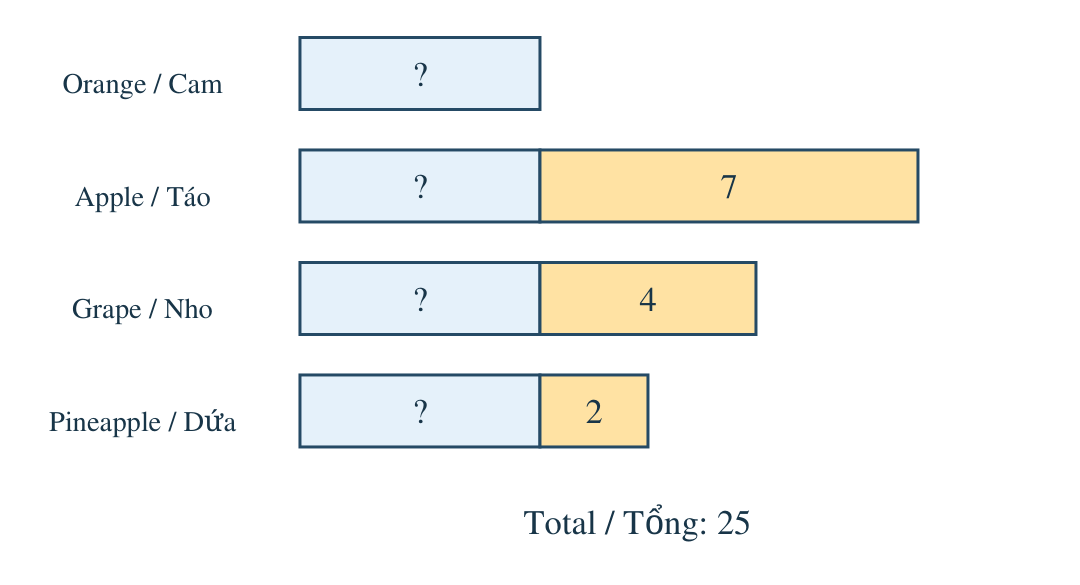
Tony bought 25 candies in four flavors: apple, orange, grape and pineapple. He bought 7 more apple candies than orange candies, 3 more apple candies than grape candies, and 2 more pineapple candies than orange candies. How many apple candies did he buy?
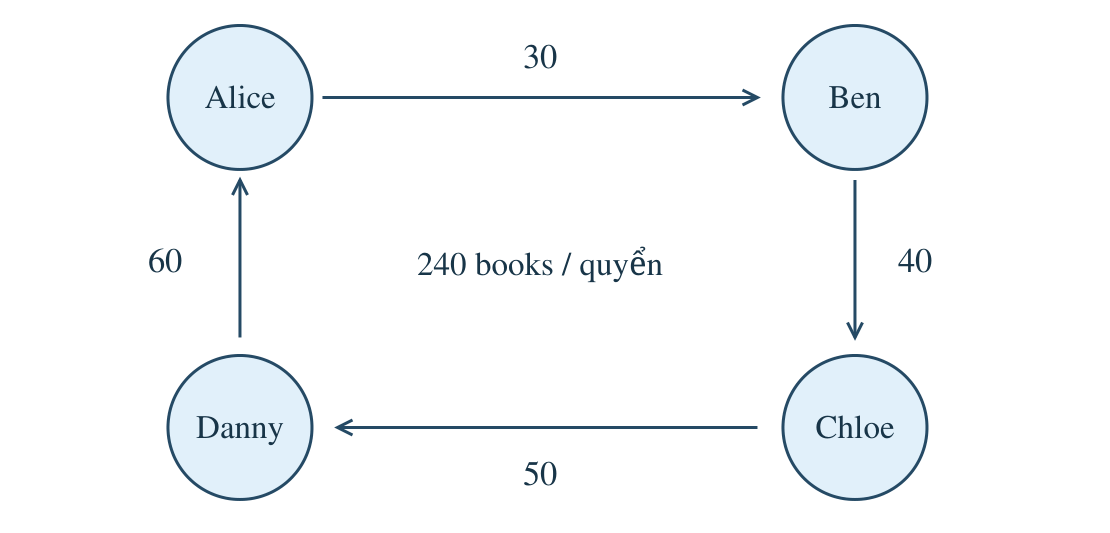
Four children own 240 books altogether. Alice gives Ben 30 books, Ben gives Chloe 40, Chloe gives Danny 50, and Danny gives Alice 60. Afterward they all have the same number. Initially, how many books did the child with the fewest books have?
Some people stand in a line. There are two people in front of two people, two people behind two people, and two people between two people. How many people are needed? Give the number. Original option variants: (I) A 3, B 2, C 4, D 6, E other; (II) A 3, B 2, C 5, D 6, E other; (III) A 2, B 3, C 4, D 6, E other.
Read this as the smallest lineup satisfying the clues. People may be mentioned in more than one clue. Without the minimum interpretation, larger lineups can also contain the described groups.
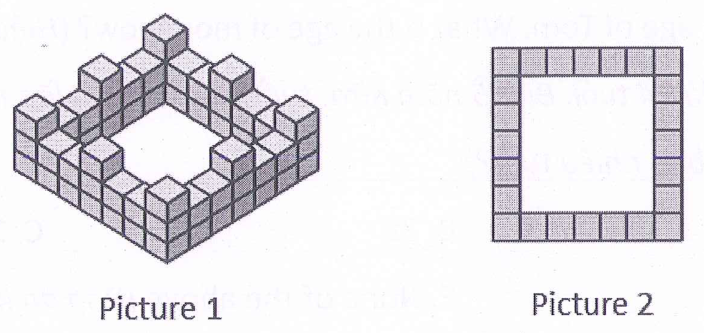
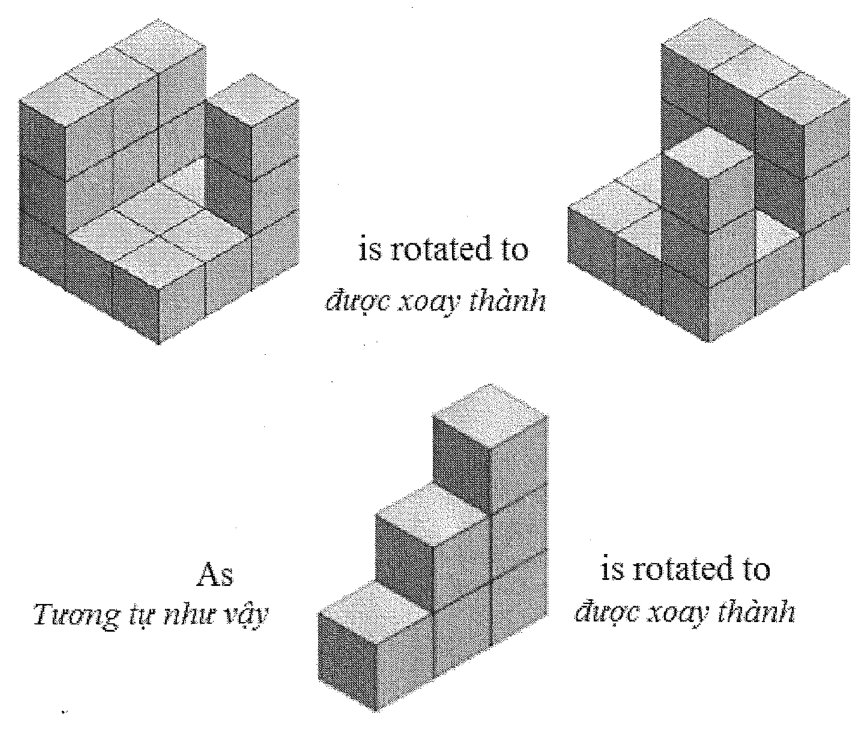
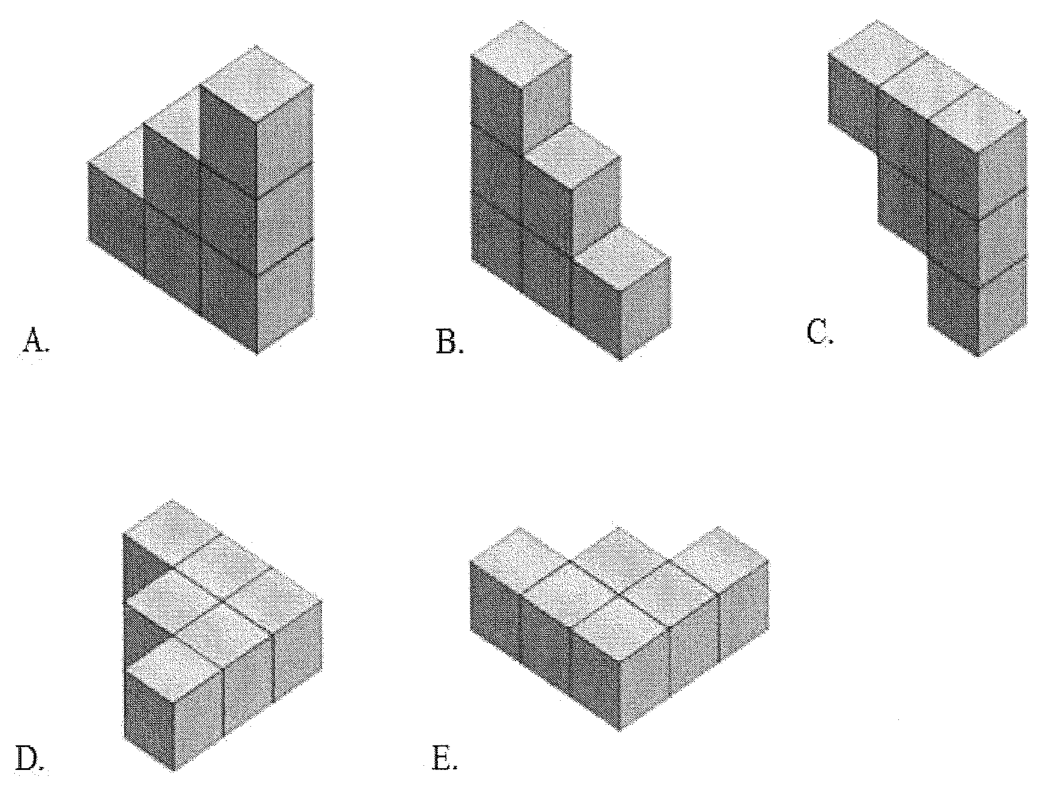
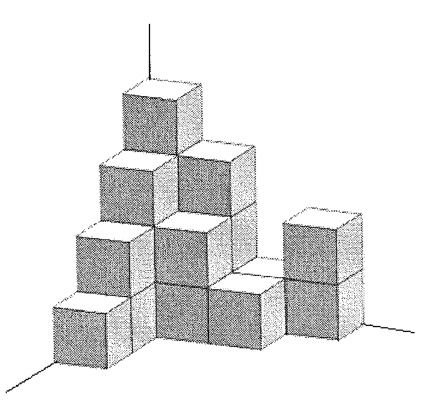
Identical cubes are stacked in a corner of a room as shown. How many cubes are there altogether? The floor is horizontal and the two walls are vertical. There are no gaps or holes behind the visible cubes.
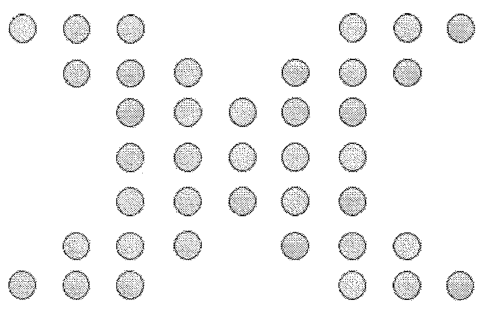
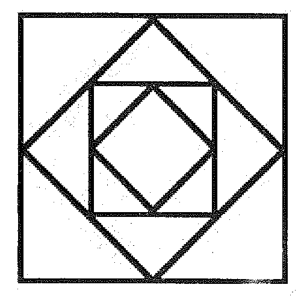
In the figure, fill all three blanks: (a) number of triangles; (b) number of squares; (c) the number of triangles is how many times the number of squares? Enter the three answers in order, separated by commas.
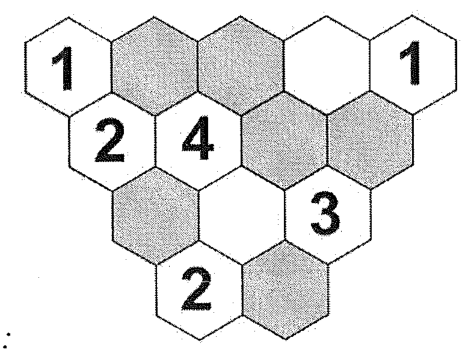
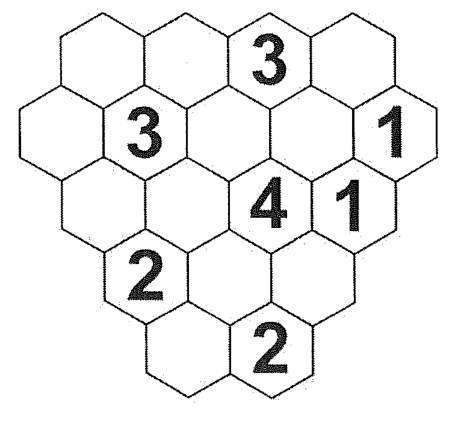
In Example 1, each numbered hexagon states how many shaded hexagons share an edge with it. Shade the blank cells of the target grid by the same rule. Numbered cells stay unshaded. How many cells will be shaded?
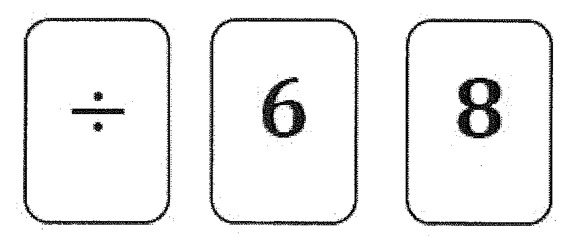
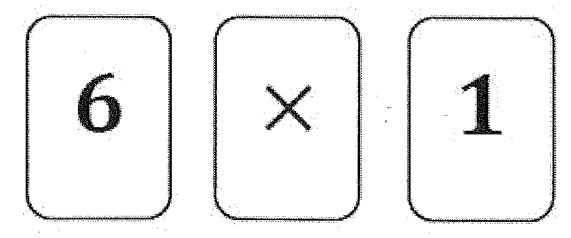
A magician places three cards on the table. Each card has a mathematical symbol on one side and a number on the other. The first arrangement shows ÷, 6, 8. He flips some or all cards and rearranges them; the second arrangement shows 6, ×, 1. What number is on the back of the card showing ×?
The English final question in the first source drops the symbol inside its quotation marks. Its Vietnamese question and worked answer identify ×, which is the target used here.