In a Formula 1 car race, a Ferrari driver started the race in last place. Throughout the race, the driver overtook 9 other cars and finished in third place. How many cars were in the race?
Interpretation: the 9 overtakes are of distinct cars that finish behind the Ferrari; no cars withdraw or pass it back.
Platform scoring: start at 0; Q1–15 earn 2 points each and Q16–25 earn 4; wrong or blank answers earn 0; maximum 70. Official SASMO rules use 15 starting points, −1 for a wrong Section A answer, and maximum 85. Time: 90 minutes (official-format reference; not printed on these source pages).
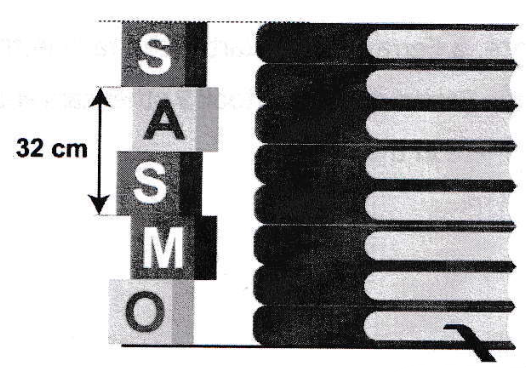
All cubes in the picture have equal height, and all books have equal thickness. The height of two cubes is 32 cm. Find the difference, in cm, between the height of one cube and the thickness of one book.
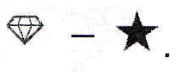
The star is the smallest 4-digit number made using all the digits 2, 0, 2 and 1. The diamond is the largest 4-digit number made using all the same digits. Find diamond − star.
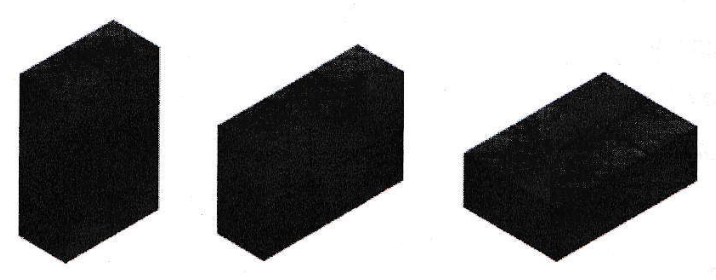
Each box-shaped figure shown is a cuboid made of 6 cubes. The three pictures show the same-sized cuboid in different orientations. How many differently sized cuboids can be formed from exactly 18 identical cubes?
Count solid cuboids with no gaps. Turning the same cuboid does not make a new size.
Nine students stand in a line to receive SASMO awards. Seven are Primary 5 students, five are gold award winners, and four are silver award winners. Both neighbours of every silver winner are gold winners. No two gold winners are next to each other. The first and last students are not Primary 5 students. How many students are Primary 5 gold winners?
In a concert hall, there were 4 times as many women as men. There were 126 more women than men. How many people were there altogether?
Answer entry: enter only the whole number, without units. The paper uses four-digit shaded answers with leading zeros; this platform accepts ordinary integer entry.
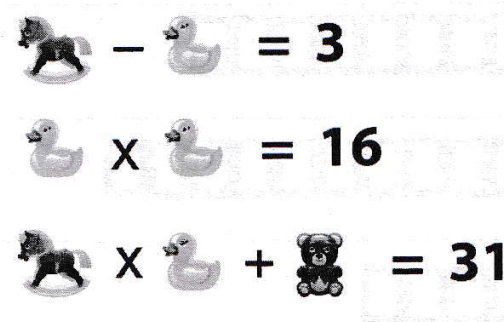
The picture equations use a horse, a duck and a bear. Find the sum horse + duck + bear.
Use positive whole-number values, as intended in this primary-school puzzle.
Answer entry: enter only the whole number, without units. The paper uses four-digit shaded answers with leading zeros; this platform accepts ordinary integer entry.
Answer entry: enter only the whole number, without units. The paper uses four-digit shaded answers with leading zeros; this platform accepts ordinary integer entry.
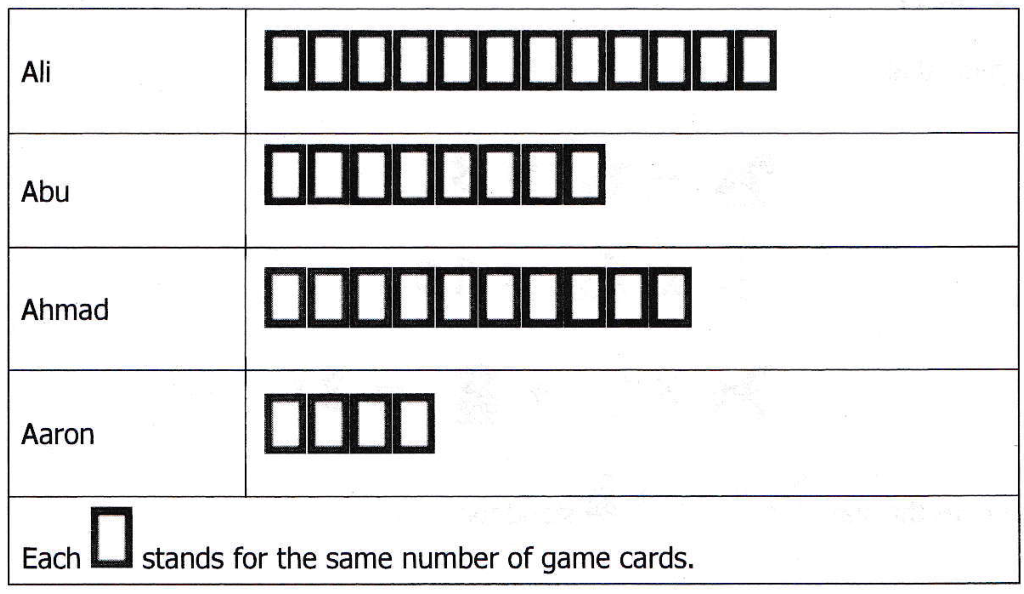
The picture graph shows the game cards collected by four boys. Together they collected 204 cards. How many game cards does each outlined rectangle represent? Each rectangle represents the same number of cards.
Answer entry: enter only the whole number, without units. The paper uses four-digit shaded answers with leading zeros; this platform accepts ordinary integer entry.
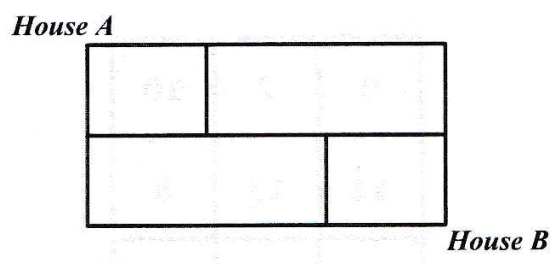
How many ways are there to travel from House A to House B if you can only move right and down along the drawn lines?
Answer entry: enter only the whole number, without units. The paper uses four-digit shaded answers with leading zeros; this platform accepts ordinary integer entry.