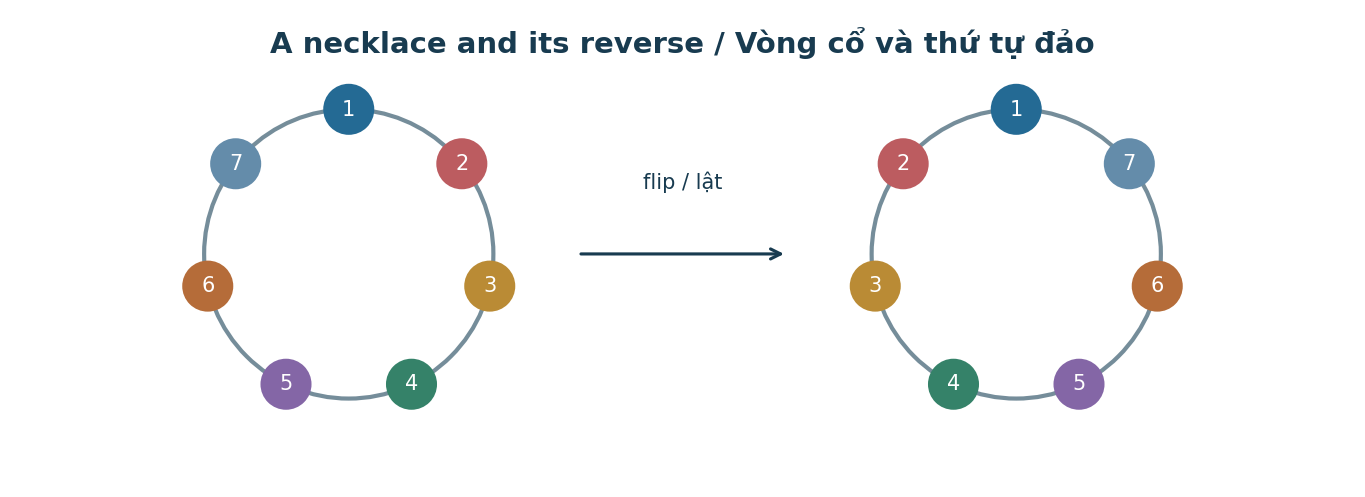
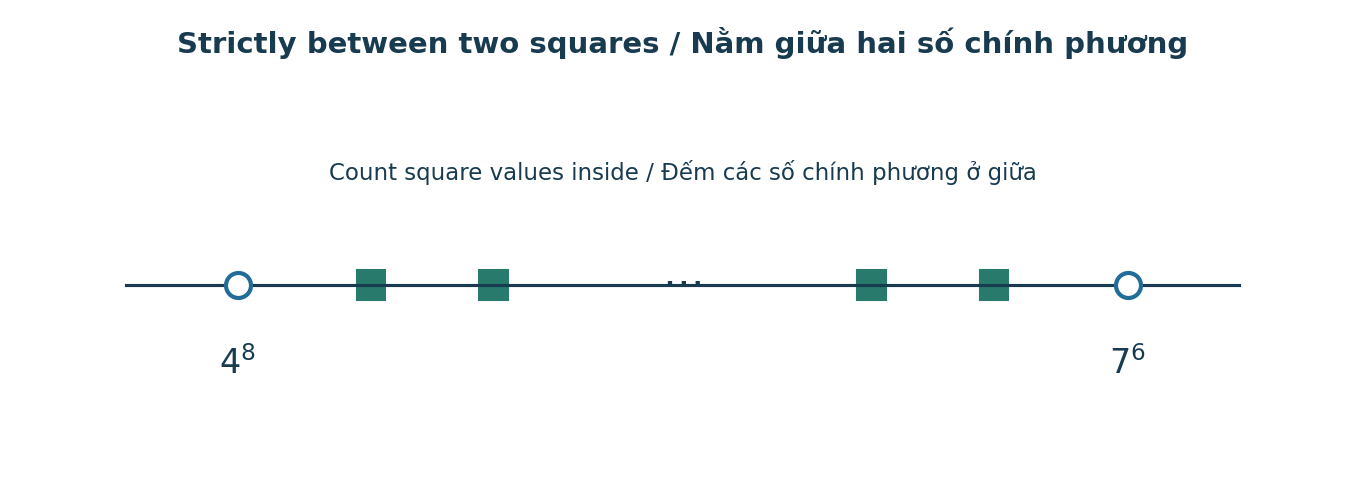
How many unique necklaces can be made with 7 equally spaced beads of 7 different colours, using each colour once? As in the source method, necklaces that differ only by rotation or by turning the necklace over are considered the same.
Rationalise the denominator of
$$\frac1{\sqrt6-\sqrt3+\sqrt2+1}.$$
The printed source offers the following expressions, retained unchanged for comparison:
- A. $\dfrac{\sqrt6+\sqrt3-\sqrt2+1}{2}$
- B. $\dfrac{\sqrt6-\sqrt3+\sqrt2+1}{2}$
- C. $\sqrt6-\sqrt3+\sqrt2+1$
- D. $\sqrt6+\sqrt3-\sqrt2+1$
- E. $\sqrt6-\sqrt3-\sqrt2+1$
For this edition, submit your rationalised expression rather than an option letter. Write the result as $(a+b\sqrt2+c\sqrt3+d\sqrt6)/e$, where the five coefficients are integers with no common factor greater than 1 and $e>0$. Enter a;b;c;d;e in that order, separated by semicolons, with no spaces. Keep every sign, including negative coefficients.
The first five terms of a sequence are $5,9,16,28,47$. Find the sum of the eighth and seventh terms.
Use the continuation intended in the source: the third differences remain constant. A first difference is the next term minus the preceding term; repeat this operation to obtain second and third differences.
The points $(0,1)$ and $(1,2)$ are vertices of a square. Find the sum of the $y$-coordinates of all possible vertices diagonally opposite to $(0,1)$. The two given vertices are not required to be adjacent; include every possible square.
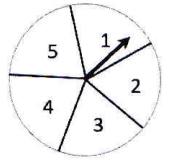
The spinner shown has five equal sectors labelled 1, 2, 3, 4 and 5. Spin it once. If it lands on a perfect square, flip a fair coin once. If it lands on a prime number, flip the coin twice. What is the probability of seeing at least one head? A fair coin has probability $1/2$ of heads on each flip.
Assume independent flips, independent of the spinner. Write the probability as $p/q$ in lowest terms with $q>0$, then enter $p+q$.
Find the positive difference between the sum of all possible integer $x$ values and the sum of all possible integer $y$ values satisfying $x^y=256$.
Use the source's convention: sum the $x$-coordinates and the $y$-coordinates over all distinct ordered solution pairs $(x,y)$, counting a repeated coordinate once for each pair in which it appears.
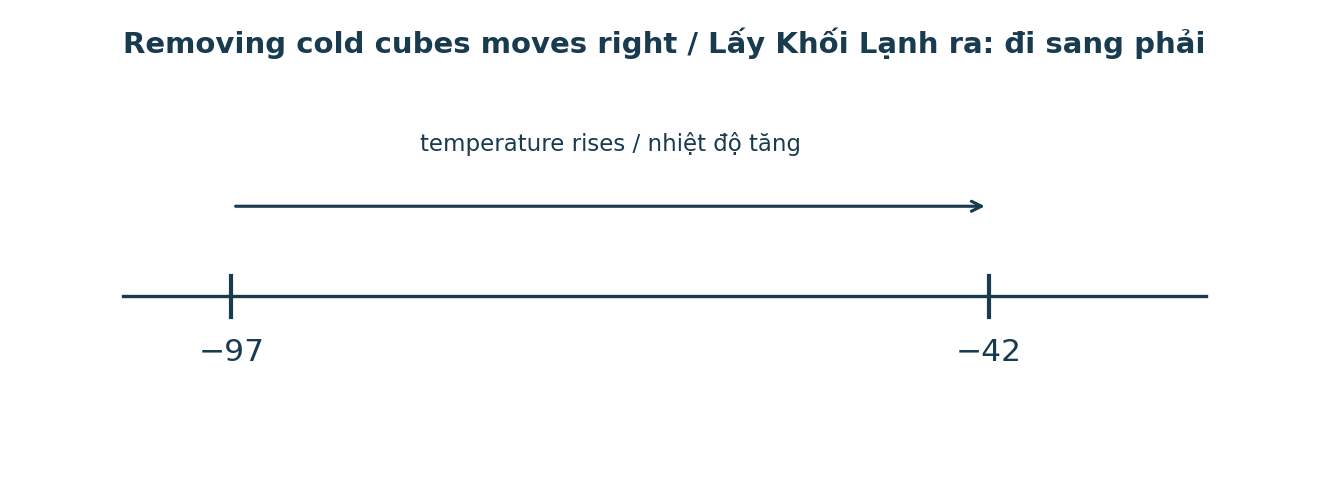
Consider negative integers as Cold Cubes and positive integers as Hot Cubes. Adding 5 Hot Cubes raises a liquid's temperature by five degrees, and adding 5 Cold Cubes lowers it by five degrees. How many Cold Cubes must be removed from a liquid at $-97$ degrees to reach $-42$ degrees? Use this integer model, in which each cube changes the temperature by one degree.
Given $$x^4+x^3+x^2+x+1=0,$$ find the value of $x^{2021}$.
Treat $x$ as an algebraic or complex number satisfying the equation; a real solution is not assumed. Preserve the printed target exactly. For this edition, enter the simplest expression in terms of $x$, using a lowercase letter, rather than forcing a numerical value.