Skip to content / Đến nội dung
ThichHocToan.com

Spatial reasoning and assembly · SET 1

Question 1

You have 59 cubic blocks. What is the minimum number that needs to be taken away in order to construct a solid cube with none left over?

Question illustration

Question 2

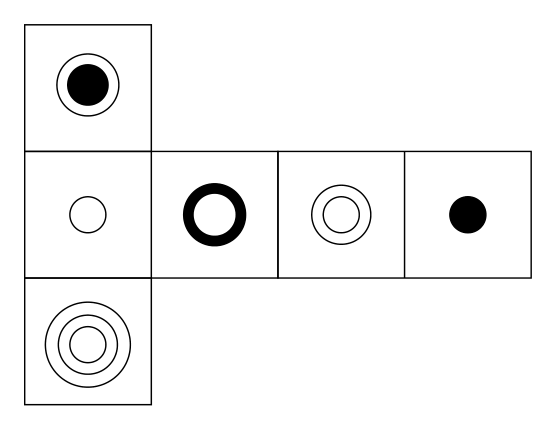
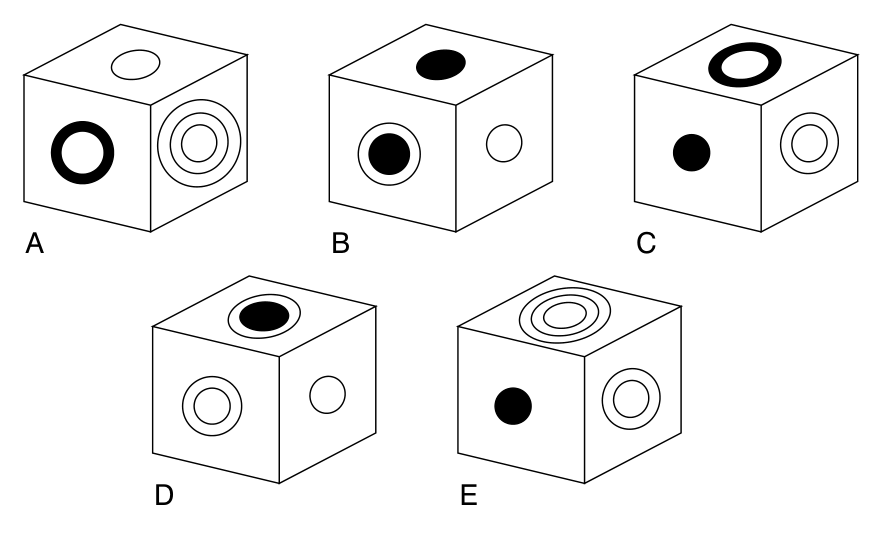
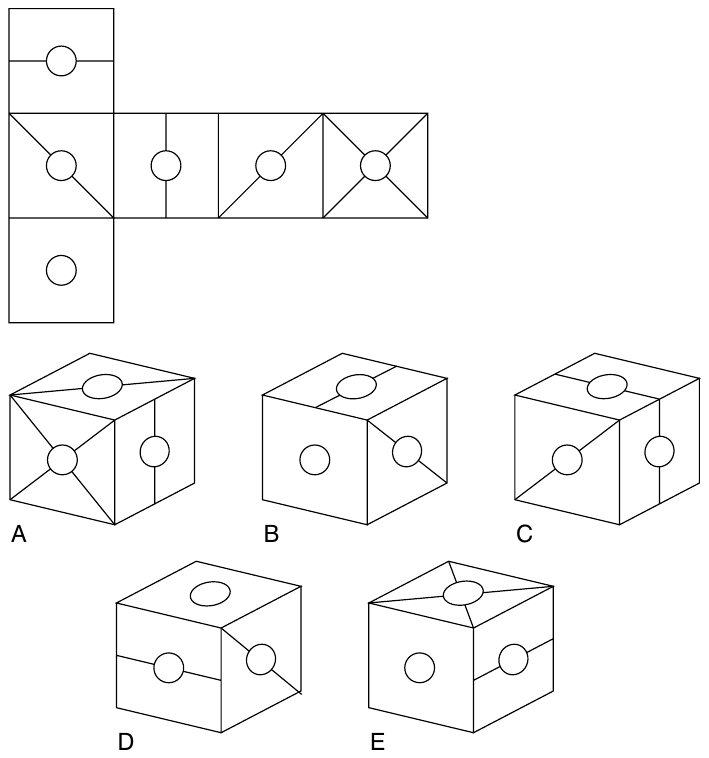
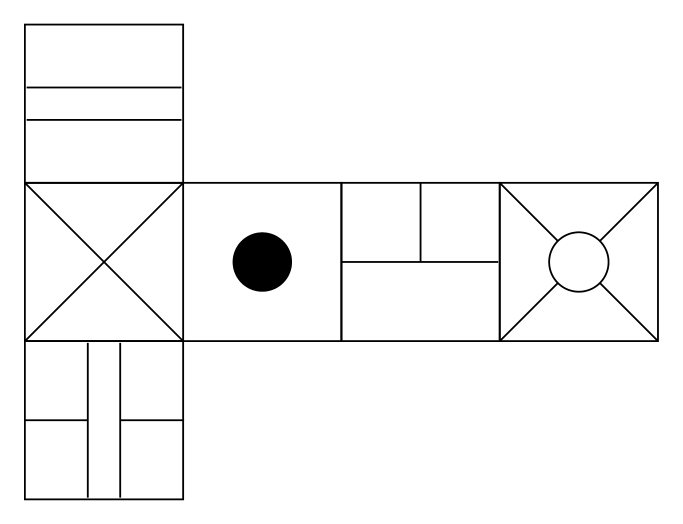
When the net above is folded to form a cube, which is the only one of the following that can be produced?

Question illustration

Question illustration
  1. Figure A
  2. Figure B
  3. Figure C
  4. Figure D
  5. Figure E

Question 3

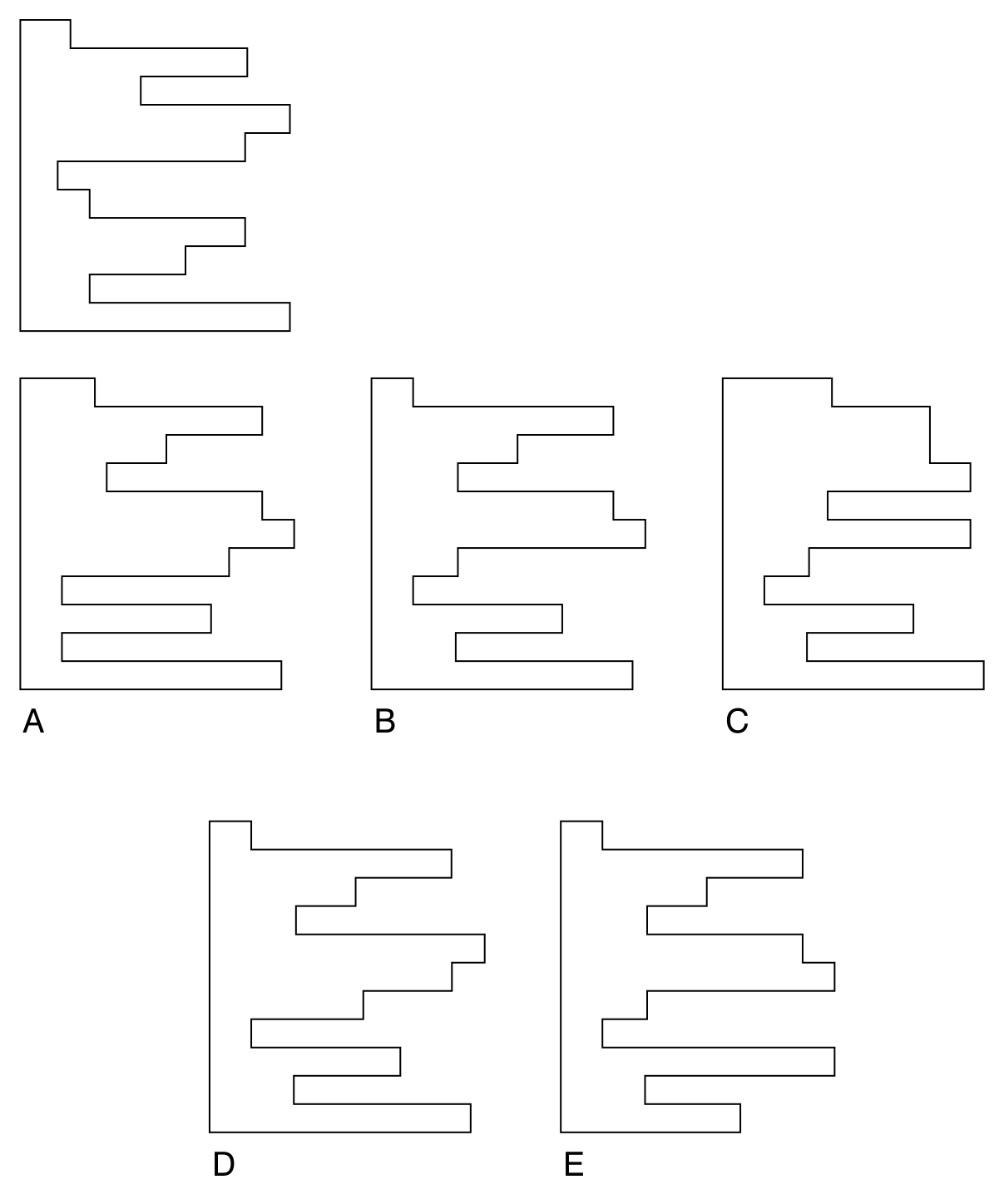
Which piece below, when fitted into the piece on the left, will form a perfect square?

Question illustration
  1. Figure A
  2. Figure B
  3. Figure C
  4. Figure D
  5. Figure E

Question 4

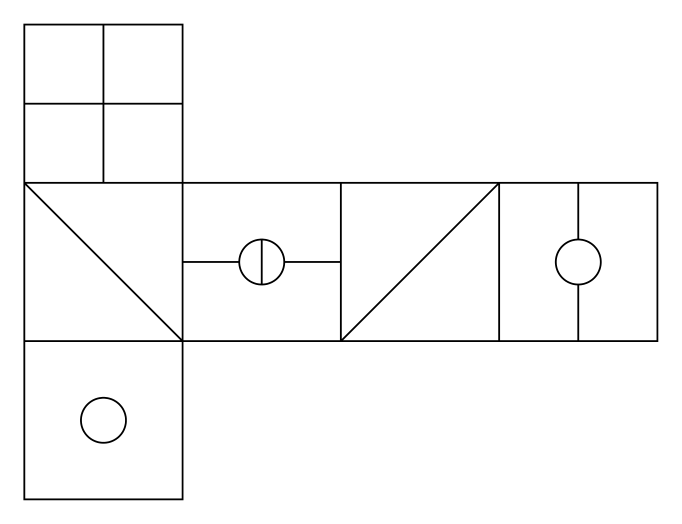
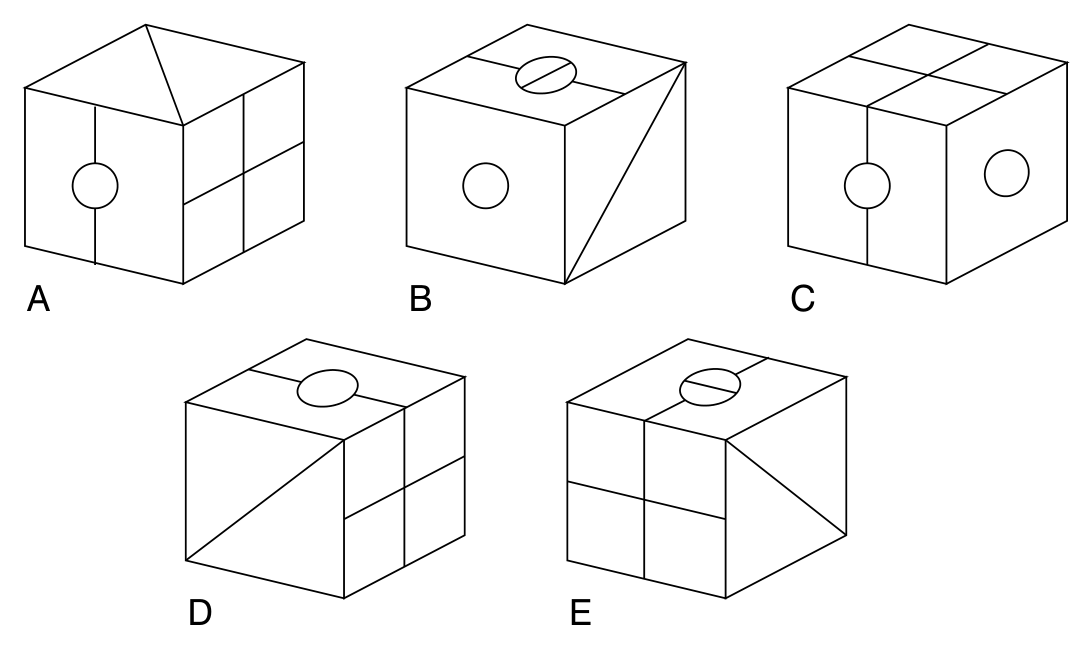
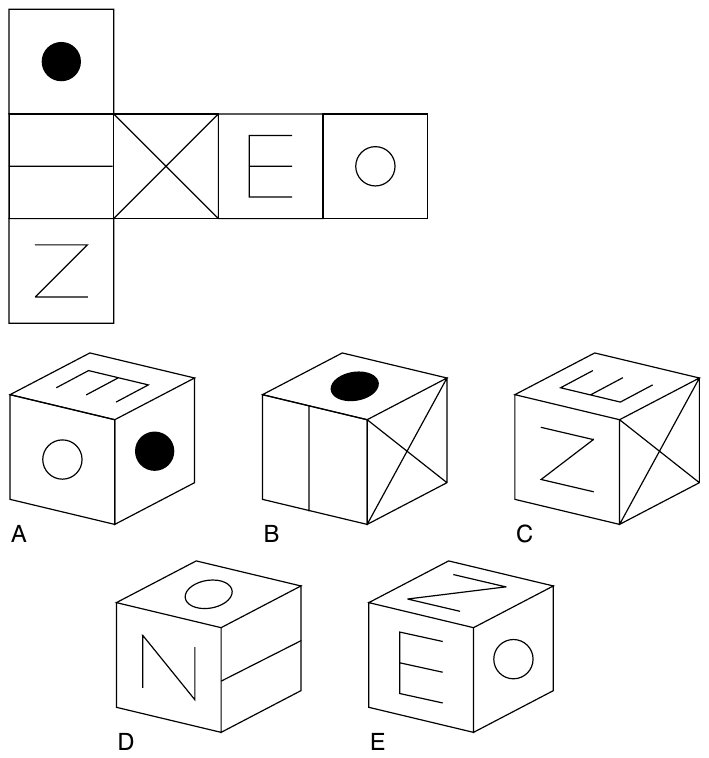
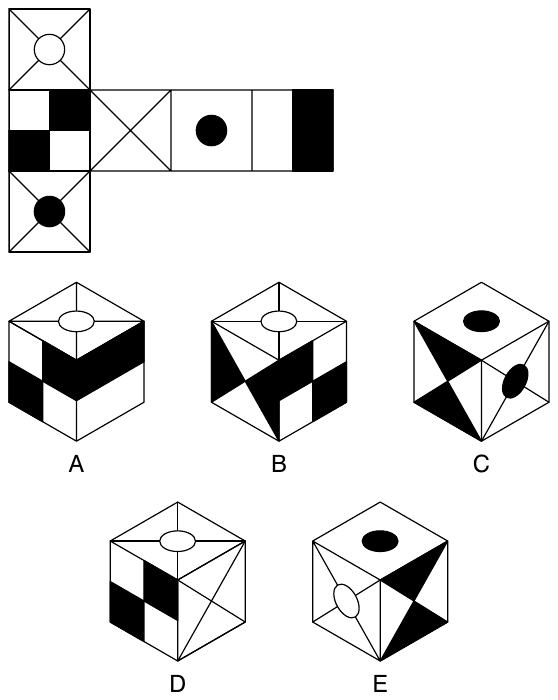
When the net shown is folded to form a cube, which is the only one of the cubes A–E that can be produced?

Question illustration

Question illustration
  1. Figure A
  2. Figure B
  3. Figure C
  4. Figure D
  5. Figure E

Question 5

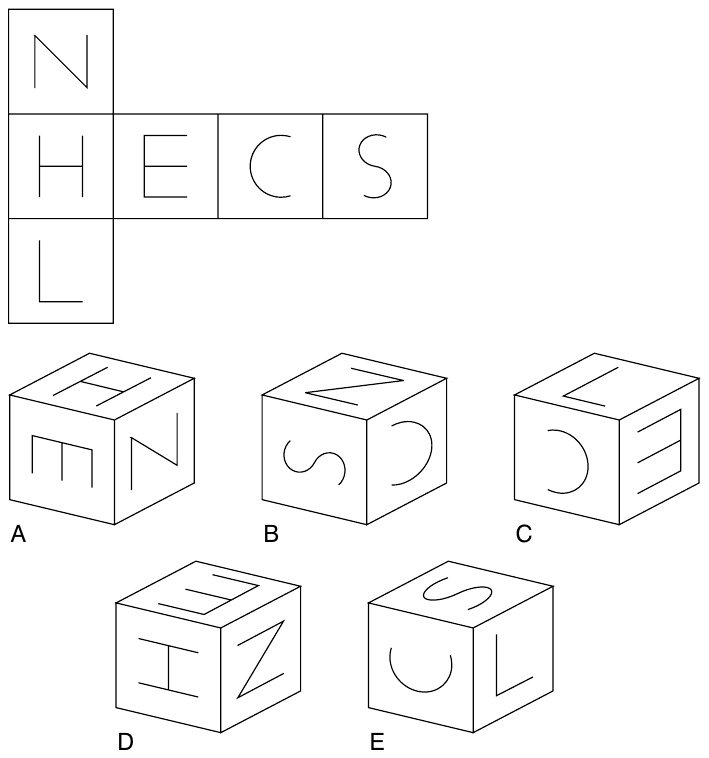
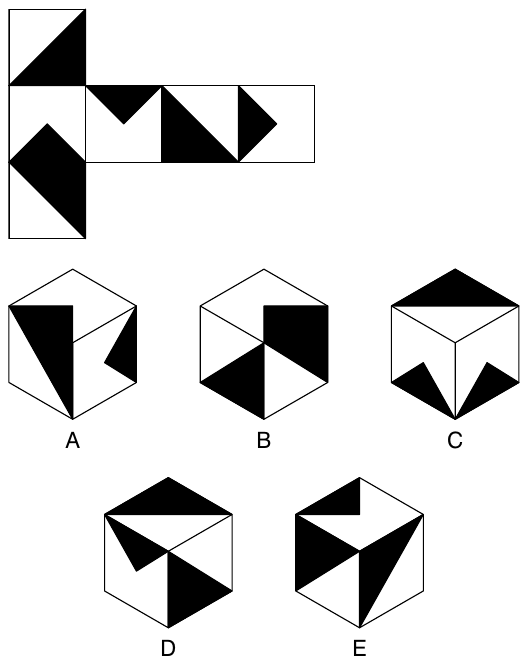
When the net above is folded to form a cube, which is the only one of the following that can be produced?

Question illustration

Question illustration
  1. Figure A
  2. Figure B
  3. Figure C
  4. Figure D
  5. Figure E

Question 6

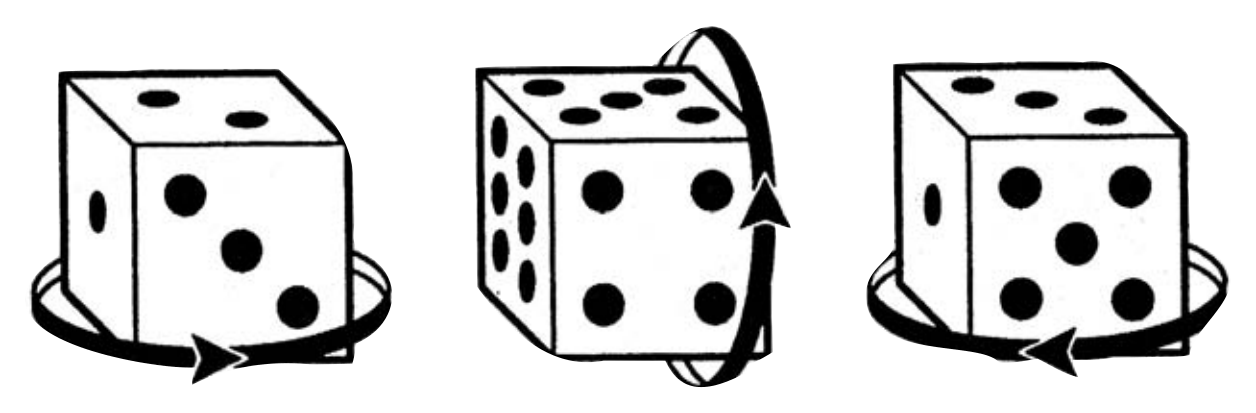
The opposite faces of a die add up to 7. Each of the three dice rotates in the direction shown by its arrow, one face (a quarter turn) at a time. After three moves, what is the total of the three front faces?

Question illustration

Question 7

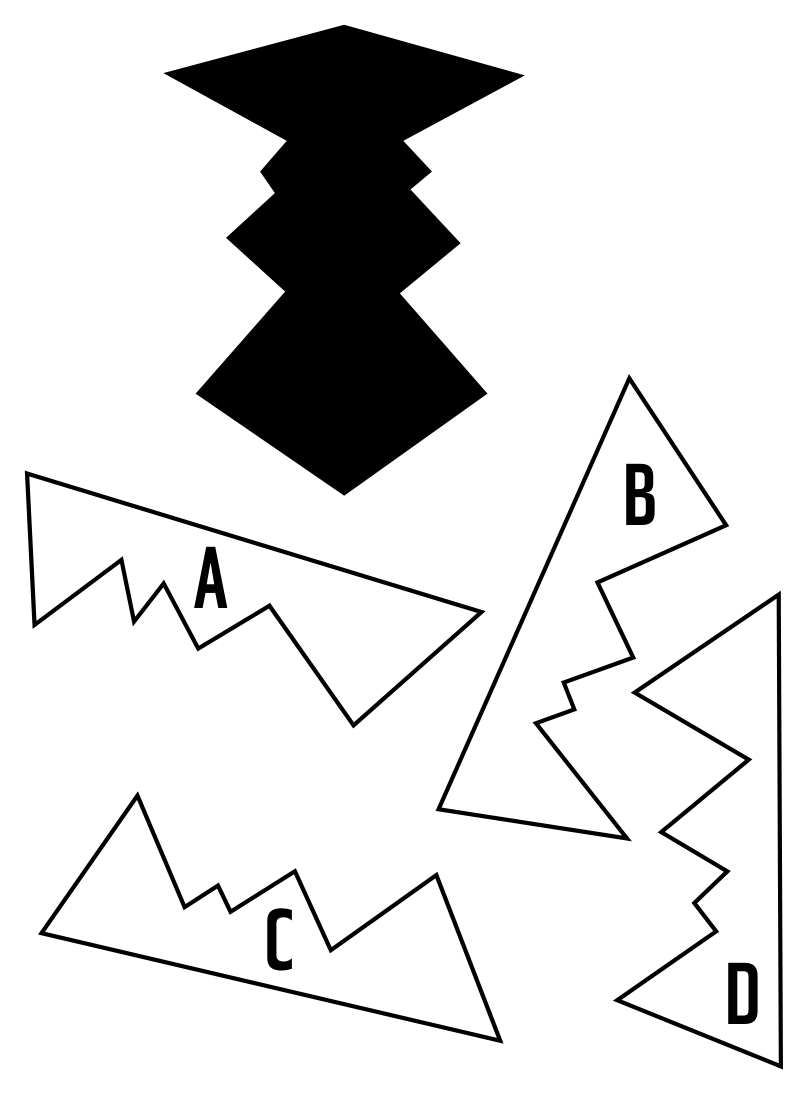
A sheet of paper is folded in half and cuts are made in it. The paper is then unfolded to reveal the black shape shown. Which of the figures A, B, C or D shows the original cuts?

Question illustration
  1. Figure A
  2. Figure B
  3. Figure C
  4. Figure D

Question 8

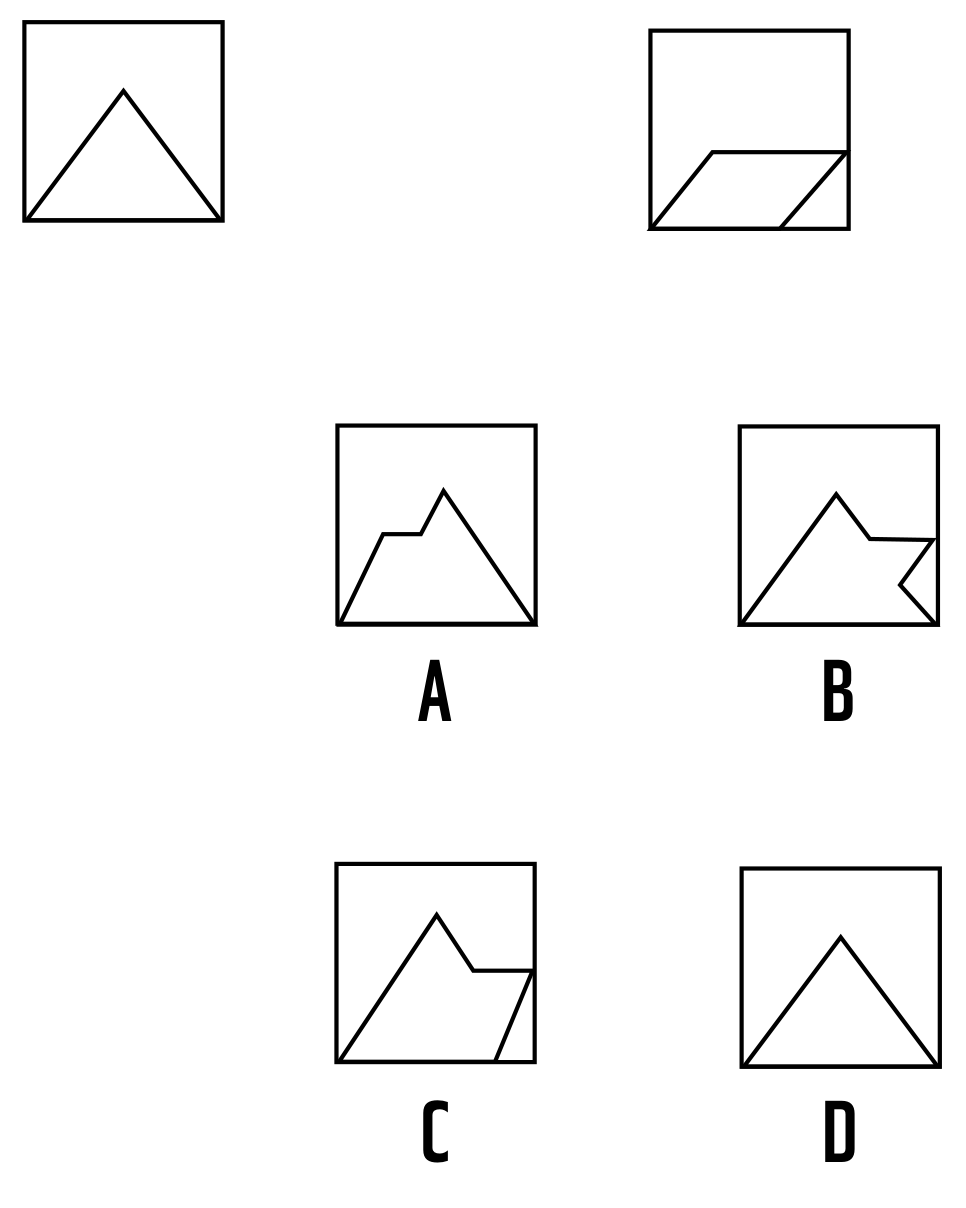
At the top, the left figure (a triangle in a square) is superimposed on the right figure (a parallelogram in a square of the same size). Which of the OUTLINES A–D will result?
Question illustration
  1. Figure A
  2. Figure B
  3. Figure C
  4. Figure D

Question 9

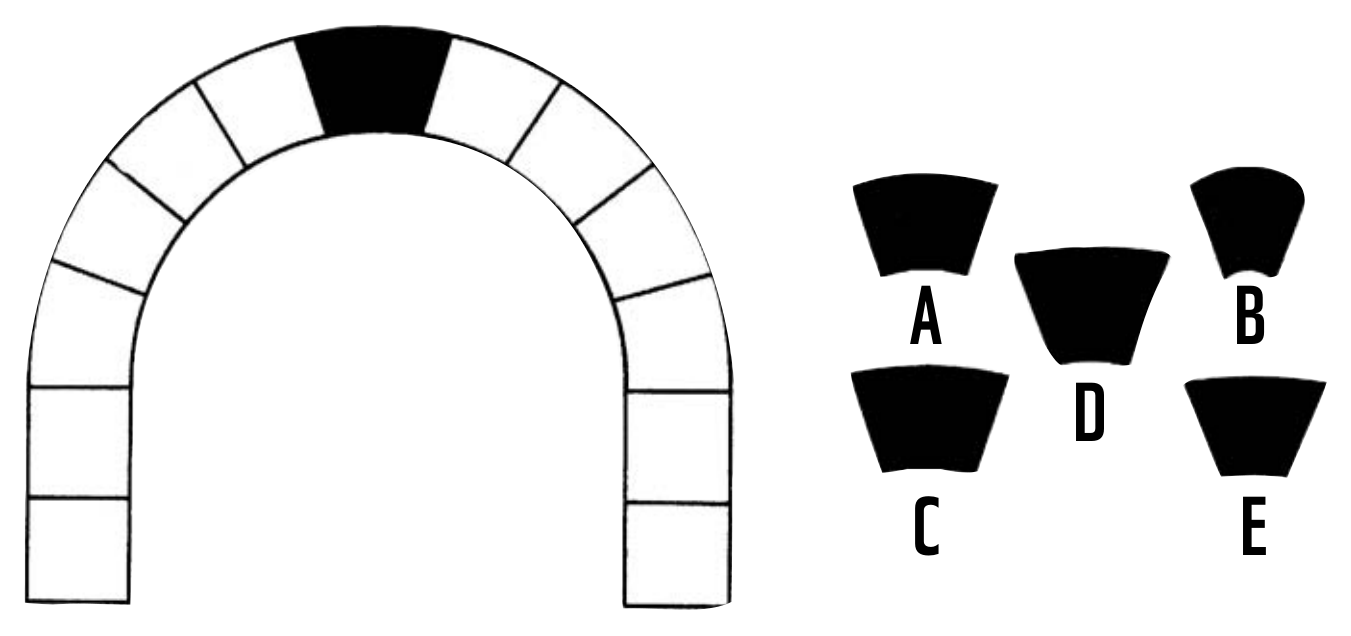
The black stone at the top of the arch marks the gap for the missing keystone. Which of the stones A–E is the missing keystone?

Question illustration
  1. Figure A
  2. Figure B
  3. Figure C
  4. Figure D
  5. Figure E

Question 10

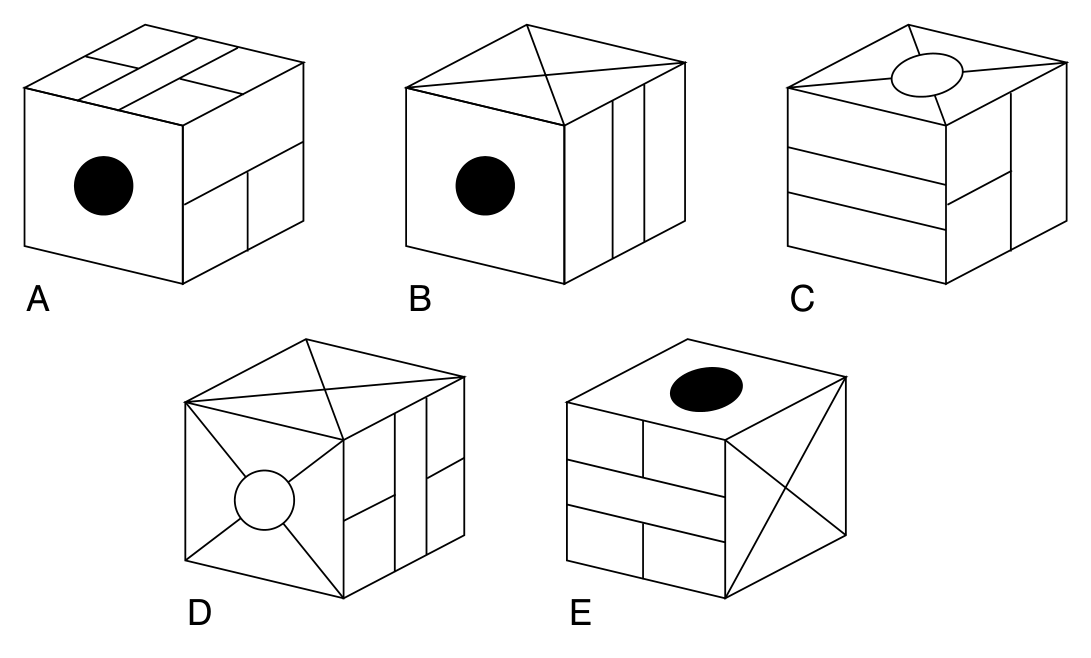
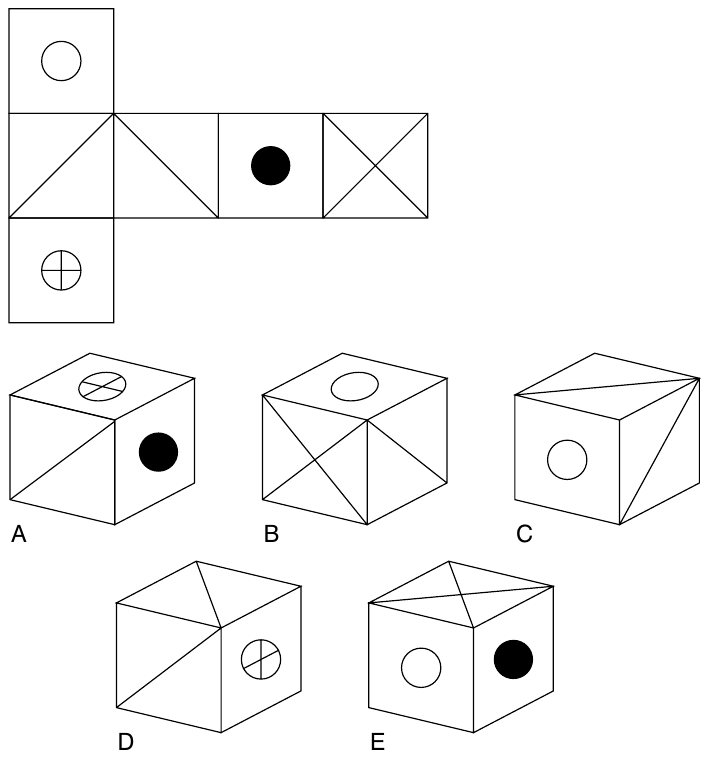
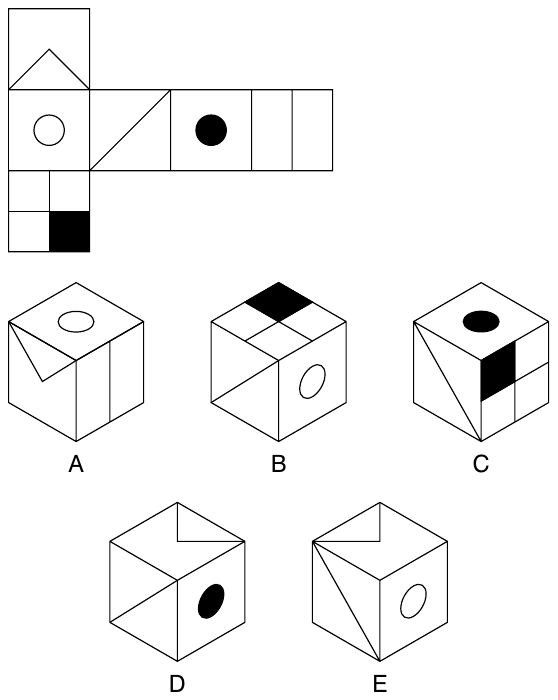
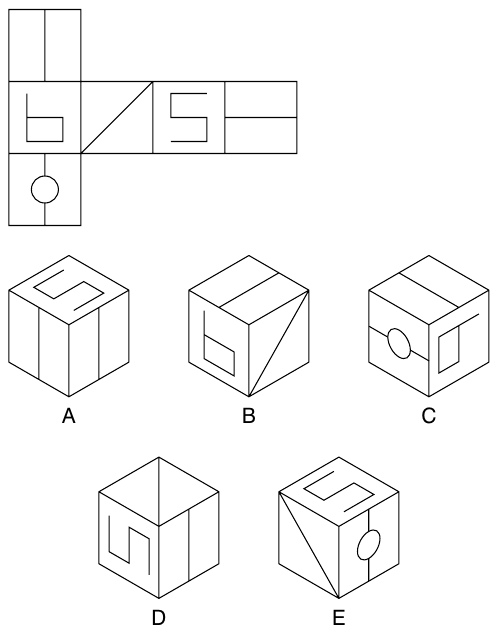
Fold the net into a cube. Which illustrated cube can be made?

Question illustration
  1. Figure A
  2. Figure B
  3. Figure C
  4. Figure D
  5. Figure E

Question 11

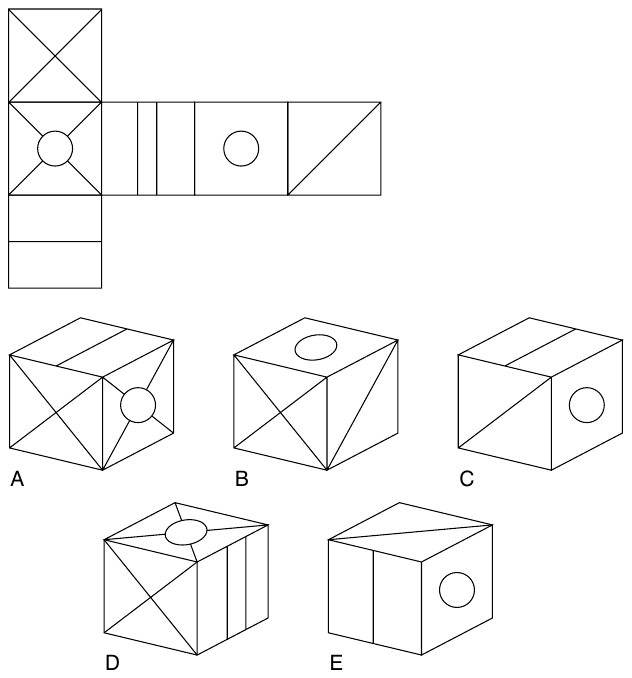
Which cube can be made by folding this net?

Question illustration
  1. Figure A
  2. Figure B
  3. Figure C
  4. Figure D
  5. Figure E

Question 12

Which cube can be folded from the net?

Question illustration
  1. Figure A
  2. Figure B
  3. Figure C
  4. Figure D
  5. Figure E

Question 13

Which cube can be folded from the net?

Question illustration
  1. Figure A
  2. Figure B
  3. Figure C
  4. Figure D
  5. Figure E

Question 14

Which cube can be formed from the net?

Question illustration
  1. Figure A
  2. Figure B
  3. Figure C
  4. Figure D
  5. Figure E

Question 15

Which cube can be made from the net?

Question illustration
  1. Figure A
  2. Figure B
  3. Figure C
  4. Figure D
  5. Figure E

Question 16

Which figure is the odd one out?

Question illustration
  1. Figure A
  2. Figure B
  3. Figure C
  4. Figure D
  5. Figure E

Question 17

Which cube can be folded from the net?

Question illustration
  1. Figure A
  2. Figure B
  3. Figure C
  4. Figure D
  5. Figure E

Question 18

Which cube can be made by folding the net?

Question illustration
  1. Figure A
  2. Figure B
  3. Figure C
  4. Figure D
  5. Figure E

Question 19

Which cube cannot be produced from the net?

Question illustration
  1. Figure A
  2. Figure B
  3. Figure C
  4. Figure D
  5. Figure E

Question 20

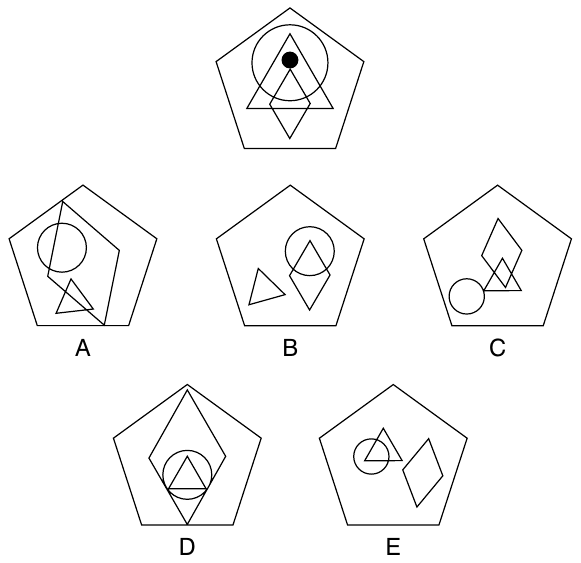
In which figure can a dot be placed in exactly the same shapes as the sample dot?

Question illustration
  1. Figure A
  2. Figure B
  3. Figure C
  4. Figure D
  5. Figure E