Skip to content / Đến nội dung
ThichHocToan.com

IMSO 2009 Science International - Theory II

Question 1

Historical theoretical question: “To prevent mosquitoes breeding in your aquarium, you can put ….” The choices below reproduce the 2009 paper, not safe aquarium-care instructions. Do not try these additions in an aquarium containing living animals. Discuss the intended mechanism and the safety problem.

A. A teaspoon of salt per liter of water

B. A drop of concentrated detergent per liter of water

C. A glass of sand in 5 liters of water

D. A teaspoon of sugar per liter of water

E. A teaspoon of oil per liter of water

Question 2

Mr. Sony is a scientist. He noticed bacteria growing on a plate of agar. Bacteria did not grow near a mold that appeared on the same plate. He wrote in his laboratory report: “The mold may produce a substance that kills bacteria.” This statement is best described as which of the following?

A. An observation

B. A hypothesis

C. A generalization

D. A conclusion

E. An assumption

Question 3

Mr. Jury has mass 60 kg and has gained an excess of 2000 calories from food, where this problem explicitly defines 1 calorie = 4.2 joules. For every 1 meter of vertical stair height he climbs, the energy used in joules equals 10 times his mass in kilograms. Calculate the height required to use the stated energy in this simplified model.
  1. 8 m
  2. 10 m
  3. 12 m
  4. 14 m
  5. 16 m

Question 4

A shrimp is not an insect because it has more than six legs. However, it belongs to the same group (arthropods) as insects because …

A. It has a skin made of chitin like insects

B. It has antennae

C. It has jointed appendages

D. It is oviparous

E. It is a carnivore

Question 5

Choose the correct answers. Which methods below are artificial vegetative reproduction in plants? More than one answer may be correct.

A. Tissue culture using a leaf disc

B. Propagation from a corm

C. Propagation using a stem cutting

D. Planting using seed

E. Crossing different varieties of plants

Question 6

Which of the following processes can be considered diffusion? More than one answer may be correct.

A. The smell of frying eggs during breakfast

B. Sand pouring to the ground from a moving truck

C. Water entering your ear during swimming

D. Dropping blue tint into a glass of water

E. A person snoring in the middle of the night

Question 7

Why does the Sun appear smaller at noon than at sunset or sunrise?

Question 8

At night, a stadium is illuminated with red light. Team P wears white shirts and black shorts. Team Q wears red shirts and green shorts. Both teams seem to have the same uniform colors. Explain why.

Question 9

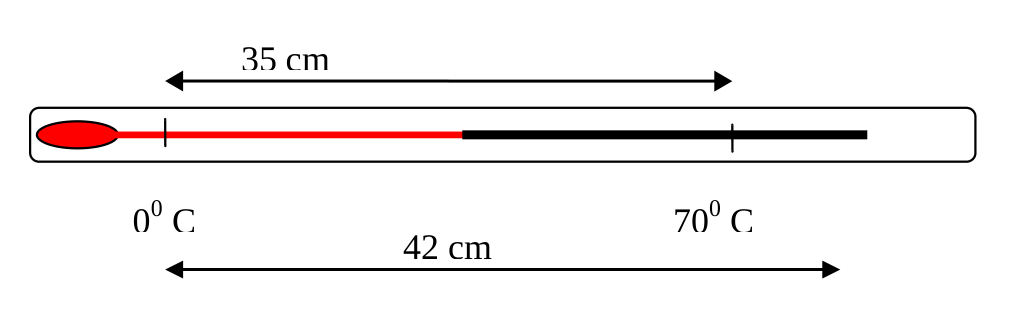
The diagram shows a mercury-in-glass laboratory thermometer. The distance between the 0°C and 70°C marks is 35 cm. Calculate the temperature when the mercury reaches 42 cm measured from the 0°C mark.

Question illustration

Question 10

One proposed way to reduce global warming is to launch a reflector into outer space. Explain the principle.

Question 11

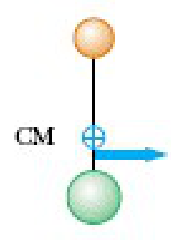
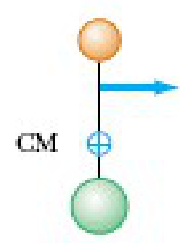
Two balls of unequal masses are connected by a light rigid rod. A force through their center of mass (CM) moves the system in the force direction without rotating it.

a) What happens when the force is applied between the less massive ball and CM?

Question illustration

b) What happens when it is applied between the more massive ball and CM?

Question illustration

Question 12

Temperature is an abiotic factor affecting metabolism, including respiration. In the source’s hypothetical aquarium scenario, how would cooling the water with ice affect fish respiration? Discuss theoretically only; do not carry out abrupt cooling on live fish.

Question 13

A city is supplied by a reservoir on high ground. Water flows through pipes when a tap is opened. Why does water usually flow out more rapidly from a first-floor tap than from taps on upper floors of an apartment building?

Question 14

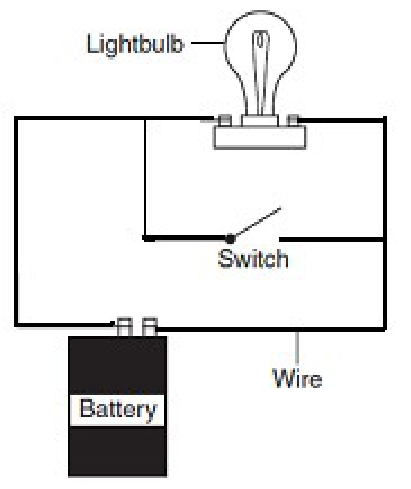
The diagram shows a lightbulb, battery and switch connected by conducting wires. Will the bulb light when the switch is a) closed or b) open? Explain.

Question illustration

Figure labels: lightbulb, switch, battery, wire.

Question 15

Why should the amalgam used in a dental filling have thermal expansion similar to that of the tooth? What could happen if their expansions were mismatched?
Question 16

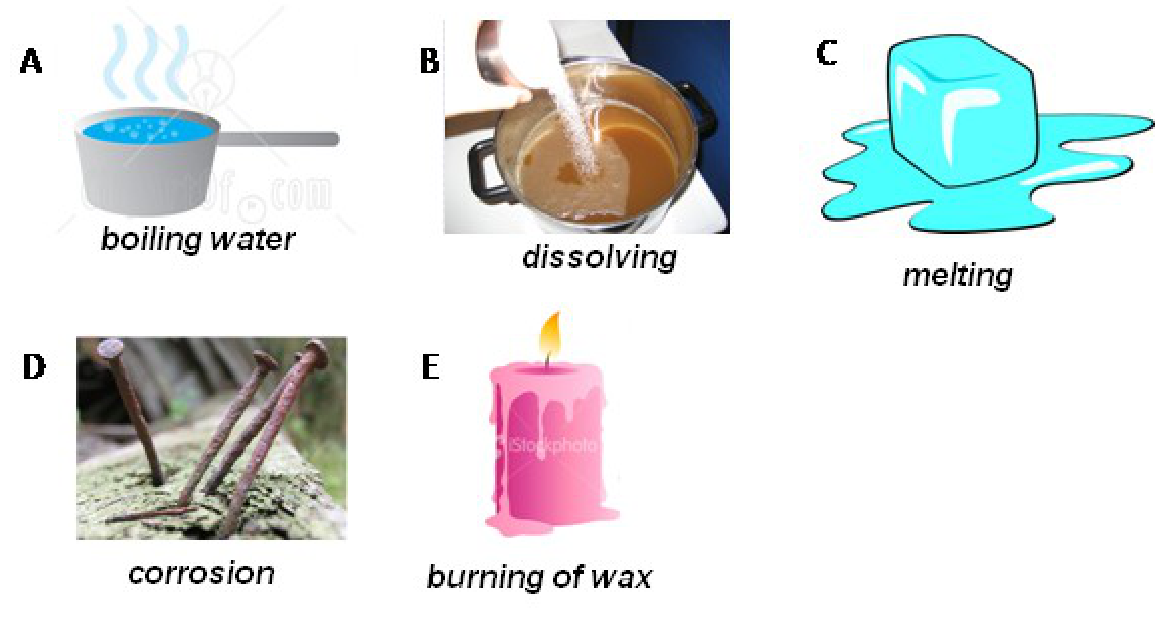
From the following list, identify examples of chemical reactions. More than one answer may be correct.

Question illustration

A. Boiling water

B. Dissolving

C. Melting

D. Corrosion

E. Burning of wax

Question 17

The table gives the maximum ammonium chloride mass that dissolves in 100 g of water at different temperatures.

| Water temperature (°C) | Maximum mass dissolved (g) |
| --- | --- |
| 0 | 30 |
| 10 | 33 |
| 30 | 42 |
| 35 | 44 |
| 60 | 56 |
| 100 | 76 |

a) Draw a graph relating temperature and maximum mass dissolved, using the provided chart.

b) Estimate the maximum mass that dissolves in 100 g of water at 80°C.

Question 18

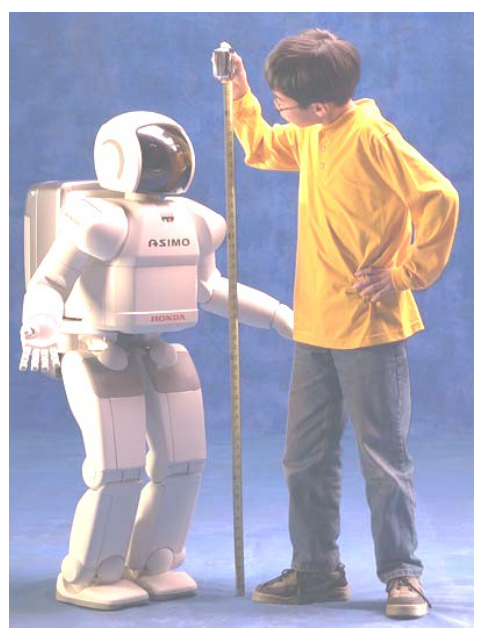
Mention five differences between a human being and a robot.

Question illustration

| No. | Human being | Robot |
| --- | --- | --- |
| 1 | | |
| 2 | | |
| 3 | | |
| 4 | | |
| 5 | | |

Question 19

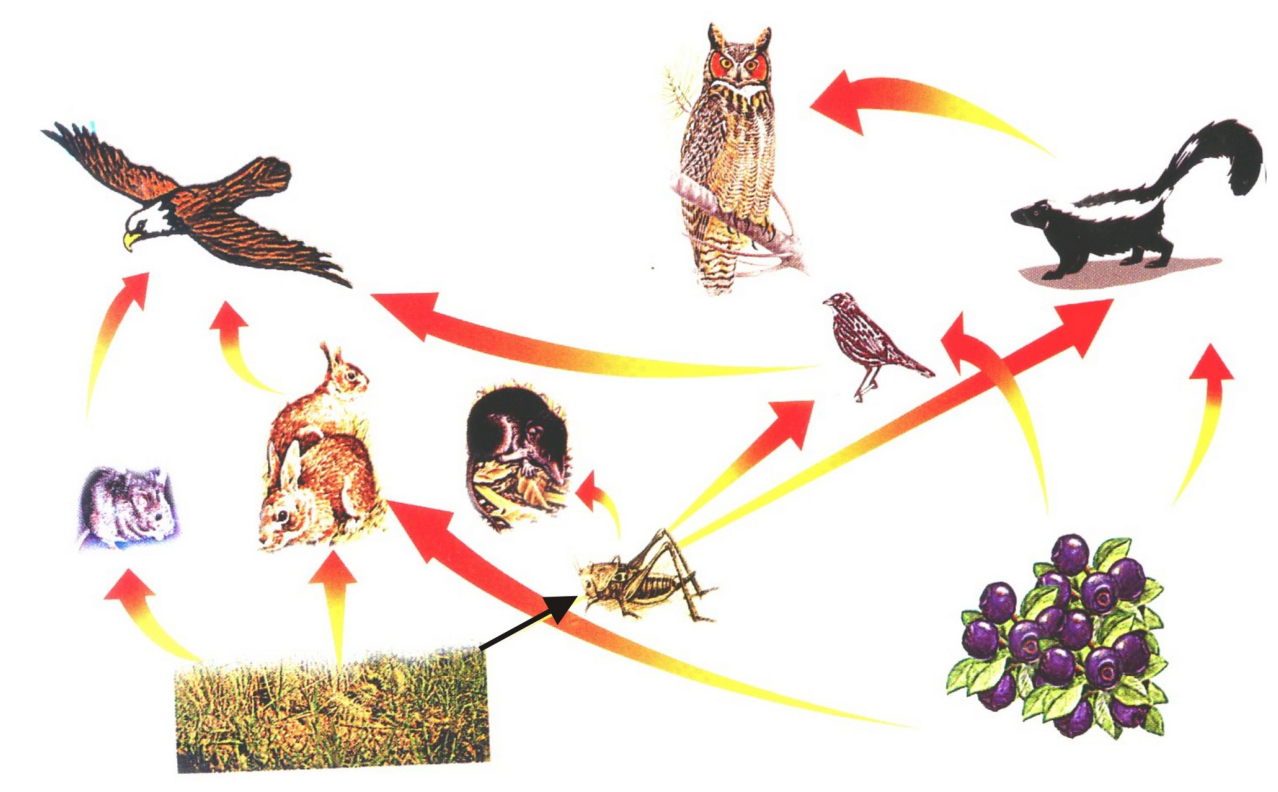
Look at the food web.

Question illustration

a) What will most likely happen if grass density decreases?

b) Which animals are omnivores?

Question 20

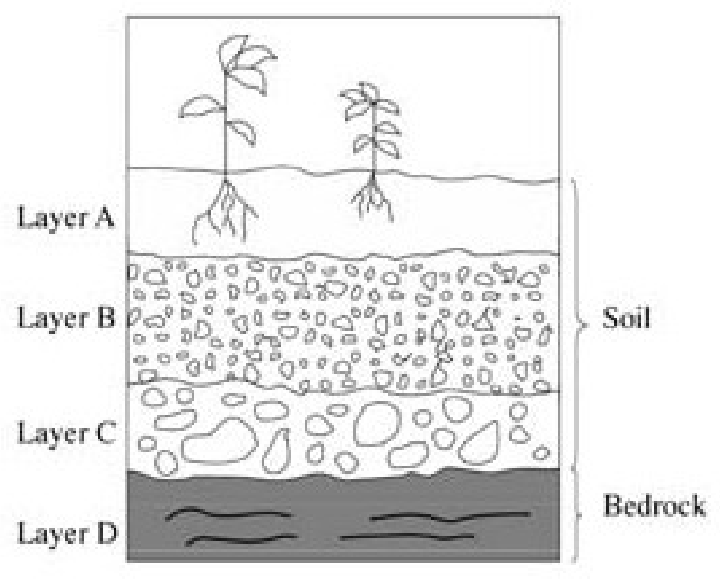
Which soil layer in the diagram contains the most organic material? Explain.

Question illustration

Labels: Layer A, Layer B, Layer C, Layer D; Soil; Bedrock.