Skip to content / Đến nội dung
ThichHocToan.com

IMSO 2009 Science International - Theory I

Question 1

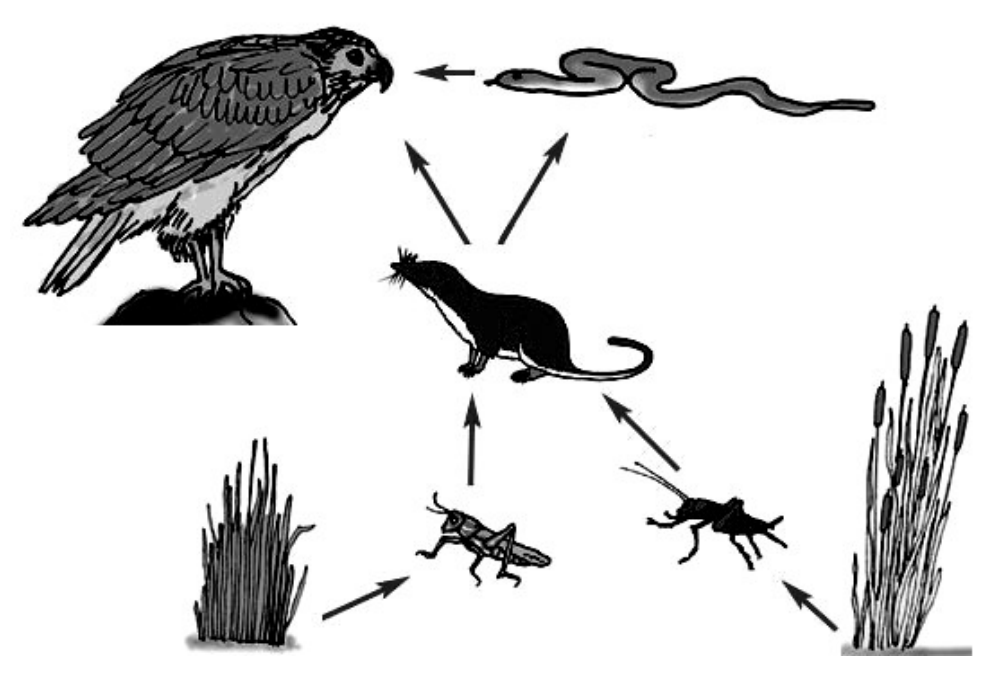
The picture below shows a food web in a swamp ecosystem. Which animal has the smallest population in that ecosystem?

Question illustration
  1. Insect
  2. Bird
  3. Mouse
  4. Cricket
  5. Snake

Question 2

If you want to see the frequency of exhalation and inhalation of an insect, which part of the insect’s body should you observe?
  1. Head
  2. Antennae
  3. Abdomen
  4. Thorax
  5. Legs

Question 3

A man has a broken humerus. At which part of the body do you have to apply a plaster cast in order to heal the man’s bones?
  1. Upper foot
  2. Neck
  3. Palm and finger
  4. Upper arm
  5. Pelvic

Question 4

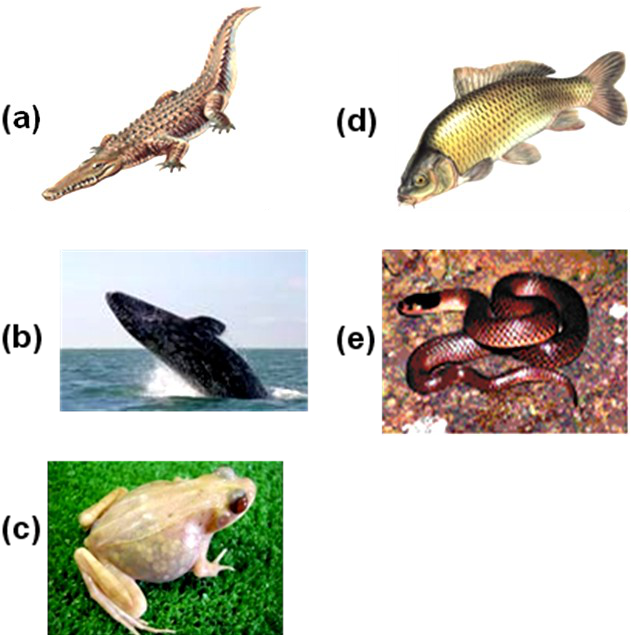
Which of the following animals is in the same group as a dog?

Question illustration
  1. Crocodile
  2. Whale
  3. Frog
  4. Fish
  5. Snake

Question 5

From the following list, circle the correct answer to explain why scientists repeat measurements during experiments.
  1. Check that the equipment is working
  2. Manipulate the equipment
  3. List all the results in a table
  4. Minimize experimental error
  5. Change the experimental conditions

Question 6

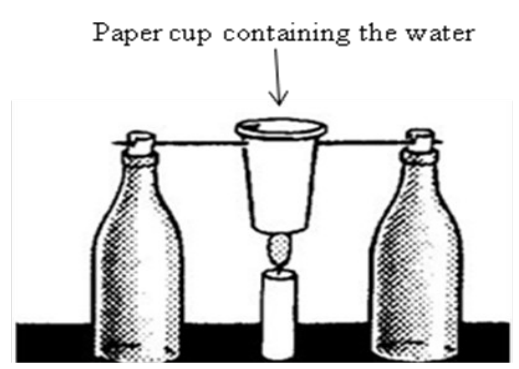
Paper cups catch fire easily. Explain why we can boil water in a paper cup using a candle without burning the cup.

Question illustration

Figure label: paper cup containing the water.

Question 7

As hot water is poured directly into a thin glass cup, the cup may occasionally break. However, this damage can be avoided by putting a metal spoon into the cup before pouring the hot water. Why can the metal spoon prevent the cup from breaking?

Question 8

Before potatoes are baked inside an oven, sometimes the potatoes are stabbed with a metal stick to allow their inner part to be well baked. Explain how this process occurs.

Question 9

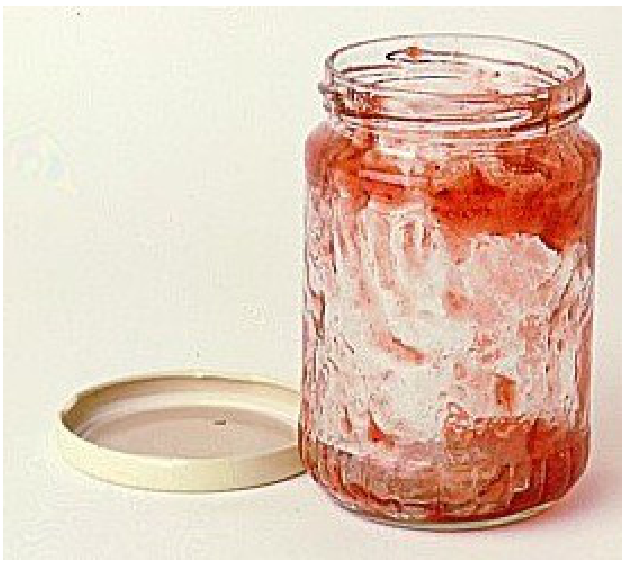
Sometimes it is difficult to open a jar of fruit jam because the cap holds the jar tightly. By immersing the jar into hot water for a while, we can open the cap easily. Give your explanation.

Question illustration

Question 10

We are unable to hear sounds produced by a dog whistle (also known as a silent whistle or Galton’s whistle). Explain why this happens.

Question 11

In order to evaporate water, should we always boil it at 100 °C? Explain whether your answer is yes or no.

Question 12

Classify the following substances as elements, mixtures or compounds. Put a check mark in the appropriate column.

| Substance | Elements | Compounds | Mixtures |
| --- | --- | --- | --- |
| Carbon dioxide | | | |
| Chlorine | | | |
| Hydrogen gas | | | |
| Ink | | | |
| Soft drinks | | | |
| Water | | | |

Question 13

Two balls of the same mass are produced in a workshop. One is made of aluminum and the other of iron. Aluminum has a density of $2.70\text{ g/cm}^3$ and iron has a density of $7.86\text{ g/cm}^3$.

a) Which ball is larger? Give a reason.

b) If the balls are left in open air for several months, will their masses (a) remain unchanged, (b) increase, or (c) decrease? Choose one possibility and explain.

Question 14

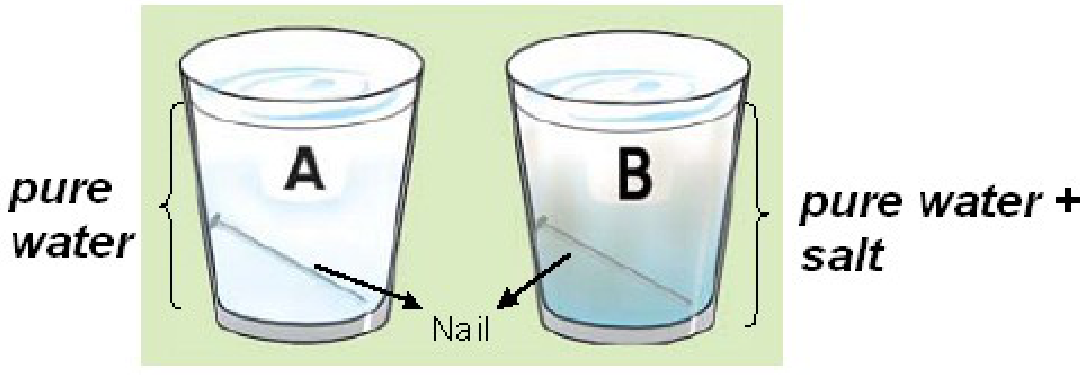
Nails are immersed in cups A and B containing pure water. Salt is added to cup B, and both are left for a few days. In which cup will the nail corrode faster? Explain.

Question illustration

Labels: A, pure water; B, pure water + salt; nail.
Question 15

The following actions influence the dissolving rate of sugar in a cup of water. Put a check mark in the appropriate column.

| Action | Fast | Slow | No influence |
| --- | --- | --- | --- |
| Heating water | | | |
| Stirring | | | |
| Adding more water | | | |
| Adding air bubbles | | | |
| Blowing the water surface | | | |

Question 16

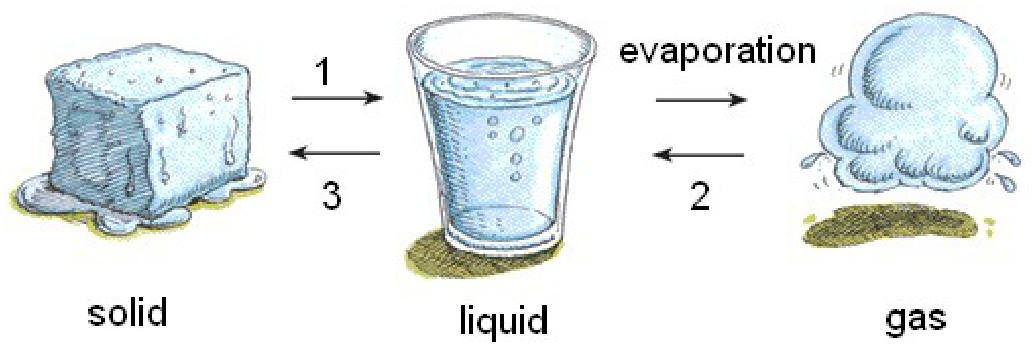
The figure shows changes of phase of water.

Question illustration

a) State the phase changes labelled 1, 2 and 3.

b) In which phase are water molecules closest together?

c) Why are all these phase changes physical changes?

Figure labels: solid, liquid, gas; evaporation.

Question 17

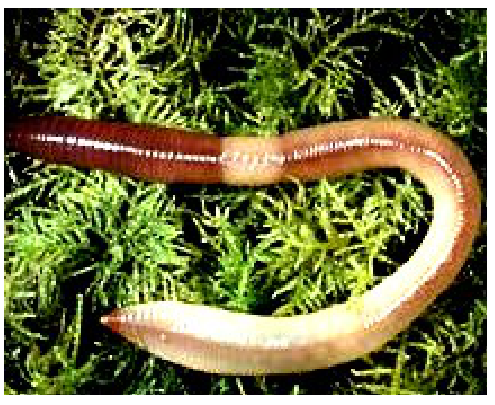
All animals and plants need oxygen from air for respiration. Explain how gas exchange occurs in the animal shown.

Question illustration

Question 18

A child shouts in front of a wall 60 meters away. If the speed of sound is 300 m/s, after how many seconds will the child hear the echo?
  1. $\frac15$ s
  2. 5 s
  3. 18000 s
  4. $\frac25$ s
  5. 2.5 s

Question 19

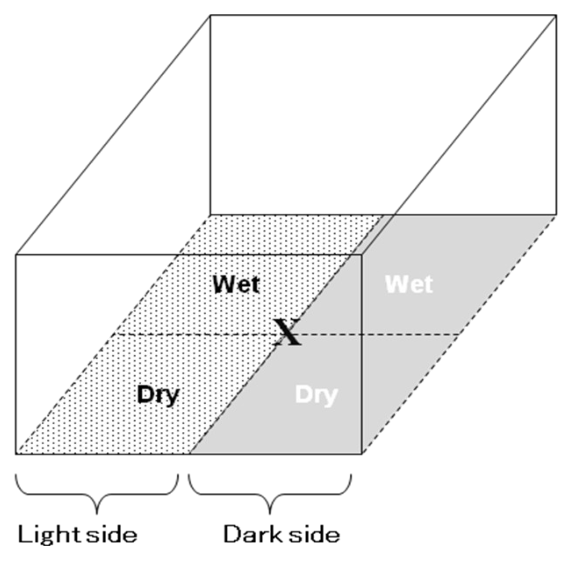
The picture shows a student’s experimental apparatus. If a worm is placed at X on the bottom of the box, to which corner would you expect it to move?

Question illustration

Labels: wet, dry, light side, dark side.

Question 20

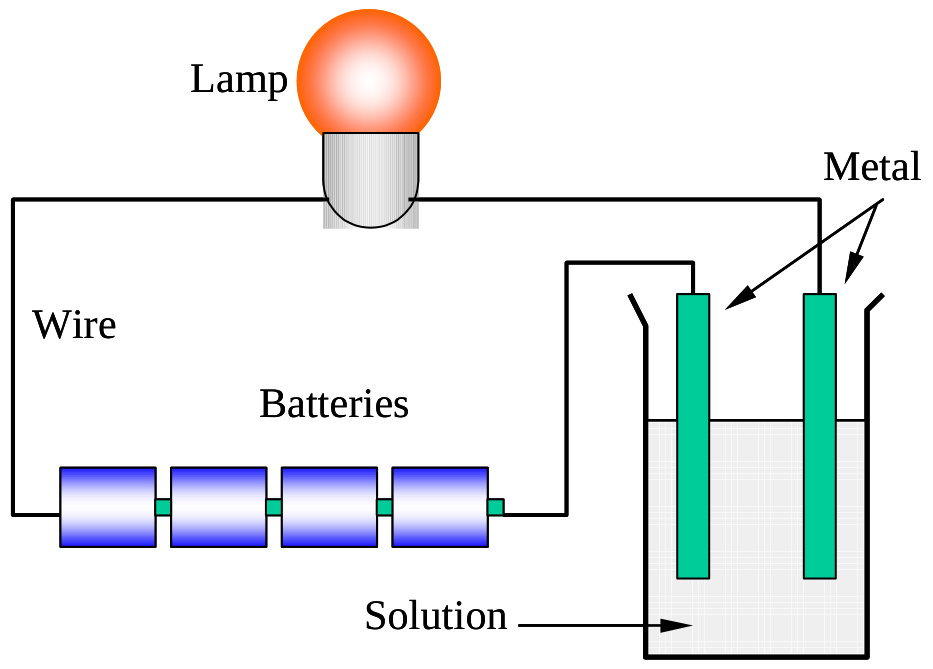
The picture shows a simple electric circuit. The lamp does not light if the solution is which of the following?

Question illustration

Labels: lamp, metal, wire, batteries, solution.
  1. Hydrochloric acid
  2. Sulfuric acid
  3. Lime water
  4. Distilled water
  5. Lemon juice