IMSO 2008 Science International - Theory I Mark one correct statement from the list below.
Sharks are mammals because they give birth.
Killer whales, like other mammals, are herbivorous.
Lizards, like other reptiles, are poikilothermic.
Cockroaches are arachnids because they have four pairs of legs.
Donkeys are carnivorous mammals.
Icebergs float on seawater. Which statement correctly explains this phenomenon?
The mass of the iceberg is smaller than the mass of seawater.
The mass of the iceberg is larger than the mass of seawater.
The density of the iceberg is smaller than the density of seawater.
The density of the iceberg is larger than the density of seawater.
The iceberg is very big, so it cannot sink.
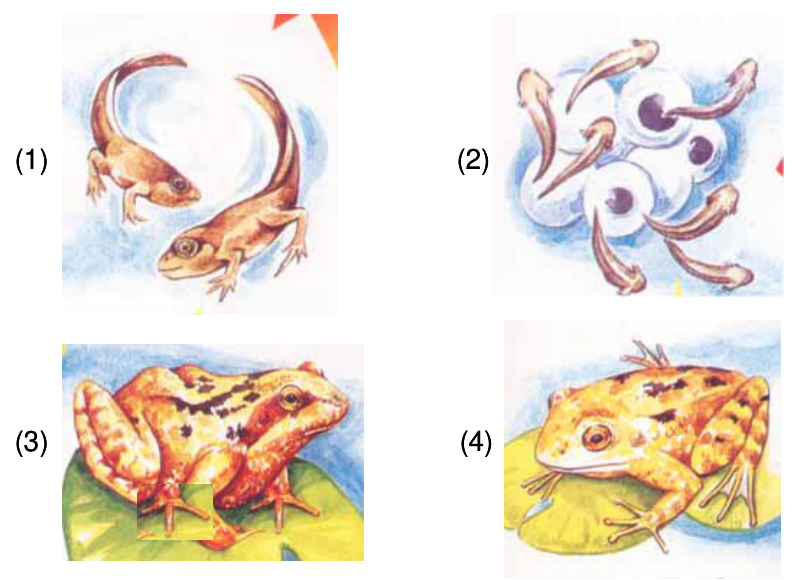
The pictures show different stages in a frog’s growth. Which order is correct?
1, 2, 4, 3
2, 1, 3, 4
1, 2, 3, 4
2, 1, 4, 3
1, 3, 4, 2
Which part of the Earth listed below has the highest temperature?
Inner core
Crust
Atmosphere
Outer core
Mantle
When grass appears green in daylight, which colour of sunlight is reflected by the grass?
All colours except green
Green
The same colour as sunlight
A colour independent of the colour of the light source
All colours including green
Which one of the following processes does not have a friction force?
A skier sliding down a hill
A space shuttle approaching the Earth
A person swimming
A man climbing a mountain
A space shuttle approaching the Moon
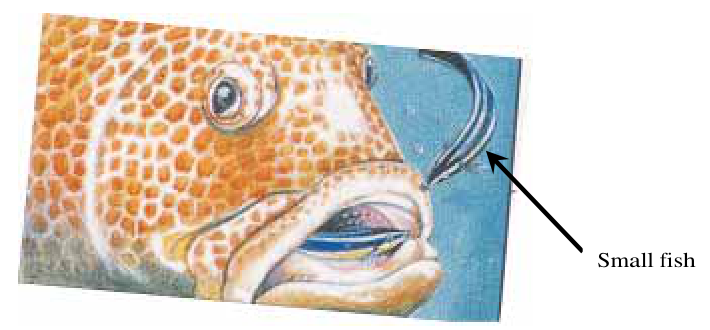
Small fish enter a large fish’s mouth to eat parasites. Which relationship below is similar?
Figure label: Small fish.
A mouse eats cheese on a table.
A bird eats insects on a cow’s skin.
An orchid grows on a palm tree.
A mosquito sucks human blood.
An orchid fertilizes a hibiscus.
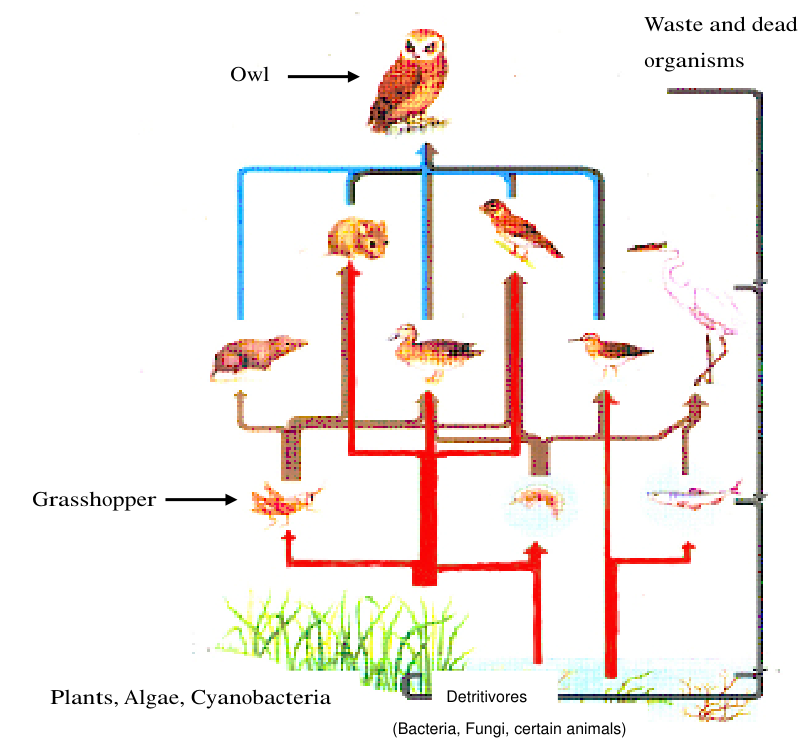
The following food web is used for Questions 8 and 9. The owl is classified as what type of consumer?
Labels: owl; grasshopper; plants, algae, cyanobacteria; waste and dead organisms; detritivores (bacteria, fungi, certain animals).
Primary consumer only
Secondary consumer only
Tertiary consumer only
Can be a secondary and a tertiary consumer
Can be a primary, secondary and tertiary consumer
The following food web is used for Questions 8 and 9. The grasshopper is classified as what type of consumer?
Labels: owl; grasshopper; plants, algae, cyanobacteria; waste and dead organisms; detritivores (bacteria, fungi, certain animals).
Primary consumer only
Secondary consumer only
Tertiary consumer only
Can be a secondary and a tertiary consumer
Can be a primary, secondary and tertiary consumer
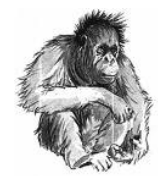
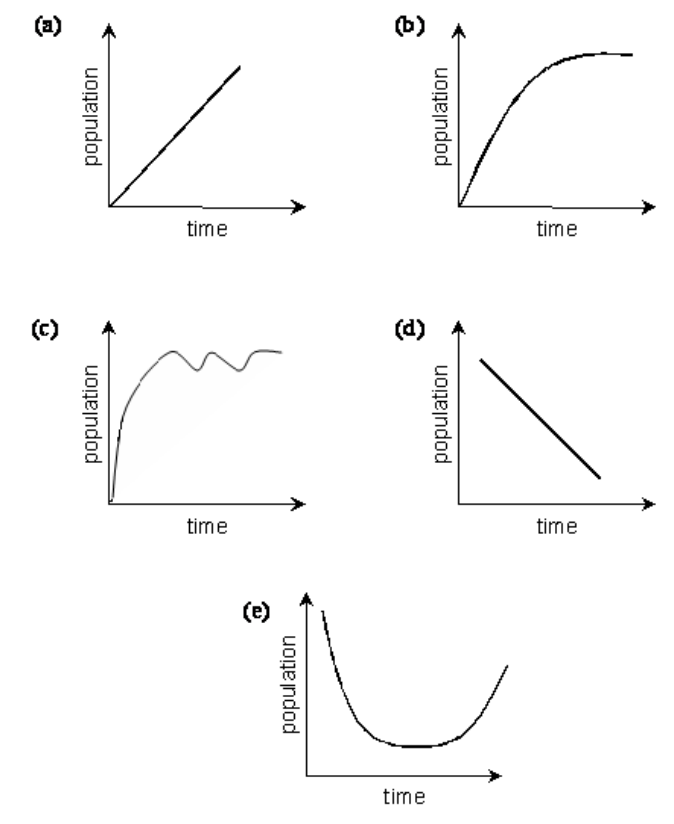
The animal below is endangered (rare). Which graph correctly describes its population change over time?
The horizontal axes show time; the vertical axes show population. Choices A–E are shown in the figure.
Which groups below cannot move, or move very slowly, when the temperature is much lower than room temperature? More than one choice may apply.
Which bold materials or objects (underlined in the original) lose thermal energy in the situations below? Select all correct choices.
A switched-on **electrical iron**
A **drinking glass** filled with hot water
A **hand** touching ice
A **drinking glass** filled with cold water
Melting **ice**
Tropical regions are known for high biodiversity. Which statements below are incorrect? More than one choice may apply.
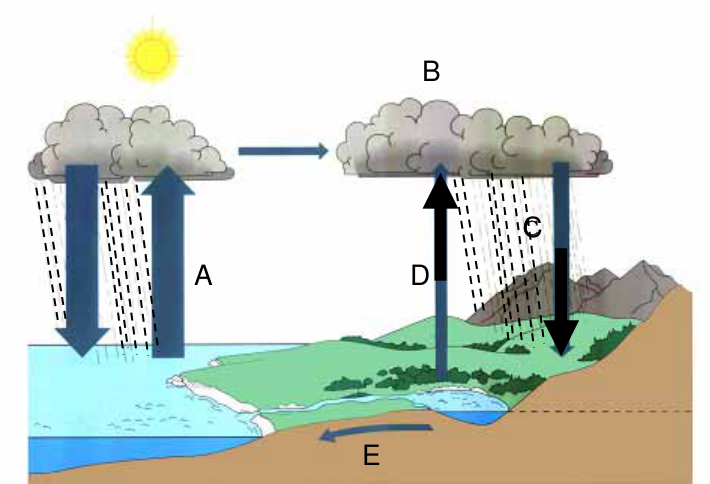
Match each letter in column I with a process number in column II.
| Column I: letter | Column II: process |
|---|---|
| A: … | 1. Condensation |
| B: … | 2. Evaporation |
| C: … | 3. Runoff |
| D: … | 4. Precipitation |
| E: … | 5. Evapotranspiration |
| | 6. Transpiration |
Match the phenomena in the left column to processes in the right column.
Fill each blank in the left column using a numbered answer from the right column.
Explain how an hourglass can show time.
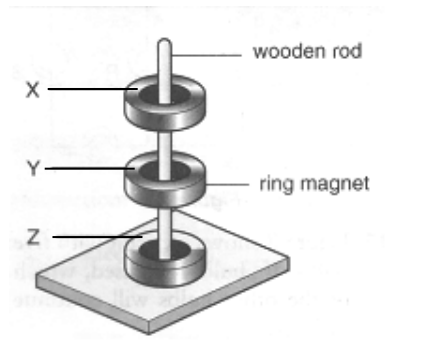
Three ring magnets are placed on a wooden rod as shown. Determine the magnetic poles at X, Y and Z.
Labels: wooden rod; ring magnet.
The Moon’s surface looks smooth to the naked eye but rough through a telescope. Explain why the observations differ.
Explain how the handle of a pan becomes warm on a stove even though only the base touches the burner.