Skip to content / Đến nội dung
ThichHocToan.com

IMSO 2006 Science – Taiwan Selection First Round Theory

Question 1

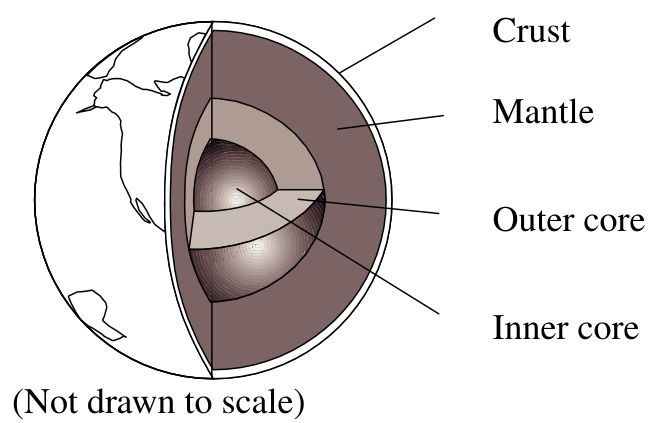
Base your answers to questions 1 and 2 on the diagram below, which shows a model of Earth’s interior.

Question illustration

What information did scientists study in order to develop this model?
  1. recordings of earthquake wave
  2. locations of recent volcanic activity
  3. core samples from seafloor drillings
  4. fossils found in rocks

Question 2

Base your answers to questions 1 and 2 on the diagram below, which shows a model of Earth’s interior.

Question illustration

Many scientists believe that crustal plate movement occurs because of convection cells contained in Earth’s
  1. Crust
  2. outer core
  3. mantle
  4. inner core

Question 3

What are needed for plants to carry out photosynthesis?

I. Sunlight

II. Water

III. Chlorophyll

IV. Oxygen

V. Carbon dioxide
  1. I, II and III
  2. I, III and II
  3. I, II, III and V
  4. I, II, III and IV

Question 4

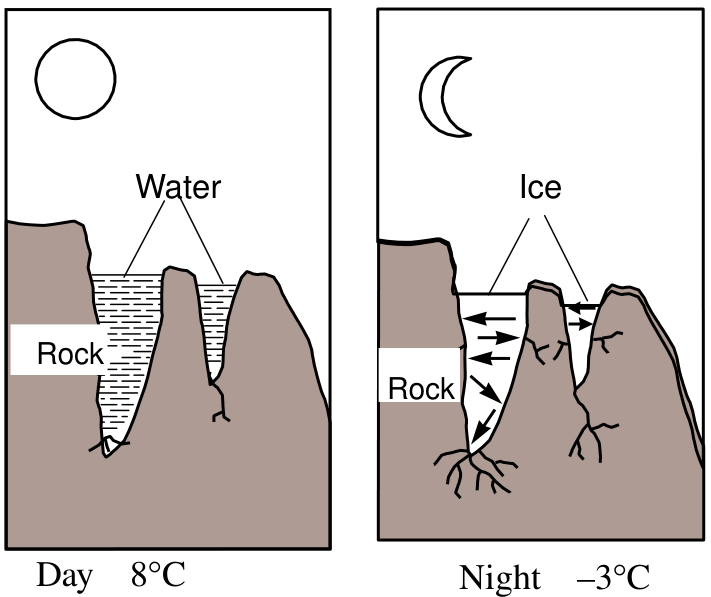
The diagrams below show a natural process that weathers rock.

Question illustration

Which statement best explains why this process results in weathering?
  1. Frozen water acts as a solute.
  2. Water expands when it freezes.
  3. The mass of water increases when it freezes.
  4. Frozen water dissolves most types of rocks.

Question 5

Use the food web below to answer the Questions 5, 6 and 7.

Question illustration

If the population of ventures dramatically decreased, the population of snakes will _______.
  1. increase
  2. decrease
  3. decrease then increase
  4. remain the same

Question 6

Use the food web below to answer the Questions 5, 6 and 7.

Question illustration

Which organisms in the food web are both prey and predators?
  1. Chicken and grasshopper
  2. Chicken and snake
  3. Grasshopper and Mynah
  4. Mynah and snake

Question 7

Use the food web below to answer the Questions 5, 6 and 7.

Question illustration

A sudden decrease in the population of mynah could be due to _________.

I. increase in the population of chicken.

II. decrease in the population of grasshopper.

III. increase in the snake population.

IV. decrease in the population of vulture.

A. I, II and III

B. I, II and IV

C. I, III and IV

D. II, III, and IV

Question 8

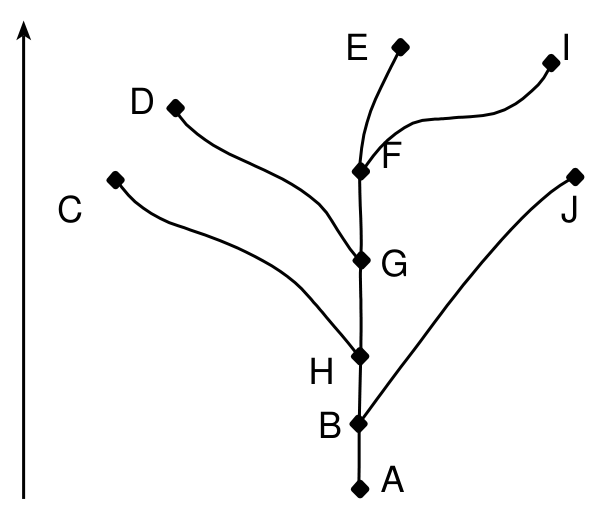
The evolutionary pathways of ten different species are represented in the diagram below.

Question illustration

Which two species are the most closely related?
  1. C and D
  2. E and I
  3. G and J
  4. A and F

Question 9

An insect rests on some green leaves. The size, shape, and green color of this insect are adaptations that would most likely help the insect to
  1. compete successfully with all birds
  2. make its own food
  3. hide from predators
  4. avoid toxic waste materials

Question 10

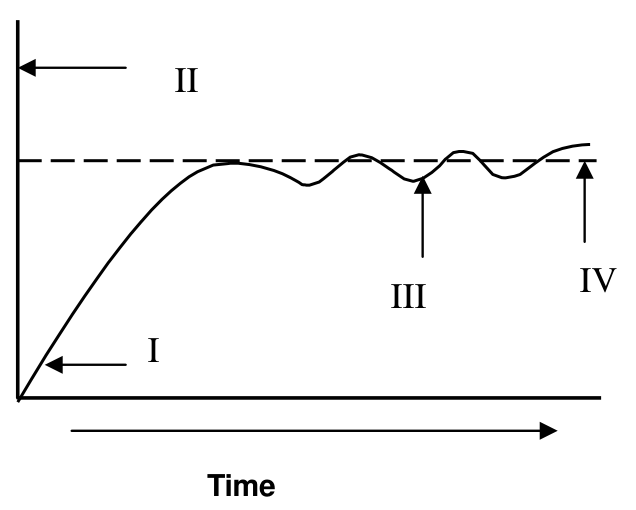
The growth of a population is shown in the graph below.

Question illustration

Which number indicates the carrying capacity of the environment for this population?
  1. I
  2. II
  3. III
  4. IV

Question 11

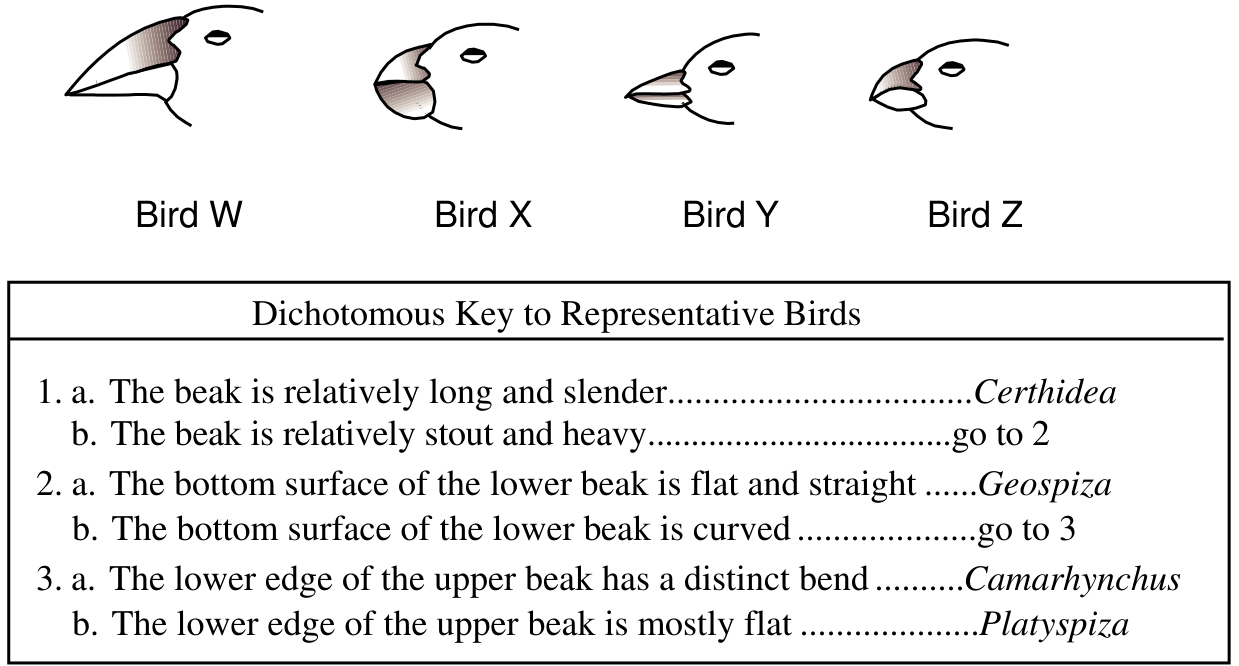
The dichotomous key shown below can be used to identify birds W, X, Y, and Z.

Question illustration

Bird X is most likely
  1. Certhidea
  2. Geospiza
  3. Camarhynchus
  4. Platyspiza

Question 12

The ozone layer of Earth’s atmosphere helps to filter ultraviolet radiation. As the ozone layer is depleted, more ultraviolet radiation reaches Earth’s surface. This increase in ultraviolet radiation may be harmful because it can directly cause
  1. photosynthesis to stop in all marine organisms
  2. abnormal migration patterns in waterfowl
  3. mutations in the DNA of organisms
  4. sterility in most species of mammals and birds

Question 13

In an ecosystem, nutrients would be recycled if they were transferred directly from herbivores to carnivores to
  1. hosts
  2. decomposers
  3. prey
  4. autotrophs

Question 14

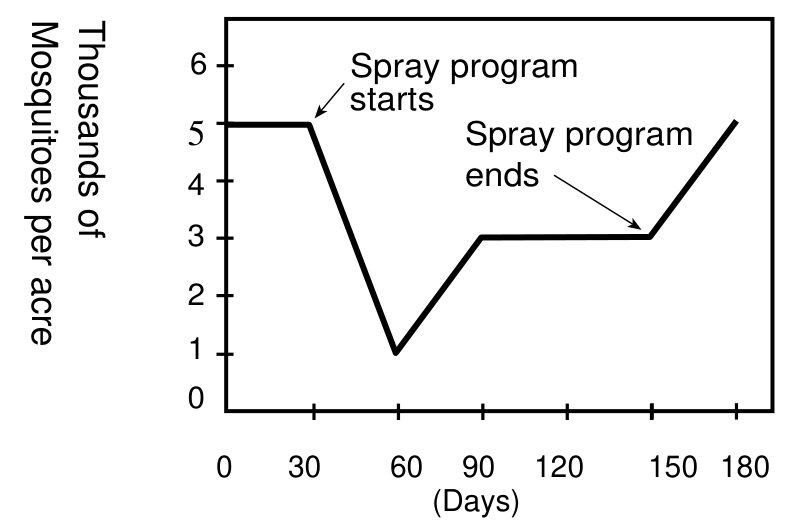
Base your answers to questions 40 and 41 on the information below and on your knowledge of biology. A small village was heavily infested with mosquitoes. The village was sprayed weekly with an insecticide for a period of several months. The results of daily counts of the mosquito population are shown in the graph below.

*Editorial note: the source labels this passage 40 and 41; it applies to questions 14 and 15 here.*

Question illustration

Which statement best explains why some mosquitoes survived after the first spraying?
  1. Some mosquitoes were adapted to the climatic change that occurred over the several-month period of spraying.
  2. All of the mosquitoes contained DNA unique to the species.
  3. The spraying of the insecticide represented a change in the environment to which all adult mosquitoes were adapted.
  4. A natural variation existed within the mosquito population.

Question 15

Base your answers to questions 40 and 41 on the information below and on your knowledge of biology. A small village was heavily infested with mosquitoes. The village was sprayed weekly with an insecticide for a period of several months. The results of daily counts of the mosquito population are shown in the graph below.

*Editorial note: the source labels this passage 40 and 41; it applies to questions 14 and 15 here.*

Question illustration

Which statement best explains the decreased effectiveness of the insecticide?
  1. The insecticide caused mutations that resulted in immunity in the mosquito.
  2. Mosquitoes resistant to the insecticide lived and produced offspring.
  3. The insecticide reacted chemically with the DNA of the mosquitoes and was destroyed.
  4. All of the mosquitoes produced antibodies that activated the insecticide.

Question 16

Two mirrors are at right angles to one another. If an object is placed near the mirrors, what is the largest number of images that would be seen in the mirrors?
  1. 2
  2. 3
  3. 4
  4. 5

Question 17

A fish is 80 cm below the surface of a pond. What is the apparent depth, when viewed from a position almost directly above the fish?
  1. less than 80 cm
  2. more than 80 cm
  3. just equal to 80 cm
  4. can’t see any fish

Question 18

The internal energy of air can be increased by,
  1. lifting it.
  2. allow heat to flow out of it.
  3. compressing it
  4. allow to expand

Question 19

Which one of the following situations, the dominant method of heat transfer is different from the others?
  1. A piece of chocolate melting in your mouth.
  2. Touching the door to see if there is fire on the other side of the door.
  3. Measure the temperature of the body with a thermometer.
  4. Clothes being dried by hanging them well.

Question 20

Of the followings, which one is not so important for the greenhouse effect?

A. water vapor in the earth’s atmosphere.

B. CO2 in the earth’s atmosphere.

C. the metal part of a car.

D. the glass part of a car.