Source instructions: Part II consists of 10 open-ended questions. Write answers in the test booklet. Each correct answer is worth 4 points. Time limit: 60 minutes.
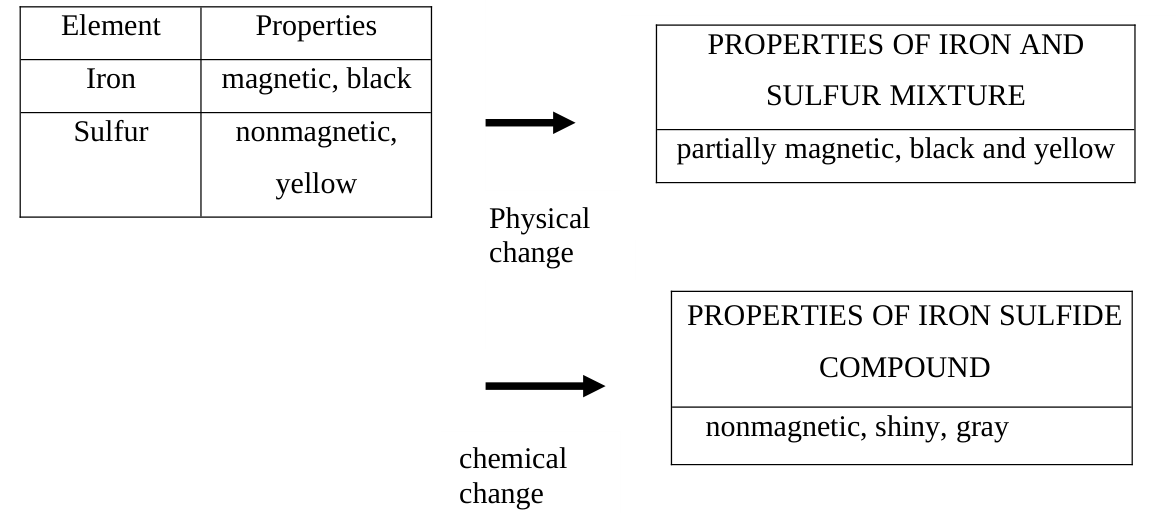
The charts show the elements iron and sulfur and their properties. The arrows indicate that they may form either an iron-and-sulfur mixture or the compound iron sulfide.
| Element | Properties |
|---|---|
| Iron | magnetic, black |
| Sulfur | nonmagnetic, yellow |
Physical change → mixture: partially magnetic, black and yellow. Chemical change → iron sulfide compound: nonmagnetic, shiny, gray.
How could a student use a magnet to indicate that combining iron and sulfur to produce the mixture of iron and sulfur is a physical change?
The charts show the elements iron and sulfur and their properties. The arrows indicate that they may form either an iron-and-sulfur mixture or the compound iron sulfide.
| Element | Properties |
|---|---|
| Iron | magnetic, black |
| Sulfur | nonmagnetic, yellow |
Physical change → mixture: partially magnetic, black and yellow. Chemical change → iron sulfide compound: nonmagnetic, shiny, gray.
What evidence indicates that a chemical change took place when the iron and sulfur combined to form iron sulfide?
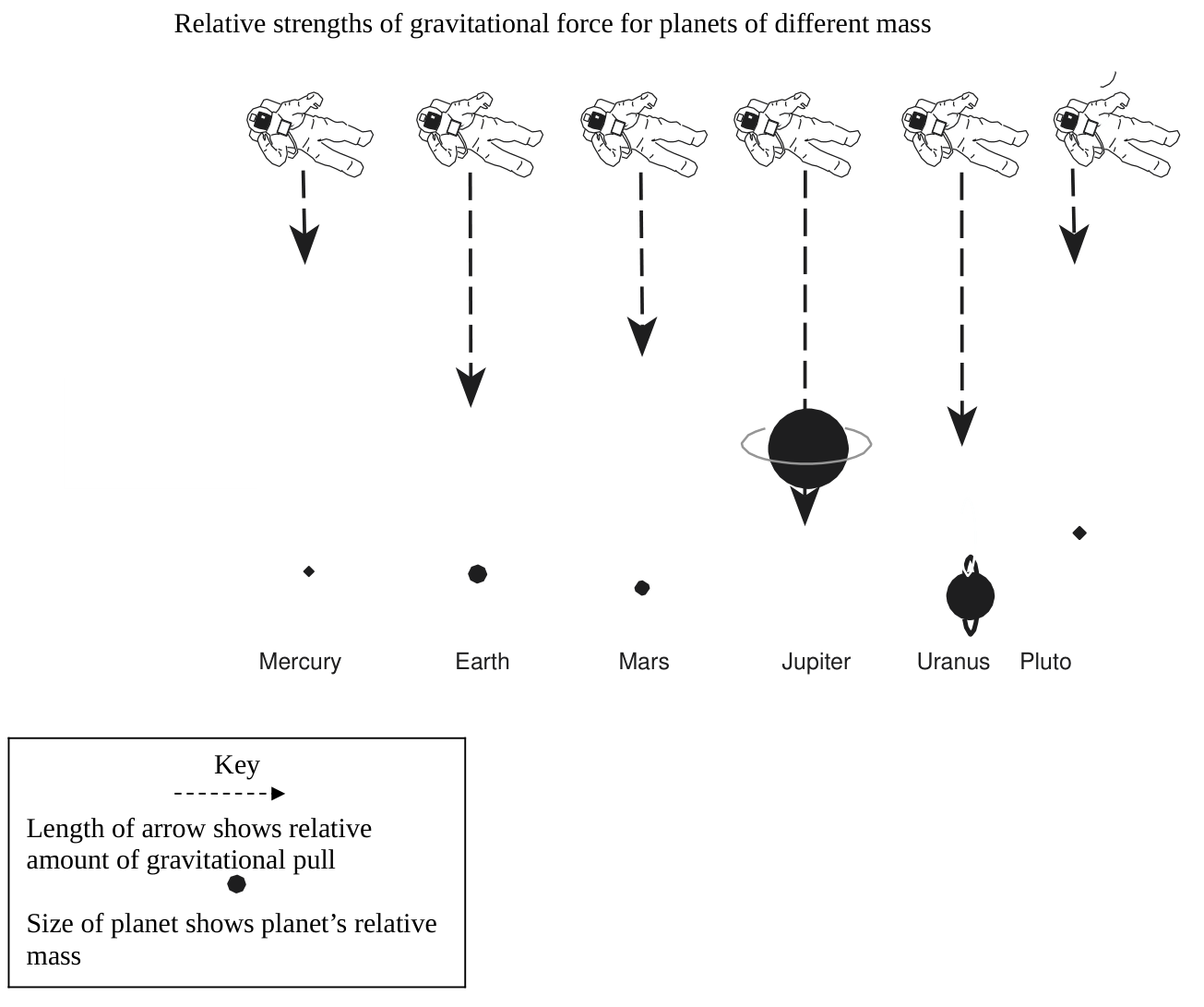
The diagram shows the relative strengths of gravitational force for planets of different masses. The size of each planet represents its relative mass. The arrow length indicates the relative amount of gravitational pull that each planet would exert on an astronaut in space.
The diagram shows the relative strengths of gravitational force for planets of different masses. The size of each planet represents its relative mass. The arrow length indicates the relative amount of gravitational pull that each planet would exert on an astronaut in space.