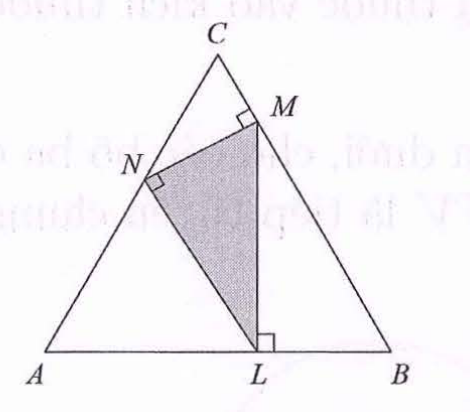
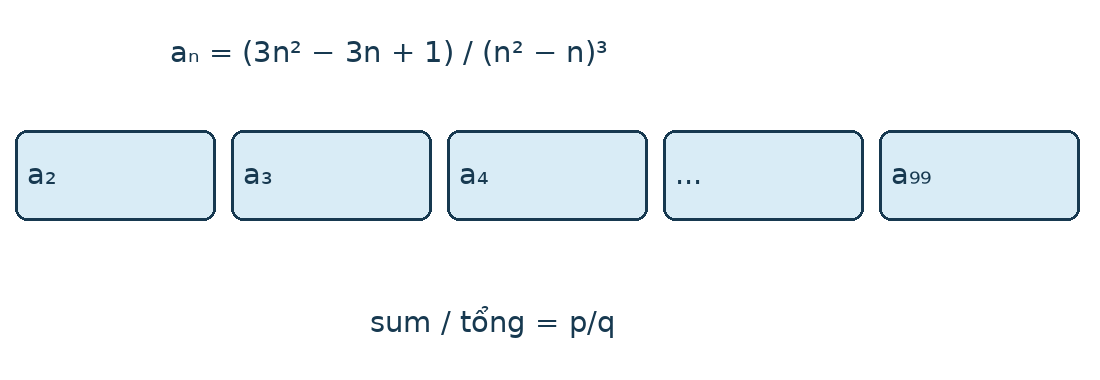
In the diagram, N, M, L lie on the sides of equilateral triangle ABC, with NM perpendicular to BC, ML perpendicular to AB, and LN perpendicular to NM. If ABC has area 100, what is the area of LMN?
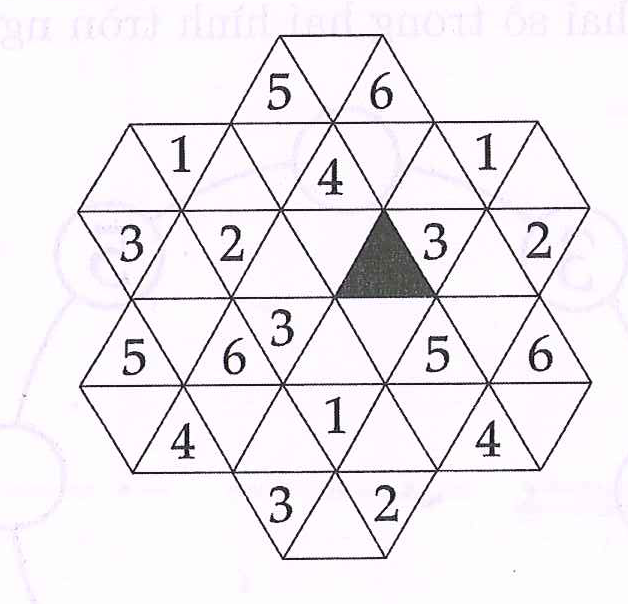
Julia wants to fill every empty unit triangle of the pictured grid with an integer from 1 to 6 so that every hexagon made of six unit triangles contains six different numbers. Which number can occupy the grey cell?
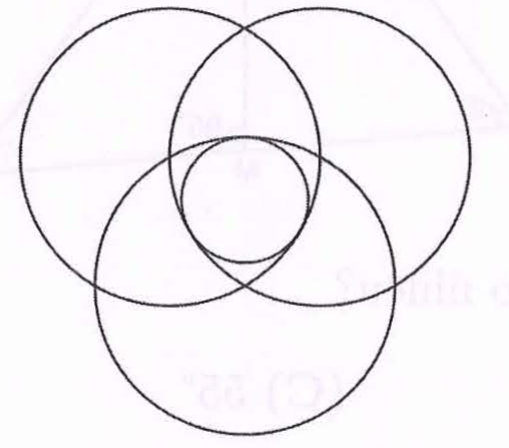
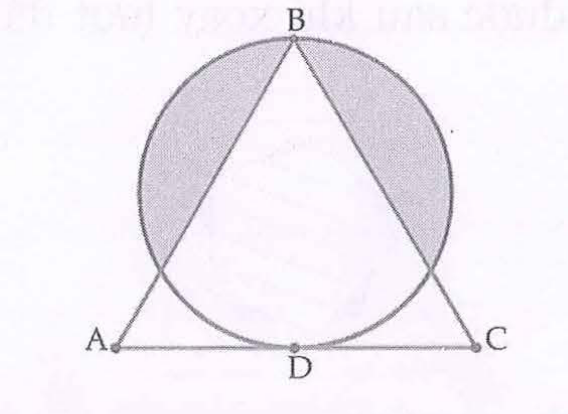
Three circles of radius 1 are drawn so that each passes through the other two centres. A smaller circle is internally tangent to all three as shown. What is its radius?
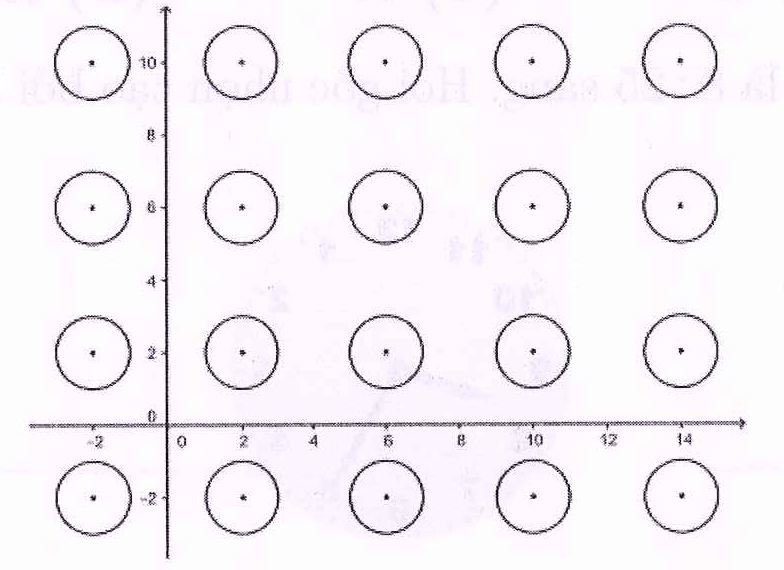
An infinite grid of radius 1 circles is drawn in the coordinate plane as shown. One circle has centre (2,2), and neighbouring centres are 4 units apart. If (x, y) is any circle centre, which offered value can x+y have?
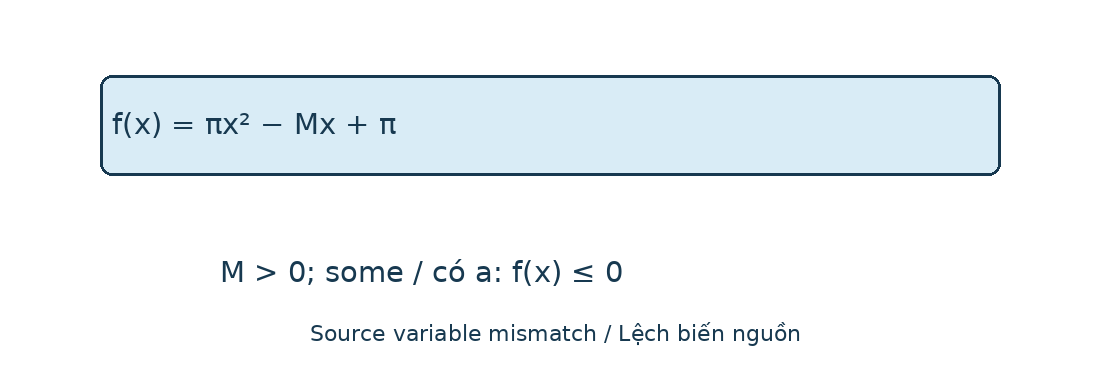
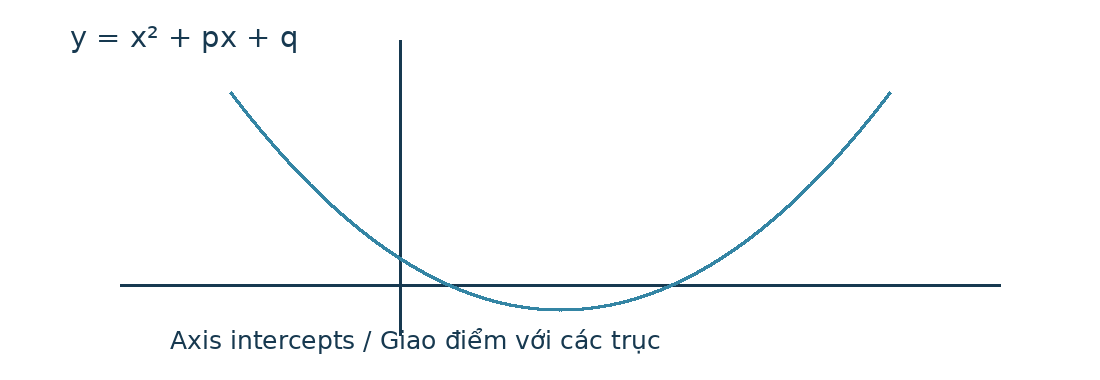
The graph of f (x)=x²+px+q meets the two coordinate axes at three distinct points. The circle through those points meets the graph at a fourth point. What are that point’s coordinates?
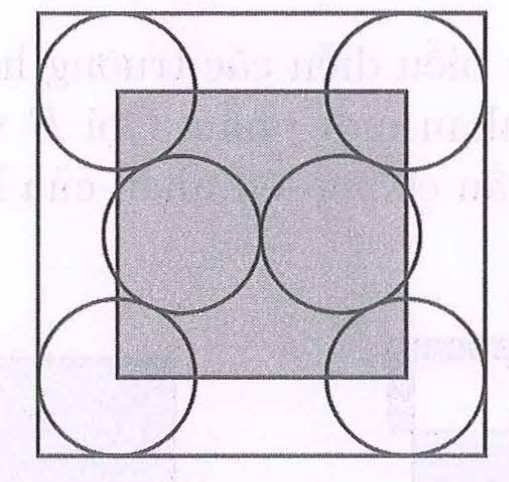
The six circles in the large square have radius 1. Two circles each touch three others; each of the remaining four touches one other circle, and their centres form a square. What is the area of the grey square?
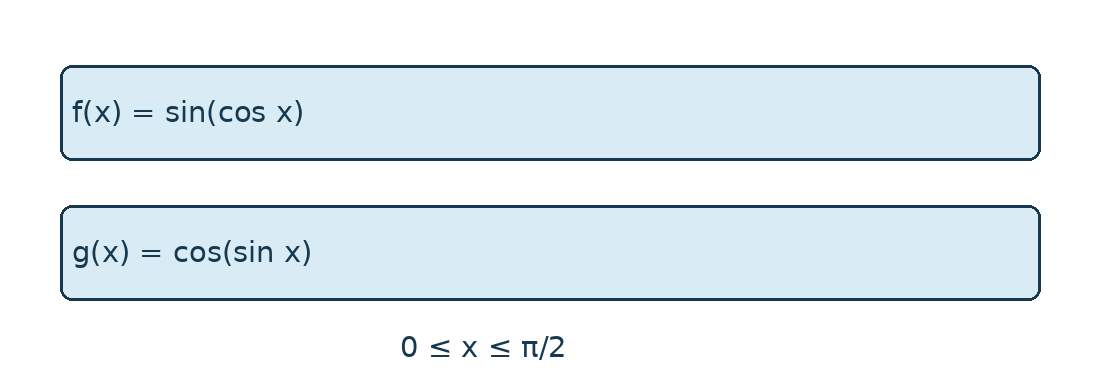
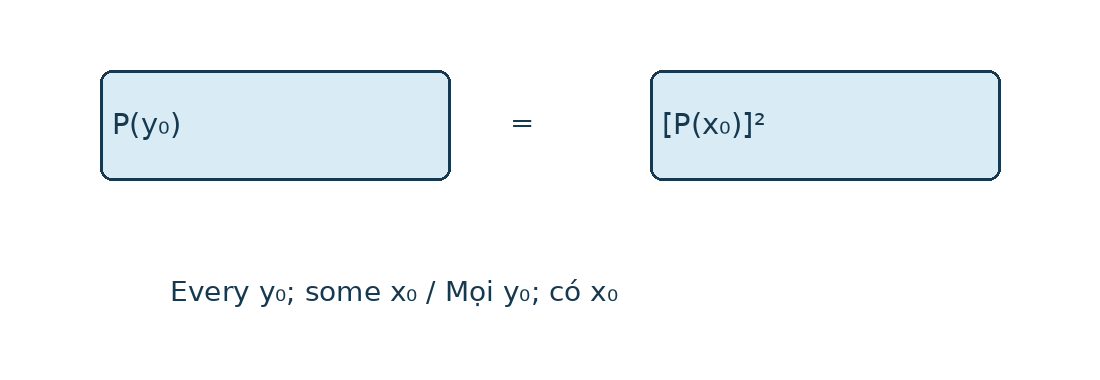
A polynomial P (x)=ax²+bx+c has the following property: for every real y₀ there is a real x₀ such that[P (x₀)]²=P (y₀). Which set below can be its range?
Editorial note: More than one printed assertion is true; select all correct choices.
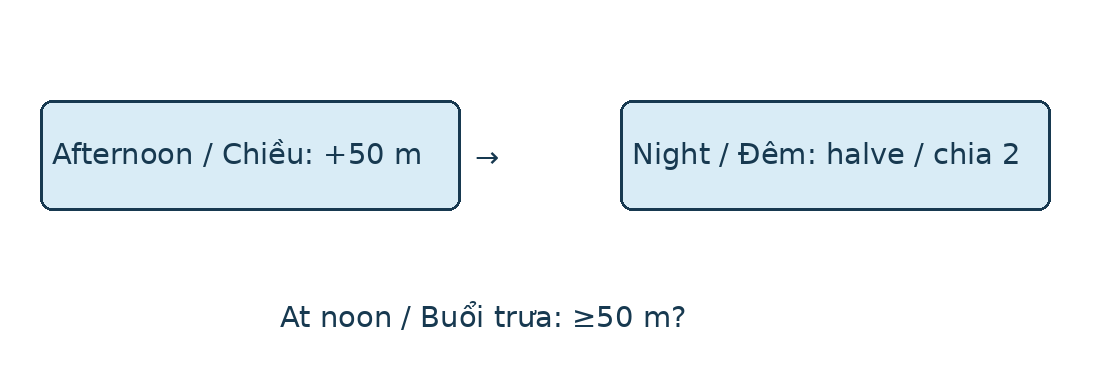
Starting on January 1, Penelope weaves 50 m of cloth every afternoon, but each night she destroys half of the cloth she has woven. At noon on which day will she have at least 50 m of cloth.
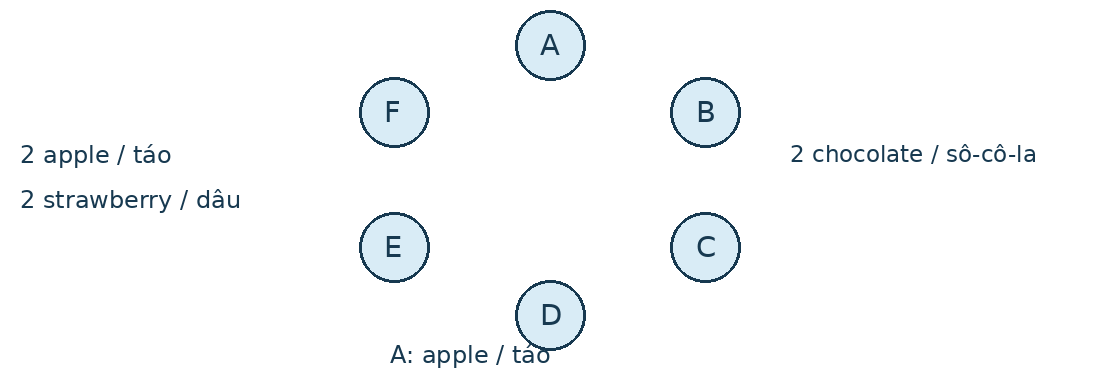
Six friends A, B, C, D, E, F sit around a round table and each receives a cake. There are two apple, two strawberry and two chocolate cakes. A has received apple. In how many ways can the other five cakes be distributed so that neighbours never receive the same flavour? Cakes of one flavour are identical.
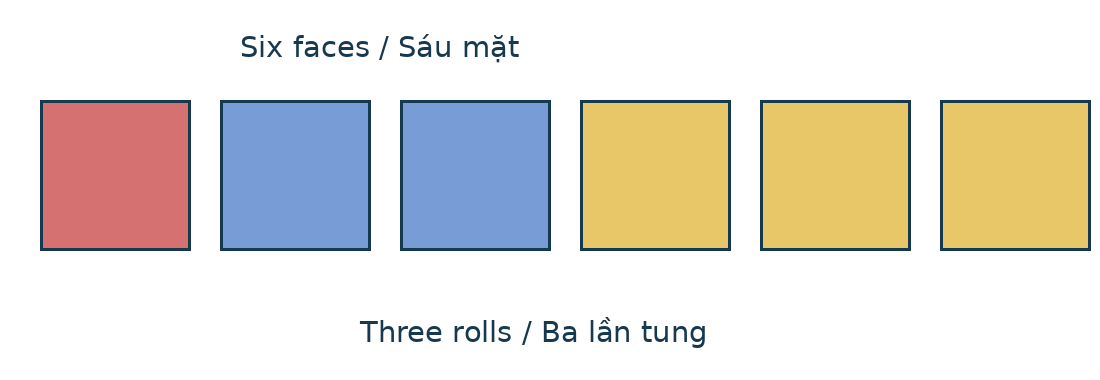
A die has one red face, two blue faces and three yellow faces. It is rolled three consecutive times. Let P (e) be the probability of three equal colours and P (d) the probability of three pairwise different colours. Which assertion is true?