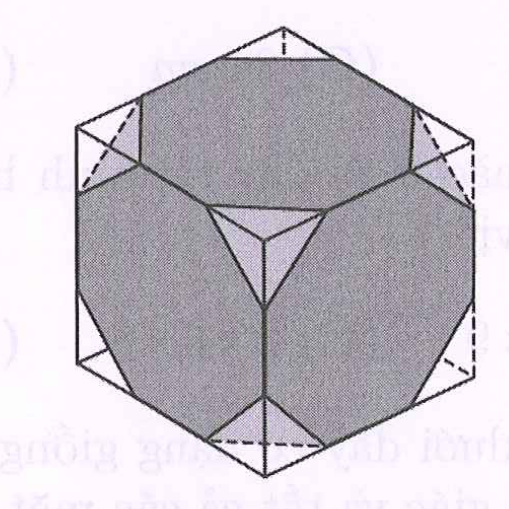
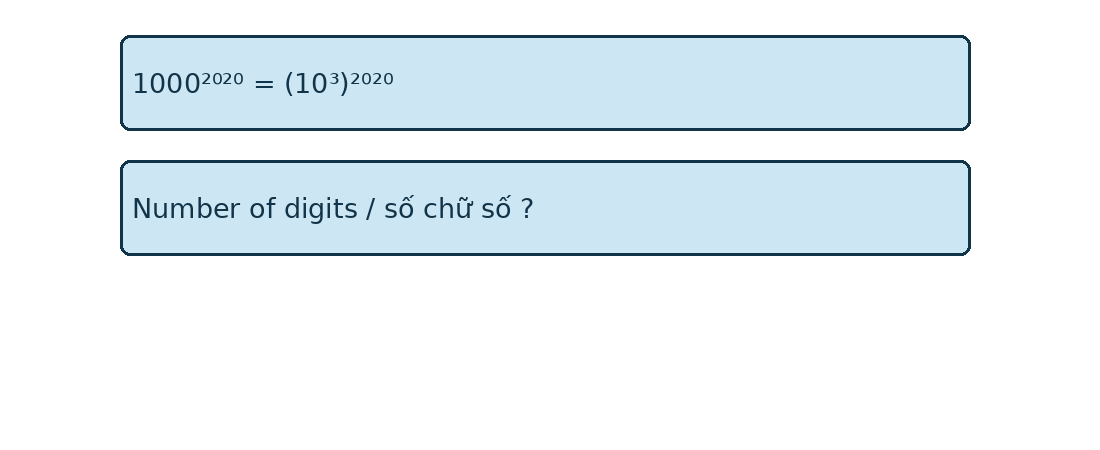
From a cardboard cube of side 3 cm, eight tetrahedra are cut off at the corners, meeting each edge 1 cm from its vertex, as shown. What is the ratio of the remaining volume to the original volume?
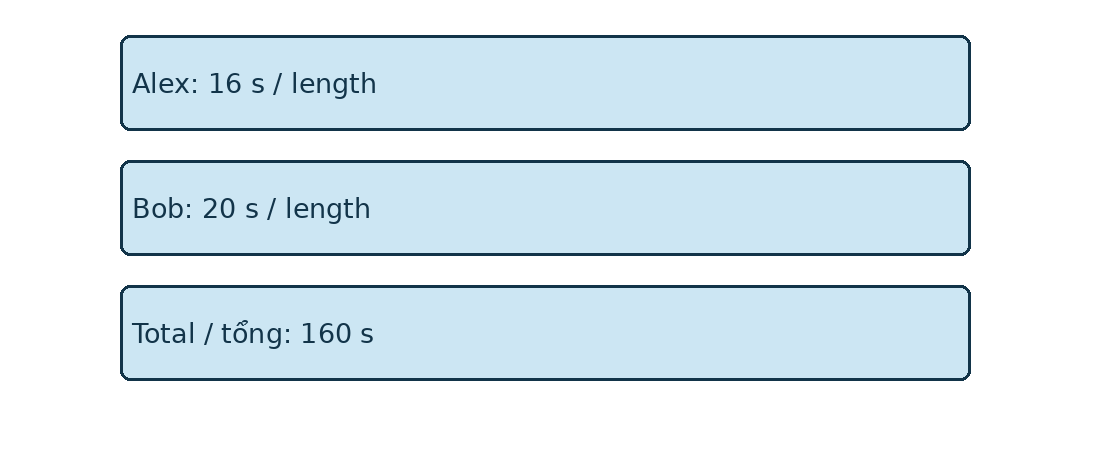
Alex and Bob practise swimming for a school competition. They take 16 seconds and 20 seconds, respectively, to swim one length. Starting together at the same end, they swim continuously for 160 seconds. For how many seconds in total do they swim in the same direction?
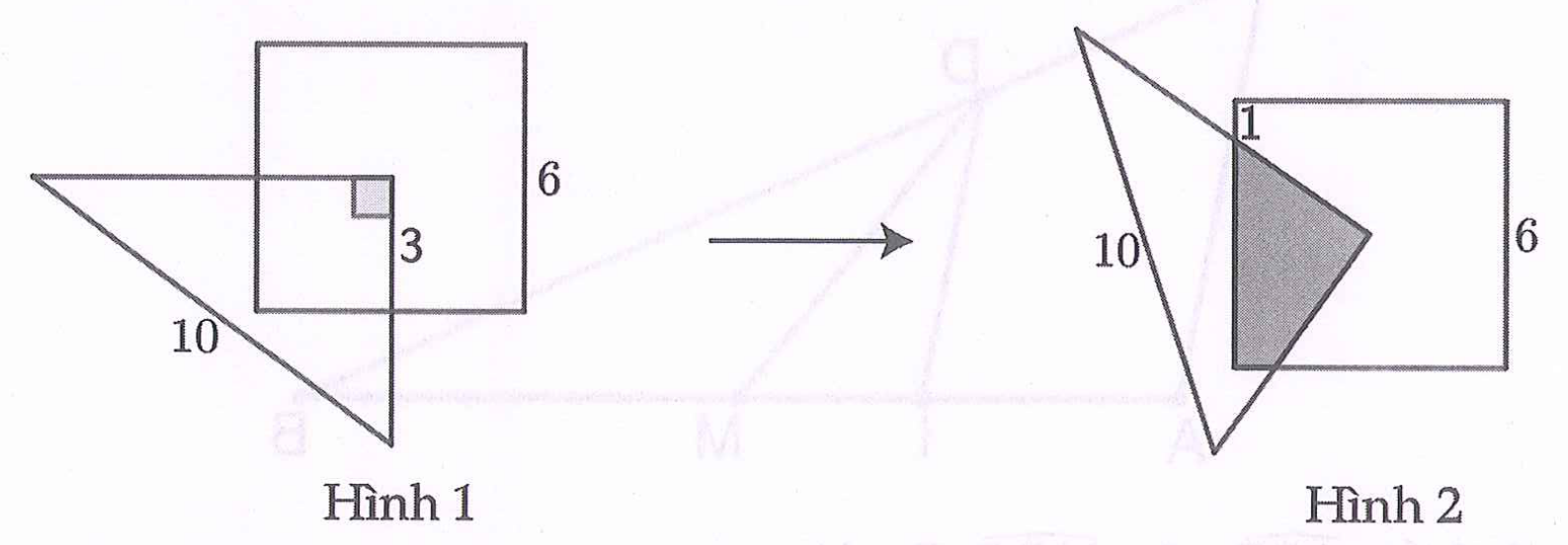
A right triangle with sides 6 cm, 8 cm and 10 cm has its right-angle vertex at the centre of a square of side 6 cm, as in Figure 1. The triangle is rotated about that vertex to obtain Figure 2. What is the grey area in Figure 2, in square centimetres?
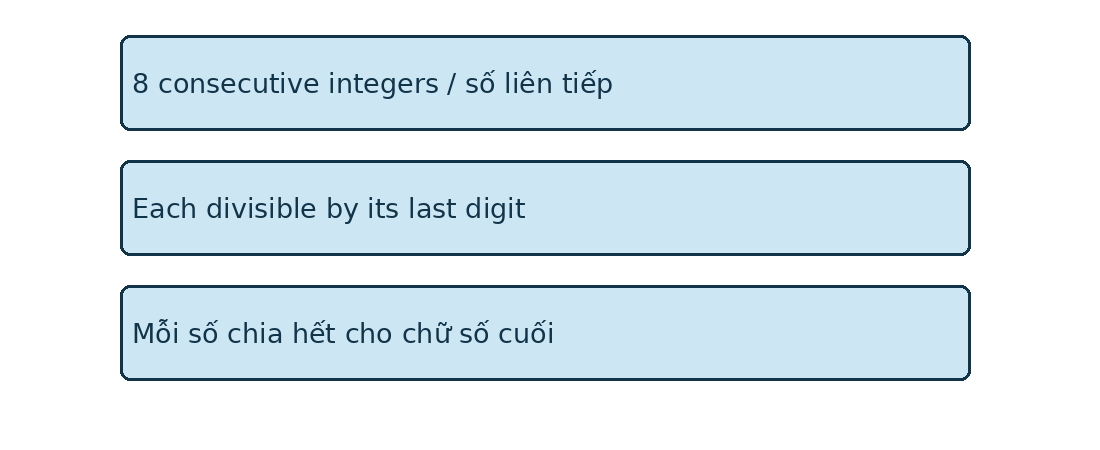
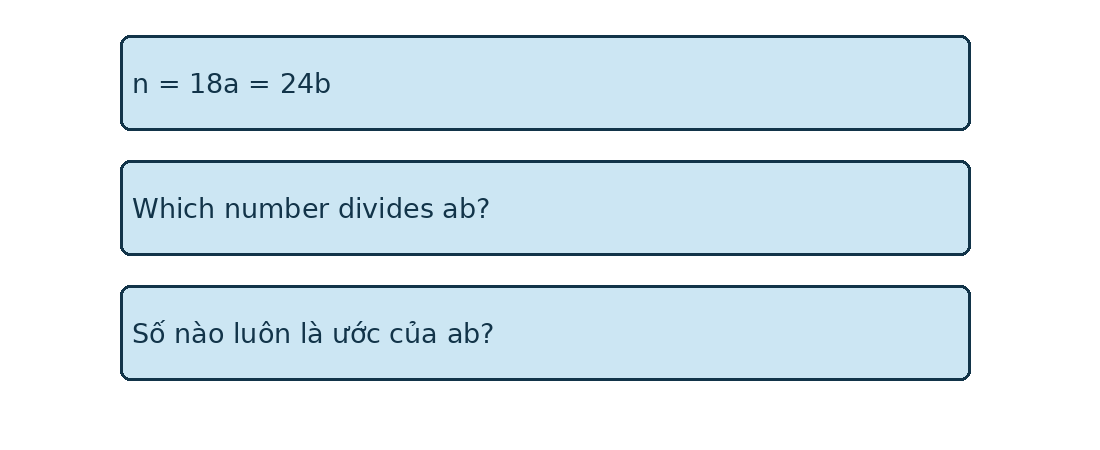
Eight consecutive three-digit positive integers are each divisible by their own last digit. Let s be the digit sum of the smallest of these integers. What is the least possible value of s?
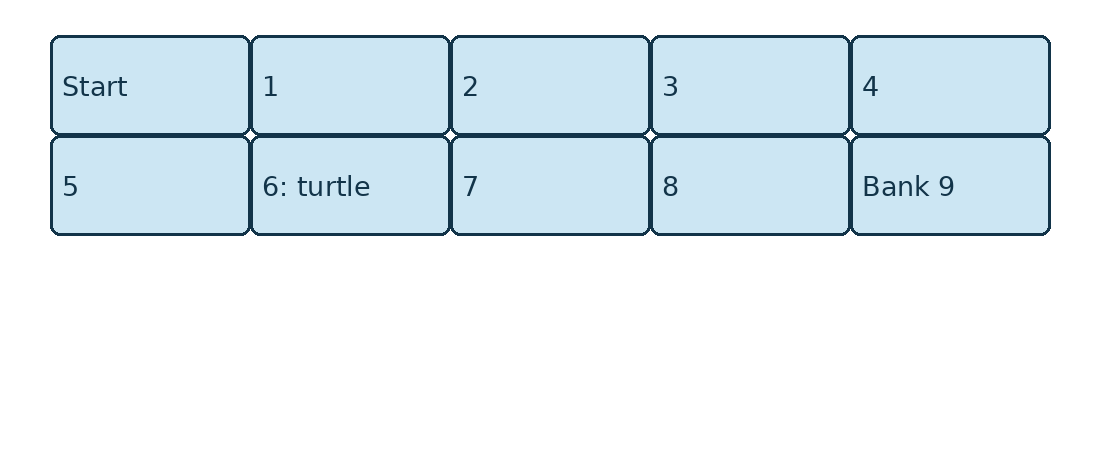
Maria must cross a stream using eight stepping stones. Each jump moves forward by one or two stones. She never goes backwards and does not land on the sixth stone, where a turtle is sitting. How many different jump sequences can she use to cross?
Editorial clarification: the worked solution uses banks at positions 0 and 9 and stones at 1–8, with jumps of one or two positions.
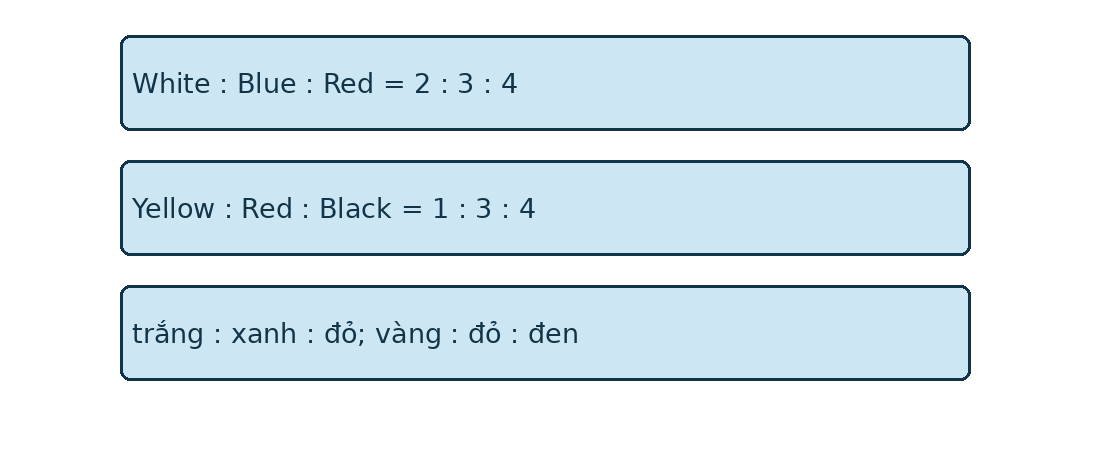
In a city, the numbers of white, blue and red cars are in the ratio 2:3:4, while the numbers of yellow, red and black cars are in the ratio 1:3:4. What is the ratio of white cars to yellow cars?
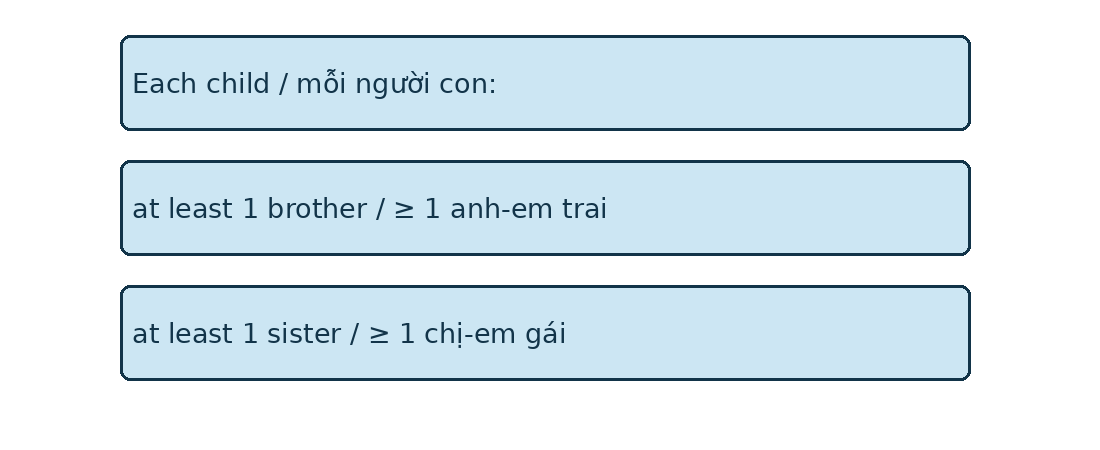
Speaking about his children, Mr Brown says: “Every one of my children has at least one brother and at least one sister.” What is the smallest possible number of children he has?
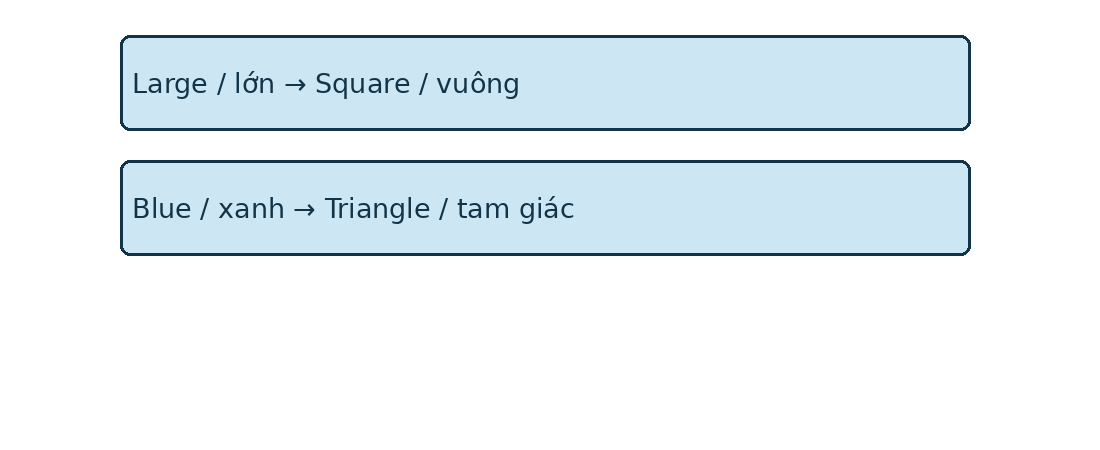
Some squares and triangles lie on a table. Each is blue or red, and small or large. Every large shape is a square; every blue shape is a triangle. How many statements below must be true? (i) Every red shape is a square. (ii) Every square is large. (iii) Every small shape is blue. (iv) Every blue shape is small. (v) Not every blue shape is a triangle.
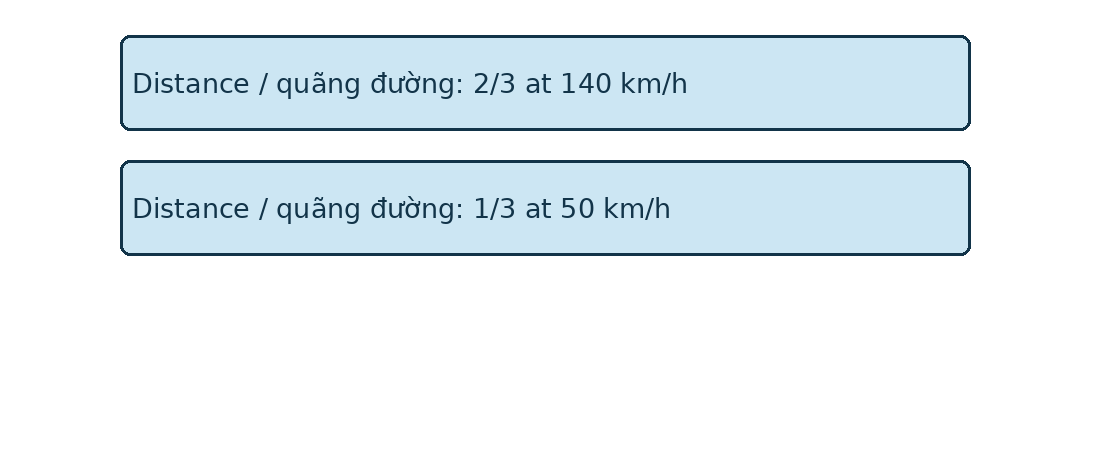
A train travels from city A to city B. It runs at 140 km/h for the first two thirds of the distance, then at 50 km/h for the remaining third. Ignore acceleration and deceleration. What is its average speed over the whole journey?
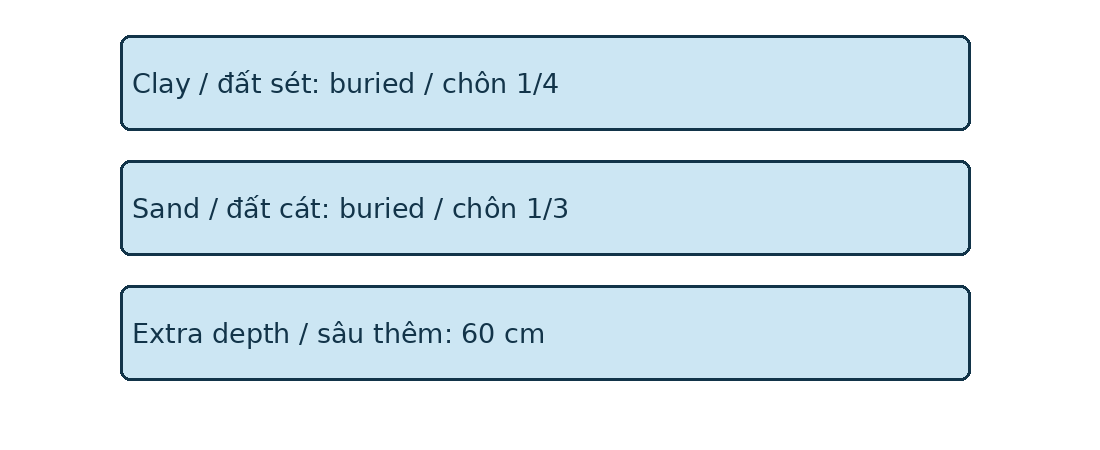
Workers use the following rule for a flagpole: one quarter of its length must be underground in clay, and one third in sand. A flagpole is moved from clay to sand, where it must be inserted 60 cm deeper. How many centimetres of the pole are now above ground?
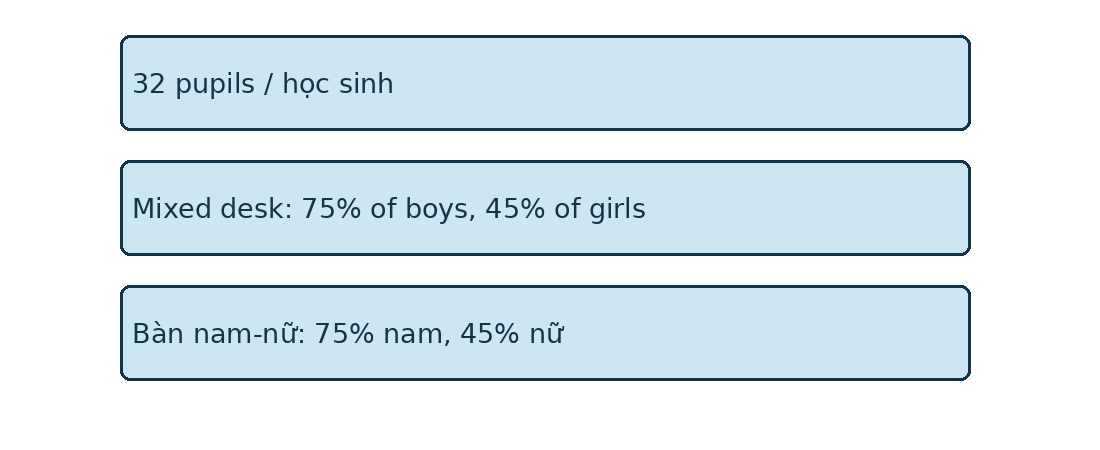
A class of 32 pupils sits at desks with at most two pupils per desk. Of the boys, 75% share with a girl; of the girls, 45% share with a boy. What is the largest possible number of desks occupied by two girls?
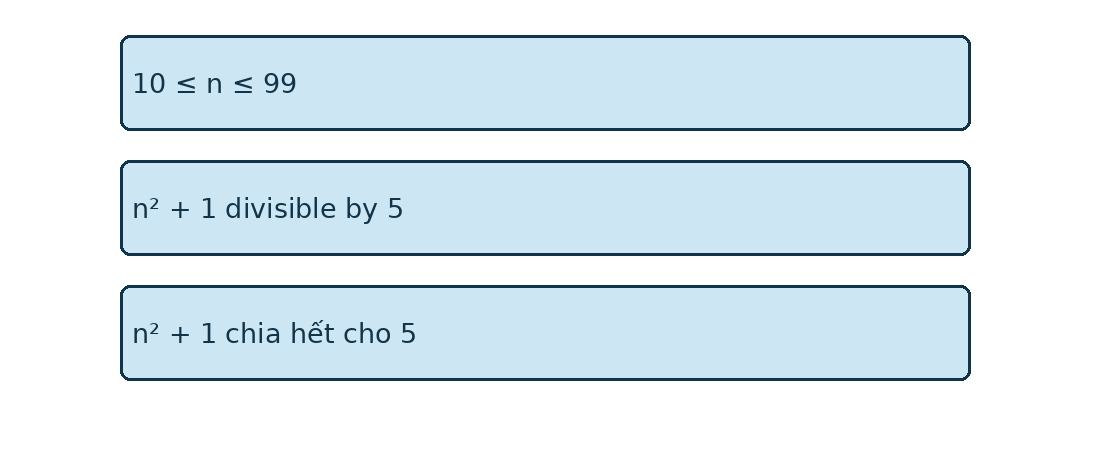
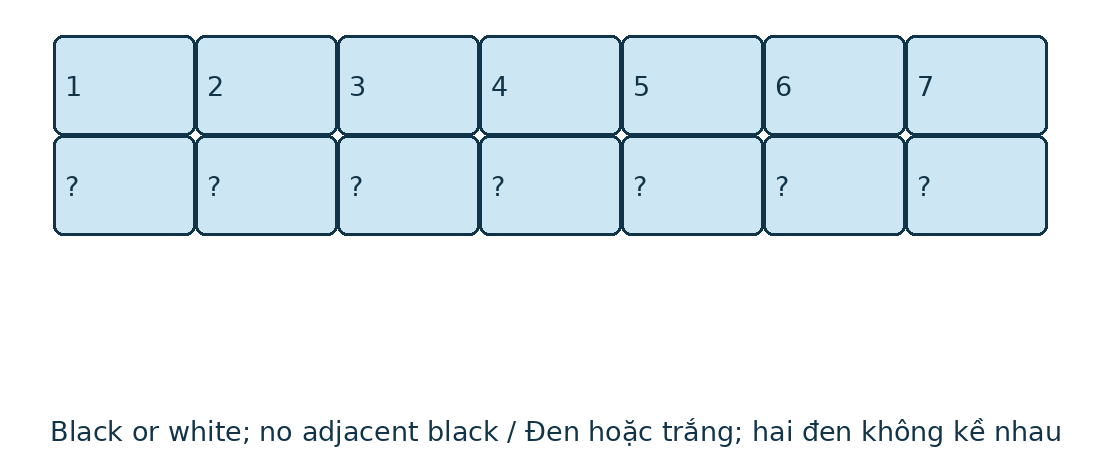
Sami has many black and white beads, with beads of the same colour identical. How many ways can he arrange any seven beads in a row so that no two black beads are adjacent?
Original options (preserved):
A. 7
B. 14
C. 24
D. 33
E. 36
Editorial note: retain the original wording and options, but explain the count and any missing condition rather than forcing a listed key. The rubric is an editorial proposal.
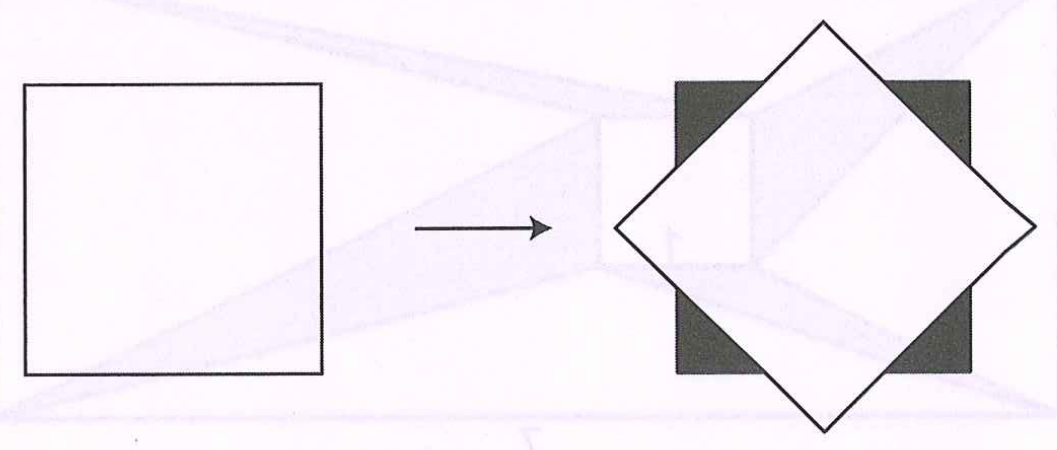
Two square pieces of card have the same size, one white and one black. Alex places the white card on the black card and rotates it through 45°, exposing four black triangles as shown. Their total area is 4 cm². What is the side length of each square, in centimetres?