Skip to content / Đến nội dung
ThichHocToan.com

IKMC 2027 - Grades 3-4 - Self-study SET 9 - Thematic Batch 3

Question 1

The numbers 2, 3, 5, 6 and 7 are written in the empty boxes so that the horizontal sum equals the vertical sum. Which number can occupy the centre?

Question illustration
  1. 3
  2. 5
  3. 7
  4. 5 or 7
  5. 3, 5 or 7

Question 2

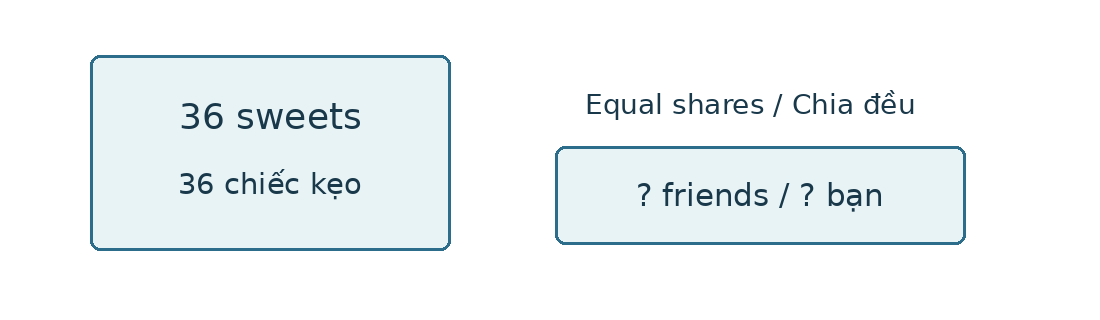
Daniel has a bag of 36 sweets. He shares all of them equally among his friends. Which of these numbers cannot be the number of friends?

Question illustration
  1. 2
  2. 3
  3. 4
  4. 5
  5. 6

Question 3

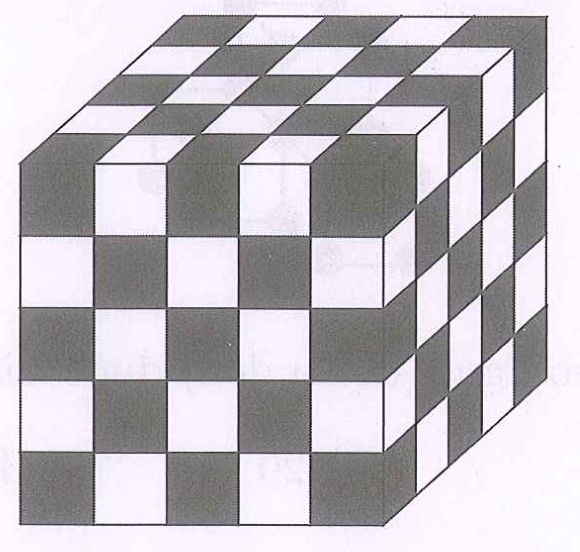
A cube of side 5 is built from black and white unit cubes, as shown. No two cubes sharing a face have the same colour. How many white unit cubes are used?

Question illustration
  1. 62
  2. 63
  3. 64
  4. 65
  5. 68

Question 4

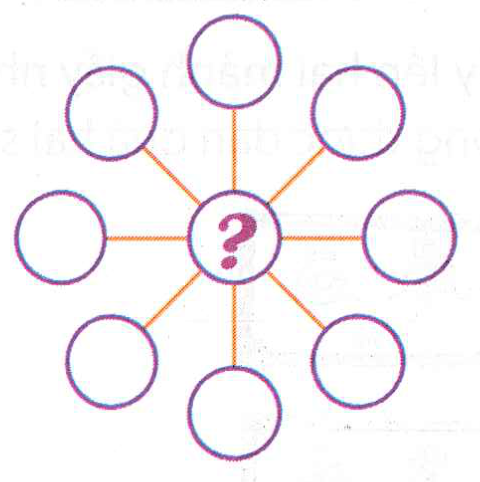
Michael fills the circles, each with one of the numbers 1, 2, 3, ..., 9. Which number can he put in the central circle so that every straight line of circles has the same sum?

Question illustration
  1. 1, 2 or 3
  2. 4 or 7
  3. 1, 4 or 6
  4. 7
  5. 1, 5 or 9

Question 5

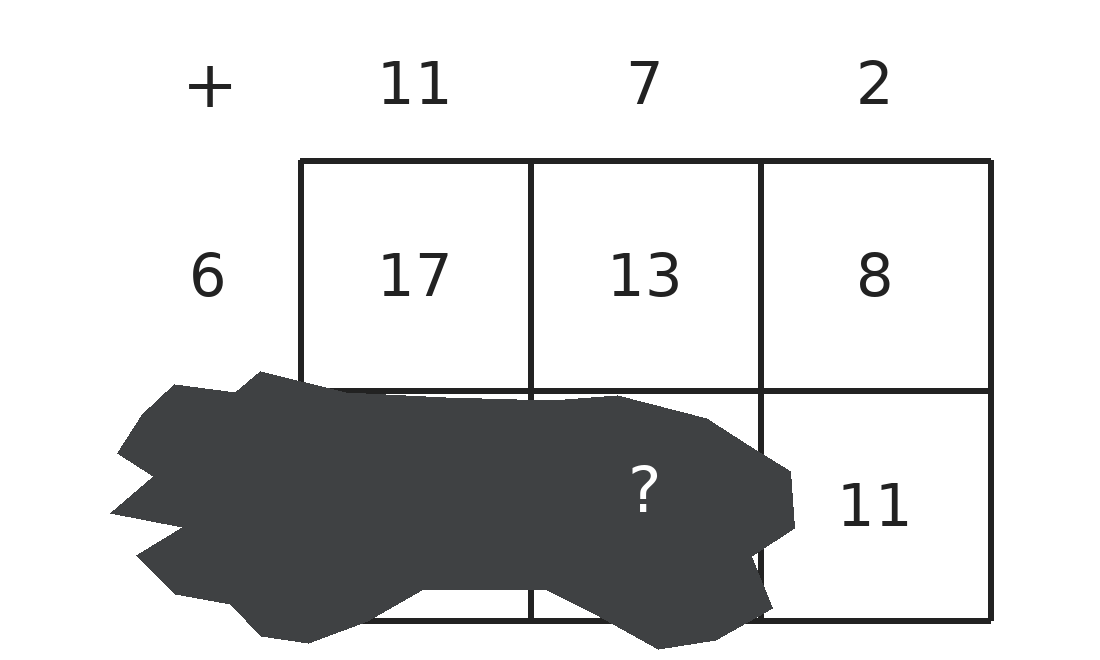
All calculations in this addition table are correct, but an ink blot hides a number. What number belongs in the question-mark cell?

Question illustration
  1. 10
  2. 12
  3. 13
  4. 15
  5. 16

Question 6

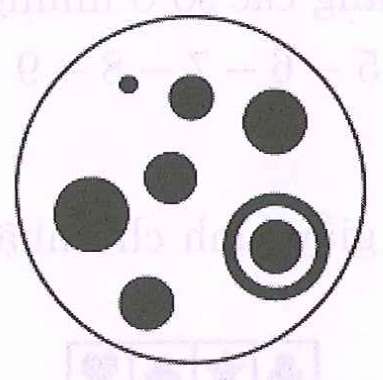
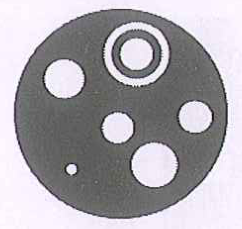
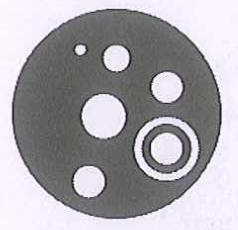
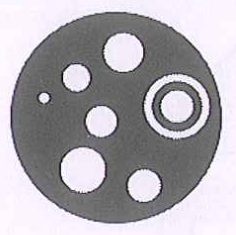
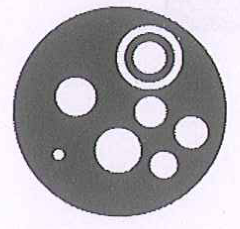
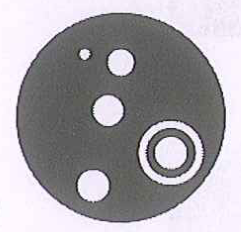
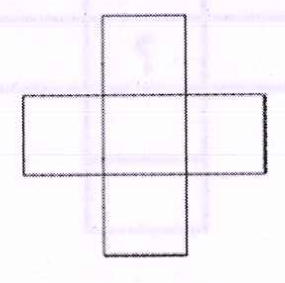
The colours in the picture below are swapped. Which picture do you obtain?

Question illustration
  1. Question illustration
  2. Question illustration
  3. Question illustration
  4. Question illustration
  5. Question illustration

Question 7

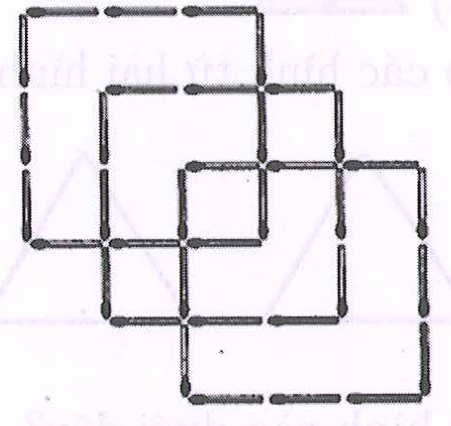
What is the least number of matches that must be moved so that the new figure contains exactly 11 squares?

Editorial task: retain the original question, then explain the missing placement rules and a checked counterexample to the printed minimum of 4. Compare the crossing planar-segment and non-crossing whole-match-grid constructions.

Question illustration

Original source options (retained):
(A) 2; (B) 3; (C) 4; (D) 5; (E) 6

Editorial format note: this essay examines the source wording and its assumptions. The original choices are retained for comparison.

Question 8

Which option consists entirely of figures that have a line of symmetry?
  1. Question illustration
  2. Question illustration
  3. Question illustration
  4. Question illustration
  5. Question illustration

Question 9

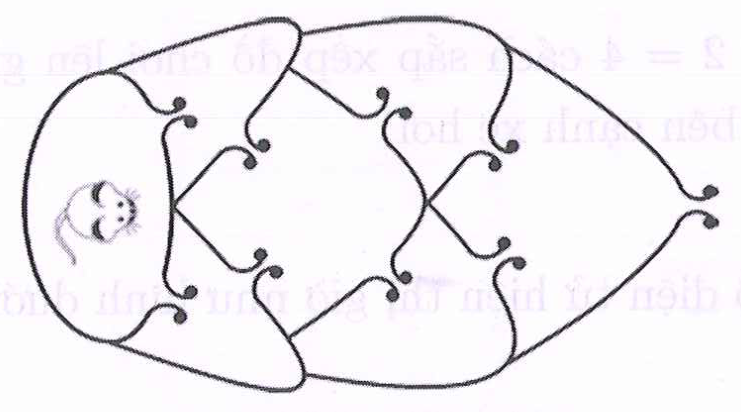
The mouse wants to escape the maze through the doors shown. How many different routes can it take out?

Question illustration
  1. 2
  2. 4
  3. 5
  4. 6
  5. 7

Question 10

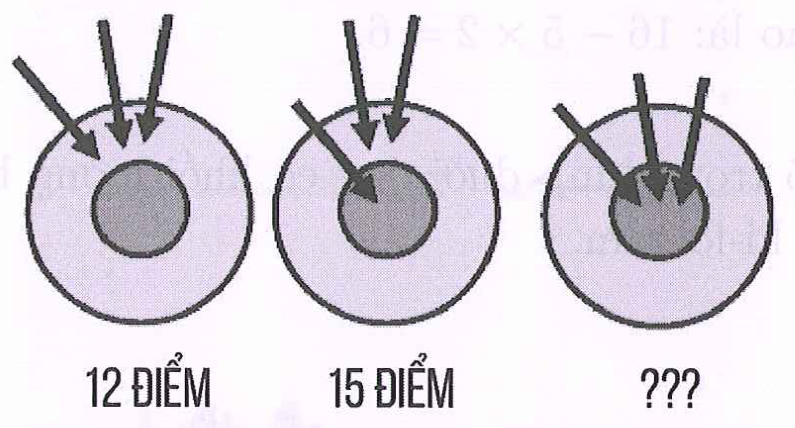
Diana throws three darts in the first round and scores 12 points. In the second round she throws three darts and scores 15 points. How many points does she score in the final round?

Question illustration
  1. 18
  2. 19
  3. 20
  4. 21
  5. 22

Question 11

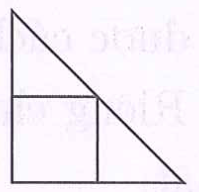
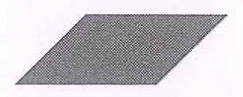
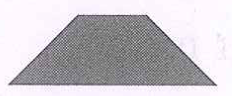
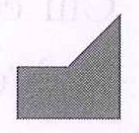
A triangle is cut into three pieces as shown. Which shape cannot be made from those three pieces?

Question illustration
  1. Question illustration
  2. Question illustration
  3. Question illustration
  4. Question illustration
  5. Question illustration

Question 12

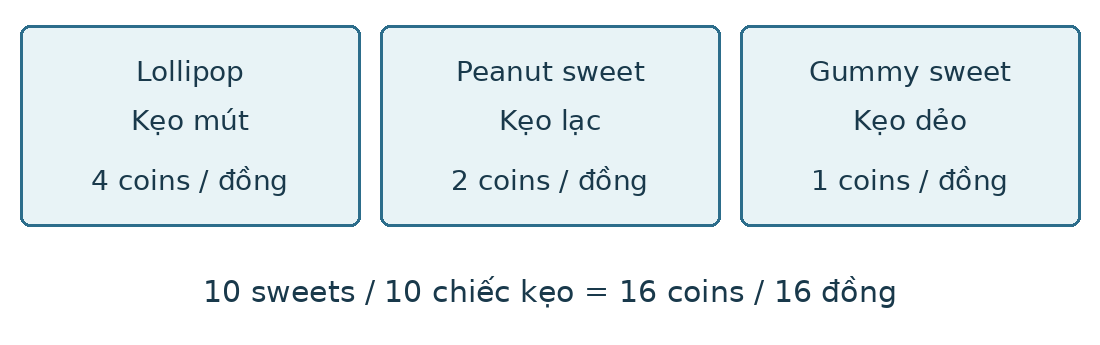
Kangaroo buys three types of sweets: lollipops cost 4 coins each, peanut sweets 2 coins each, and gummy sweets 1 coin each. Kangaroo buys 10 sweets for 16 coins. What is the least number of gummy sweets?

Editorial task: explain the minimum under both readings: at least one sweet of each type, or zero of a type allowed. Check each claimed minimum against the ten sweets and sixteen coins.

Question illustration

Original source options (retained):
(A) 5; (B) 4; (C) 3; (D) 2; (E) 1

Editorial format note: this essay examines the source wording and its assumptions. The original choices are retained for comparison.

Question 13

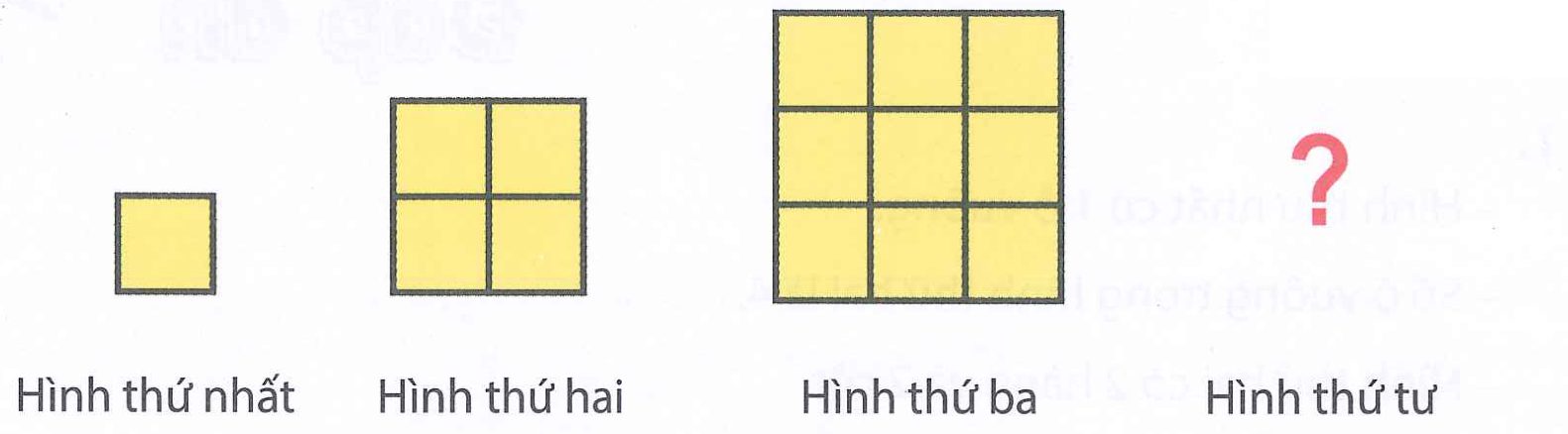
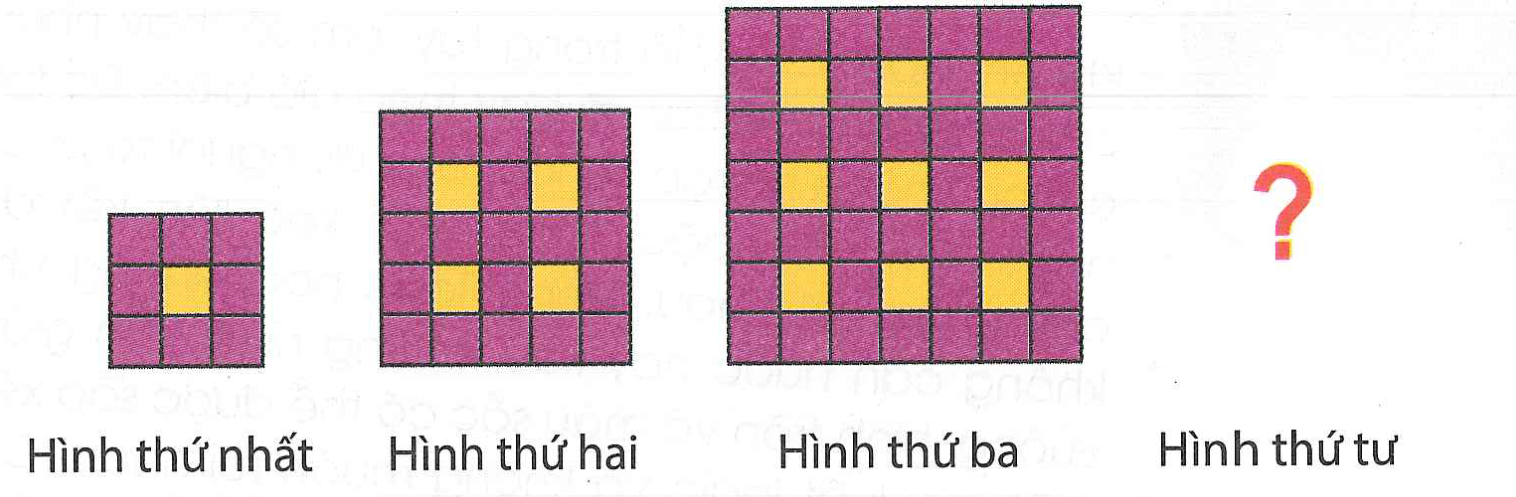
1. Look at the first sequence and answer:
– How many unit squares are in the first figure?
– How many are in the second figure?
– How many rows and columns does the second figure have?
– How is the number of squares related to the rows and columns?
– Use this relationship to find the number in the third figure, then predict the fourth.
2. The second sequence contains purple and yellow squares.
– How many rows and columns are in each of the first three figures? What is their pattern? Find the rows, columns and total squares in the fourth figure.
– How do the yellow-square counts in the first three figures compare with the counts in part 1?
– How many yellow squares are in the fourth figure?
– How many purple squares are in the fourth figure?

Question illustration

Question illustration

Question 14

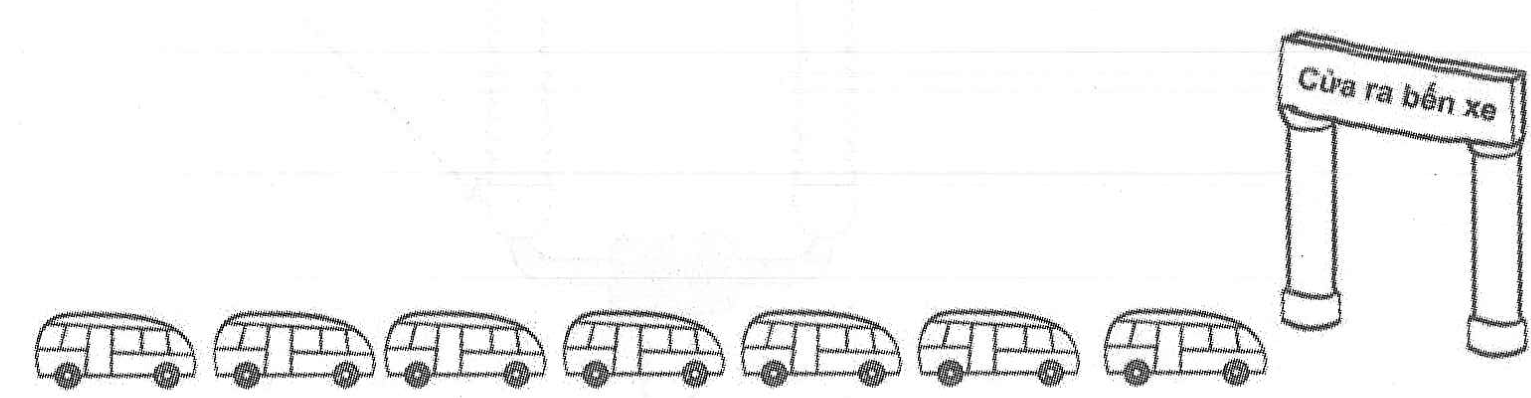
Seven BRT buses, coloured blue, red, yellow, green, pink, purple and brown, queue to leave the station. Their order is unknown. Four buses leave before the red bus; five leave after the yellow bus; purple leaves after yellow but before blue; and blue leaves before red. In which position does the blue bus leave?

Question illustration
  1. Second
  2. Third
  3. Fourth
  4. Sixth
  5. Seventh

Question 15

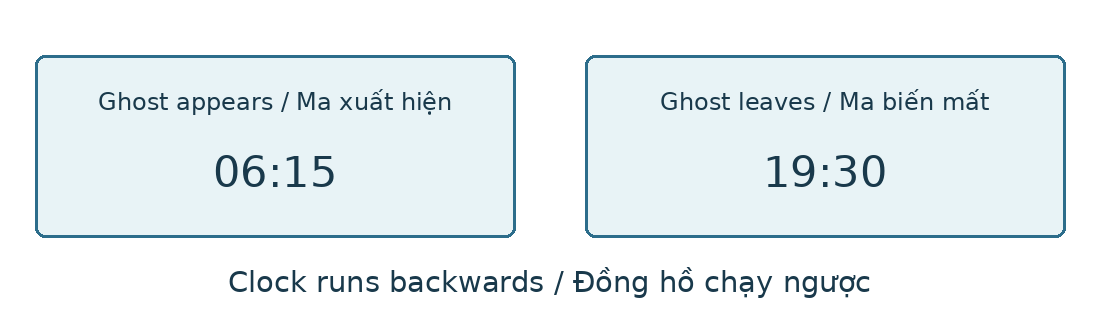
At 6:15 a ghost appears and makes the clock run backwards at a constant rate. The ghost disappears at 19:30. What time does the clock then show?

Question illustration
  1. 17:00
  2. 17:45
  3. 18:30
  4. 19:00
  5. 19:15

Question 16

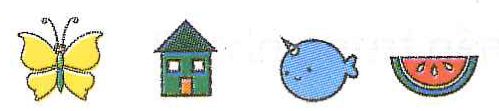
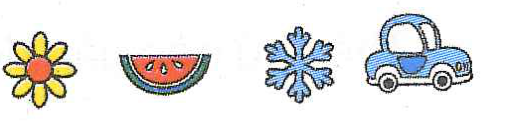
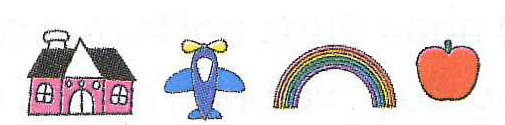
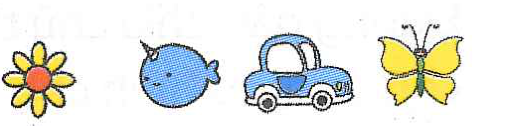
Which number can be represented by the flower?

Question illustration
  1. 7
  2. 6
  3. 5
  4. 4
  5. 3

Question 17

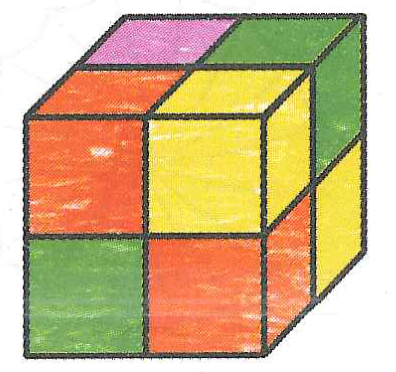
Lisa makes a large cube from eight small cubes. Each small cube is coloured green, red, purple or yellow. Any two cubes sharing a face have different colours. What colour is the hidden small cube?

Question illustration
  1. Green
  2. Red
  3. Yellow
  4. Purple
  5. No colour satisfies the conditions

Question 18

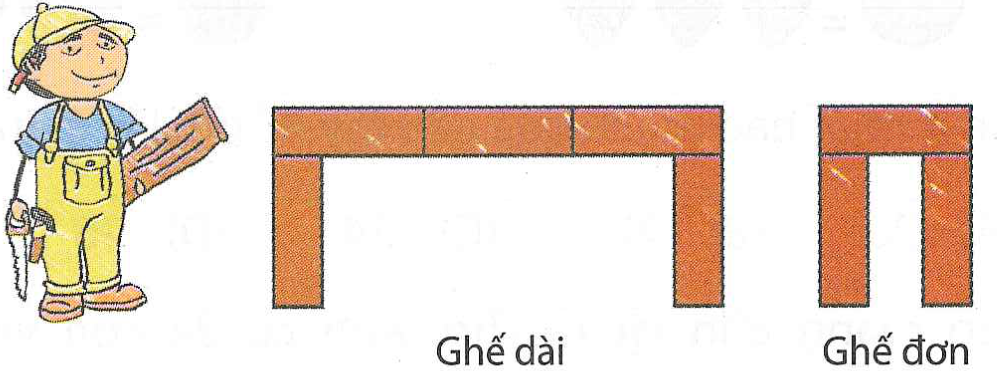
Geppetto makes benches and stools using identical boards, as shown. He sells all his stools and has seven benches left. He wants to dismantle these benches to make more stools. What is the greatest number of stools he can make?

Question illustration
  1. 7
  2. 10
  3. 11
  4. 14
  5. 15

Question 19

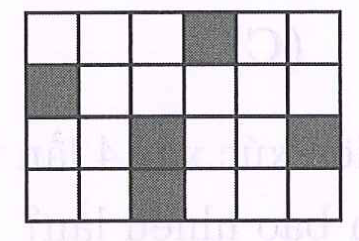
How many more unit squares must be shaded so that the number of grey squares is exactly half the number of white squares?

Question illustration
  1. 2
  2. 3
  3. 4
  4. 6
  5. 8

Question 20

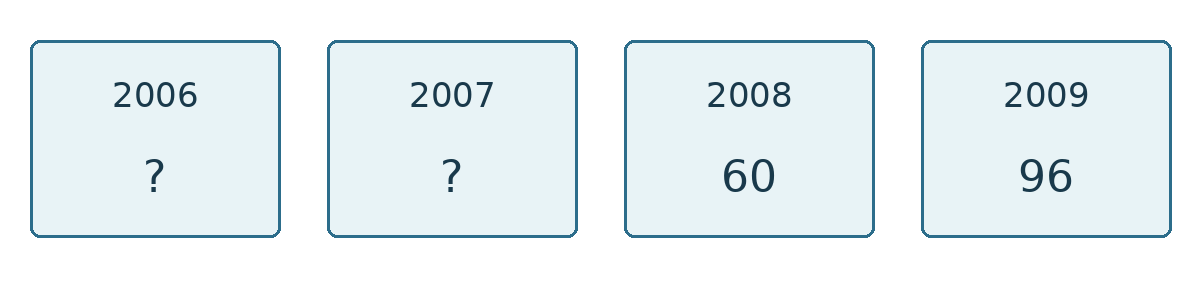
Meta collects celebrity photographs. Each year she collects as many as in the preceding two years combined. She collects 60 in 2008 and 96 in 2009. How many does she collect in 2006?
Question illustration
  1. 20
  2. 24
  3. 36
  4. 40
  5. 48