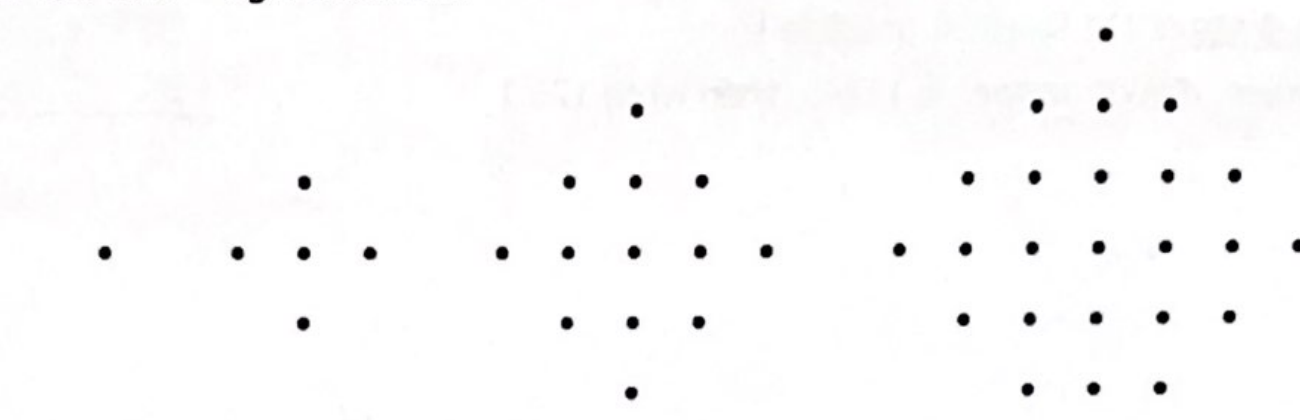
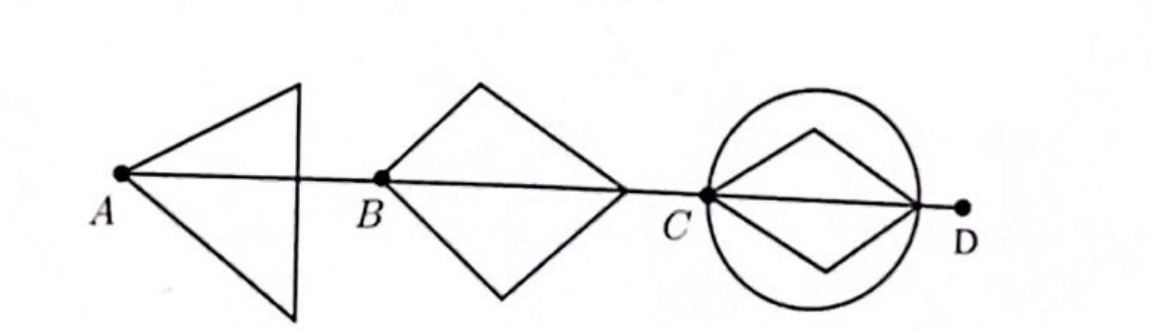
Sammy has \$10 on Monday and gets \$2 every Sunday for allowance. Tammy has \$50 on the same Monday and spends \$3 every Sunday on snacks. After how many weeks will they have the same amount of money on a Monday?
There are three numbers each represented by one of the symbols □, △, and ◇. Given that the following statements are true, what number does the sum ◇ + □ represent?
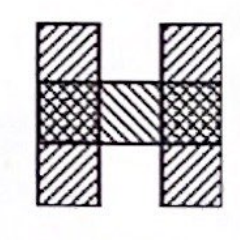
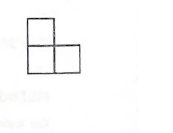
Orville has L-tiles, each made up of three 1 × 1 squares (as shown). What is the greatest number of these L-tiles that can fit into a 7 × 5 rectangle so long as there is no overlap? [Note: The L-tiles can be rotated in order to fit better but not cut.]
Marci looked at a clock and realized that the number of hours that had passed since midnight was three times the number of hours remaining until noon. What time did the clock show?
(Disregard the colon in your answer. Example, if your answer is 3:00, write 300)
Sigmund is a collector of coins from different countries. When his coins are arranged in piles of 13, there are 9 coins left over. When his coins are arranged in piles of 11, there are 9 coins left over. When Sigmund’s coins are arranged in piles of 143, how many coins are left over?
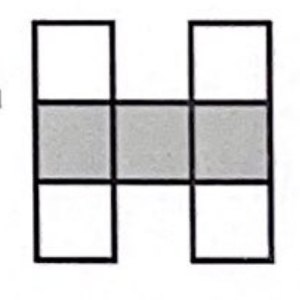
In the figure, the whole numbers from 1 through 7 are to be placed, one per square. The sum of the numbers in the left column, the sum of the numbers in the right column, and the sum of the numbers in each diagonal are the same. What is the least possible product of the numbers across the gray row?
Three brothers have the same birthday but were born in different years. Four years ago, the oldest brother’s age was 5 times the age of the youngest brother. At that time, the age of the middle brother was 3 times the age of the youngest brother. Today, the middle brother’s age is twice the age of the youngest brother. Today, how old is the oldest brother?
A rectangular billboard has a length greater than its height and has an area of 60 square meters. There are lights around the perimeter of the billboard, one every meter. There are 34 lights around the perimeter of the billboard. Find the length, in meters, of the longer side of the billboard.
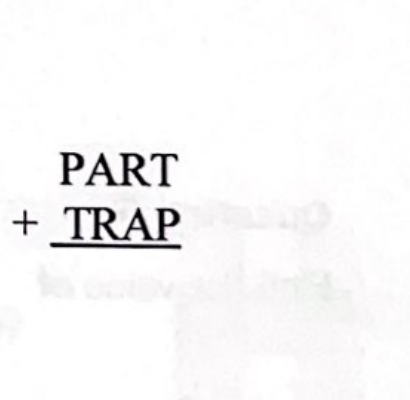
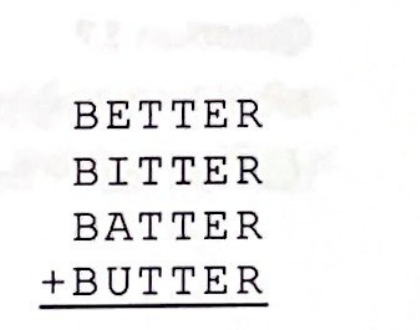
In the following cryptarithm, each different letter represents a different digit in the 6-digit numbers. If B is not 0, find the first three digits of the smallest possible sum.
(Example, if your answer is 12345, then write 123.)
Each of the whole numbers 1 through 9 is written on 9 cards, one number per card. Three cards are given to each of three players. The sum of Player One’s cards is 15. The sum of Player Two’s cards is 24. Who received the greatest number of even digits?
(Write 001 if it was Player One, 002 if it was Player Two, 003 if it was Player Three)
Kenneth writes the whole numbers in order as shown below. The 1st number in Row 1 is 1. The 1st and 2nd number in Row 2 are 2 and 3, respectively, and so on. What is the 27th number in Row 27?
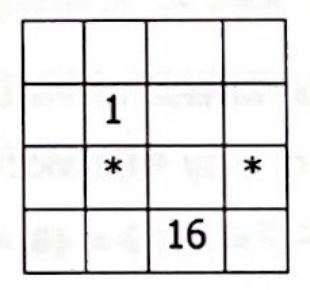
Each number from 1 through 16 is written one to a box. A path is formed by placing consecutive numbers in adjacent boxes horizontally or vertically, but not diagonally. Two numbers are shown. Find the largest possible sum of the numbers in the starred (*) boxes. (“Adjacent boxes” means that boxes next to each other.)