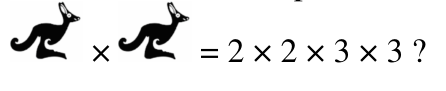
Javed likes to multiply by 3, Parvaiz likes to add 2, and Naveed likes to subtract 1. In what order should they perform their favorite actions to convert 3 into 14?
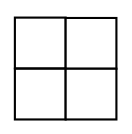
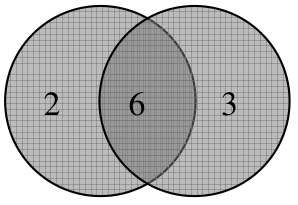
Numbers 2, 3, 4 and one more number are written in the cells of a 2 × 2 table. The first row sums to 9 and the second row sums to 6. The unknown number is:
Before the snowball fight, Ali had prepared a few snowballs. During the fight, he made another 17 and threw 21 at the other boys. Afterwards he had 15 left. How many had he prepared before the fight?
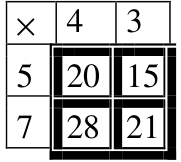
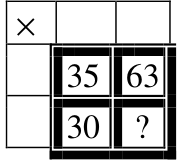
The first picture is a small piece of a multiplication table. The second is another one with some missing numbers. What is the number in the square with the question mark?
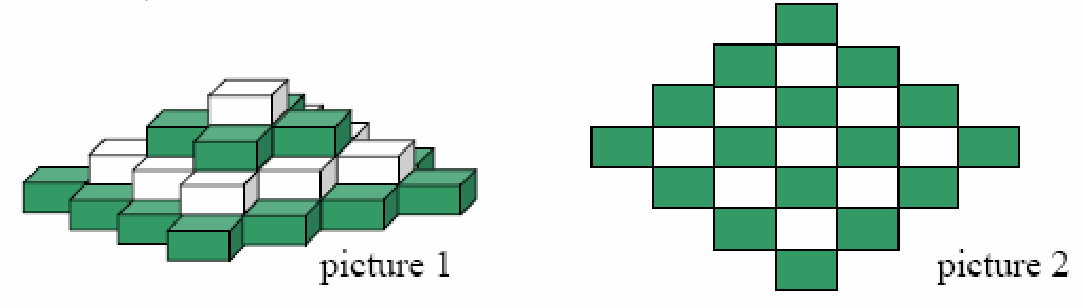
In a toy shop a four-floor black and white “brickflower” is displayed (picture 1). Each floor is made of bricks of the same colour. Picture 2 is its top view. How many white bricks were used?
Source colour note: the printed text says black and white, but the original coloured figure uses green and white; those original colours are preserved.
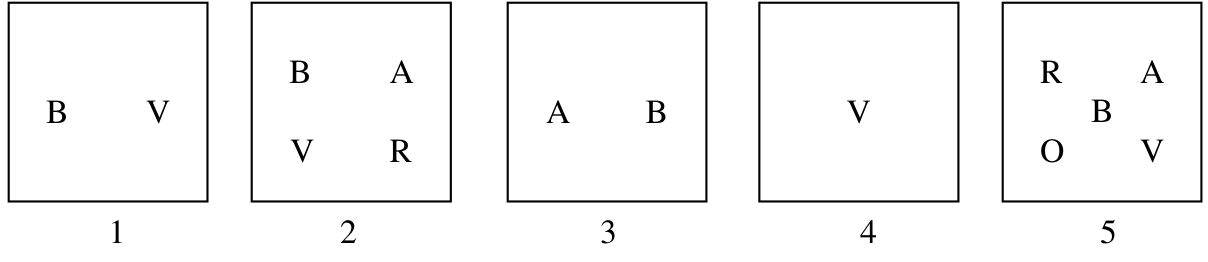
There are 5 boxes, each containing cards labeled A, B, O, R, V as shown. Peter removes cards so that each box ends with only one card and all five remaining letters differ. What card remains in box 5?
A circular table is surrounded by 60 chairs. Some n people sit so that each is a neighbour of exactly one person. What is the largest possible value of n?
Here neighbours means people occupying immediately adjacent chairs.
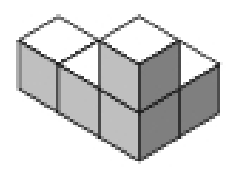
Which of the “buildings” (A), …, (E), each consisting of exactly 5 cubes, can you not obtain from the building on the right if you are allowed to move exactly one cube?
Source note: the stem says A–E, but only A–D are printed in this paper. All four actual choices are retained. Whole-building viewing rotations are allowed; cubes are not turned into a different shape.
Points A, B, C and D lie on a straight line in some order. AB = 13, BC = 11, CD = 14 and DA = 12. What is the distance between the farthest two points?
Seven cards numbered 1 to 7 lie in a box. The first person randomly takes 3 cards, the second takes 2, and 2 remain. The first says: “I know that the sum of your card numbers is even.” What is the sum of the first person’s cards?