Keystone species are organisms that largely define the ecosystem they inhabit, and if removed, will result in drastic changes in the ecosystem. The term comes from the word “keystone” in stone bridges, wherein removal of the keystone leads to collapse of the bridge. In the tropical rainforests of Southeast Asia, fig trees are considered to be one of the keystone species. The following choices therefore describe why fig trees are keystones species, EXCEPT which one?
Fig trees provide fruits as a food resource, especially in times of food scarcity.
Fig trees provide shelter to many organisms.
Fig trees rely only on fig wasps for pollination.
Roots of fig trees hold the ground firmly, preventing landscape changes.
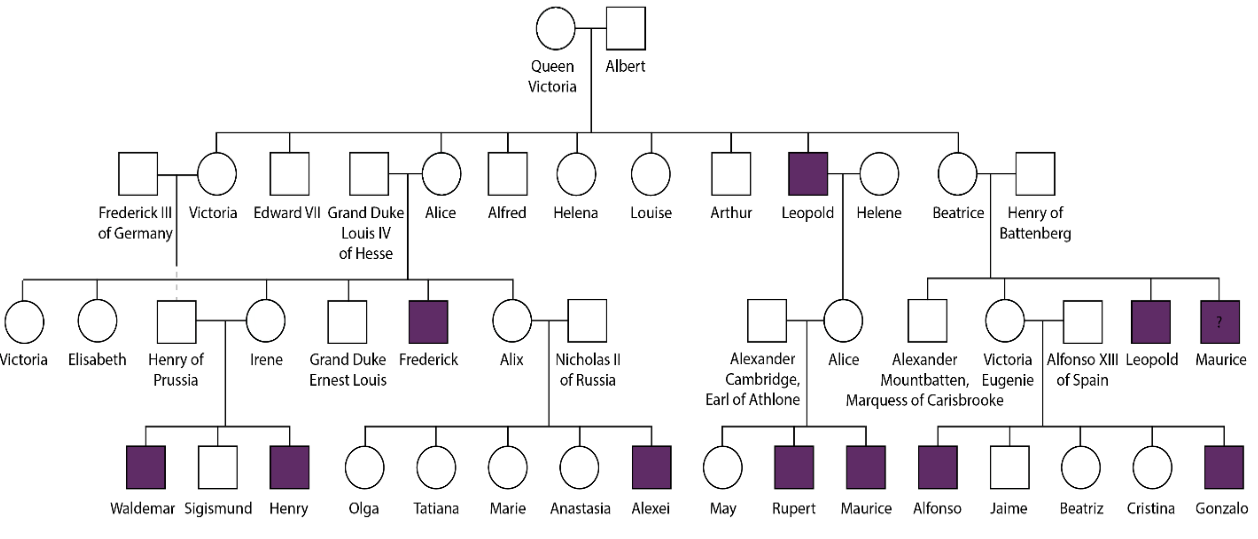
Queen Victoria, the former monarch of the United Kingdom, was also known to have spread the X-linked hemophilia disorder among the European royals through marriages from her descendants. The diagram below shows a simplified pedigree chart of Queen Victoria’s descendants, wherein hemophiliacs were indicated as purple. Which of Queen Victoria’s descendants was not a carrier? Source: https://i.pinimg.com/originals/a9/41/f2/a941f2f654d2c813045815c939a05c31.png
A. Princess Victoria, daughter of Queen Victoria
B. Princess Beatrice, daughter of Queen Victoria
C. Princess Victoria Eugenie, granddaughter of Queen Victoria
D. Princess Alix, granddaughter of Queen Victoria
Editorial review: explain the evidence and whether the original wording gives a unique answer.
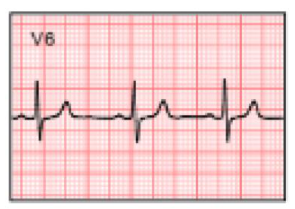
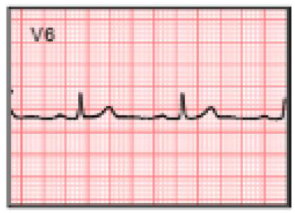
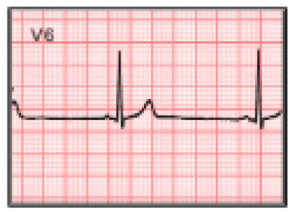
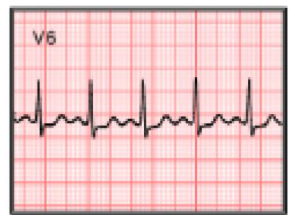
The electrocardiogram shows the electrical impulses from the heart following depolarization of the sinoatrial node and conduction of the impulse throughout the Purkinje fibers. Which of the following ECG readings describe an arrhythmia or abnormal heart rhythms?
A.
B.
C.
D.
Editorial review: explain the evidence and whether the original wording gives a unique answer.
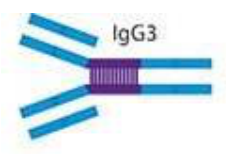
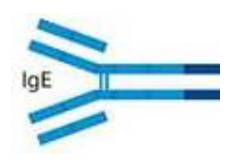
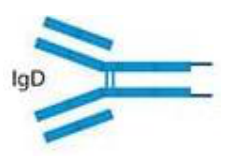
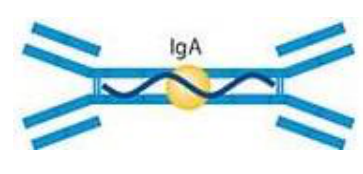
Which of the following antibody isotypes remain in the bloodstream for months after vaccination or infection of SARS-CoV-2, thus providing a long-term immunity?
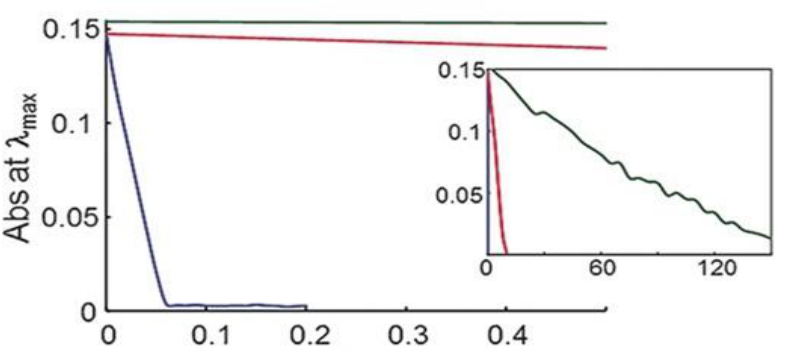
In 2016, researchers from Japan showed that a family of dyes lose their color in a linear fashion. Shown below are the data at shorter (t<1s) and longer (t~100s) scales for three dyes. Systematically, the three dyes (corresponding to the green, red, and blue data each) lose their color in linearly over time. What is the order of the reaction? Source: Calupitan et al. Chem Eur J, 2016, 10002-10006.
Editorial convention: use the stated linear colour loss and assume absorbance is proportional to concentration.
Gasoline is made up of hydrocarbons such as hexane (C₆H₁₄). When they burn, they produce water (H₂O) and carbon dioxide (CO₂). However, incomplete combustion happens when oxygen gas (O₂) is insufficient so that carbon monoxide (CO), instead of carbon dioxide, is produced. Calculate how much more oxygen complete combustion requires relative to incomplete combustion.
Editorial wording: “x more” asks for the ratio of total oxygen amounts for the same amount of hexane.
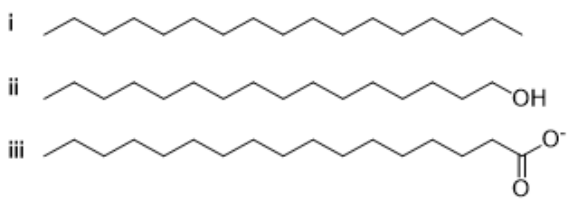
Intense attention on research on gold nanoparticles (AuNPs) are being carried out in the past couple of decades due to their promise for applications in catalysis, energy, and medicine. These small particles of metallic gold have a size < 100 nm and are usually in a colloidal suspension. The small particles must be stabilized by emulsifiers that can cover their charged surface and keep them suspended in a non- polar solvent, for example. Which of the following can be used to stabilize these particles in hexane?
Editorial convention: compare the structures as potential amphiphilic stabilizers in a simplified model.
Calcium carbonate is present in the skeleton of corals. It is formally insoluble in water but a small amount of it is actually in equilibrium between dissolved and undissolved states: CaCO₃ (s) ⇌ Ca²⁺ (aq) CO₃²⁻ (aq) Further, carbonate ions may form carbonic acid in the presence of hydride ions. The former can then decompose to water and carbon dioxide: CO₃²⁻ (aq) + H⁺ (aq) → H₂CO₃ (aq) → CO₂ (aq) + H₂O (l) The balance of these reactions is therefore important for the health of corals and thus of the ocean. Which of the following favors the disintegration of coral skeletons?
A. Acid rain
B. Additional mineral calcium ions in the ocean
C. Higher water alkalinity
D. More dissolved carbon dioxide in the ocean
Editorial review: explain the evidence and whether the original wording gives a unique answer.
How much salt is produced (in g) if 37.0 mL of 0.220 M Mg(OH)₂ were mixed with 23.0mL 0.415 M of HCl? Use the following atomic weights: H=1, O=16, Mg=24, Cl=35
Editorial convention: use the given analytical amounts and assume neutralization proceeds completely.
One of the fundamental ideas of quantum mechanics is that energy is quantized. Light, for example, comes in single individual wave packets in whole numbers, as if they are particulate, excluding the possibility of a “half-energy” or anything in between. To aid in this phenomenon, it is useful to think of light coming as single photons, each with a set amount of energy. This can be very infinitesimally small to notice in our day-to-day life (but it is significant in smaller systems). To illustrate, how many photons of 505 nm light would be equivalent to the energy necessary to lift a 1 kg object 1 m above the ground? For reference, following are some useful constants: Acceleration due to gravity = 9.8 m/s² Planck’s constant=6.62607004 × 10⁻³⁴ m² kg / s speed of light=299 792 458 m / s Boltzmann’s constant = 1.38064852 × 10⁻²³ m² kg s⁻² K⁻¹.
A coconut nut hanging from its tree has a potential energy of 2000 J. When it falls, this potential energy is converted to kinetic energy. The kinetic energy is highest, the same as the initial potential energy, when the potential energy is 0, i.e. upon impact with a high velocity on the ground. Upon impact, this energy is converted to other forms of energy such as heat or sound. By the first law of thermodynamics (law of conservation of energy), it is theoretically possible to harness the same energy (2 000 J), by shouting or by heating, and put it into making the nut fly again, without a loss of energy. However, this is practically impossible because of what law?
A student designs an experiment to determine the spectrum of color produced by different light sources. Which variable should be held constant in the student’s experiment?
The Polar Satellite Launch Vehicle (PSLV) developed and operated by the Indian Space Research Organization (ISRO) was launched at a height enough to follow a curved path. What law of motion governs the given situation?
Editorial interpretation: identify the law accounting for the curvature of the path, rather than the launch thrust.