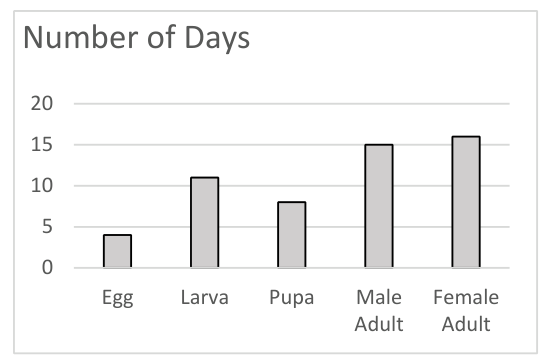
The graph below shows the number of days of each stage in the life cycle of an organism lasts. Based on the graph above, which of the following statement(s) is/are definitely true?
I. The young looks like the adult
II. The longest stage is the adult stage
III. There are four stages in the life cycle of the organism
IV. It takes 23 days for the organism to become an adult after hatching.
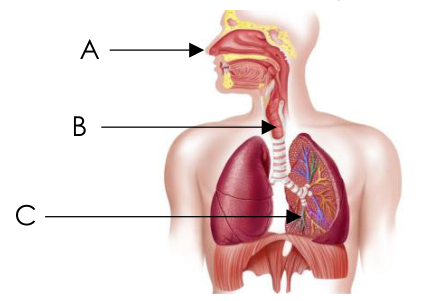
The diagram below shows the human respiratory system. Which of the following statements are correct based on the diagram above?
I. Part A allows air to enter and leave the body
II. Part B allows the passage of air to the lungs
III. Part B traps the dust from entering the lungs
IV. Part C contains air sacs, which are covered with many blood vessels.
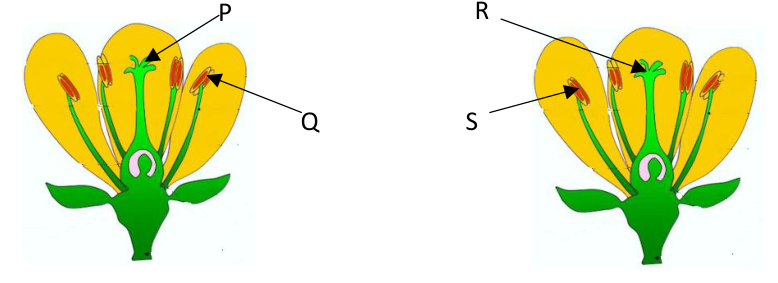
The diagram below shows two flowers from the same plant. Pollination between these two flowers occurs when pollen grains are transferred from____________.
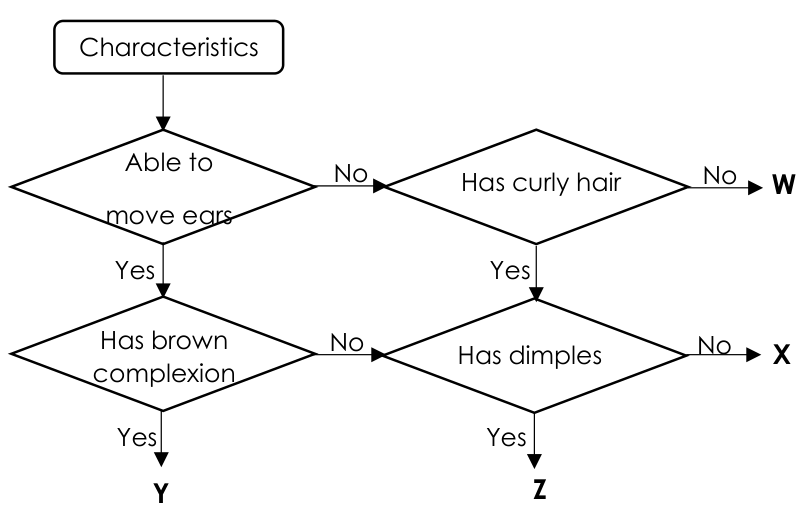
The diagram below shows how an organ can be formed from a basic unit of life represented by X. Which of the following correctly represents the basic unit of life?
Read the following descriptions of the human respiration process below.
P air enters the body through the nose
Q carbon dioxide leaves the body through nose
R blood transport carbon dioxide to the lungs
S air pass through the windpipe and lungs take in oxygen
T oxygen passes into the blood and is transported to other parts of the body
Arrange the description in the correct order to describe what happens when a person breathes in and out.
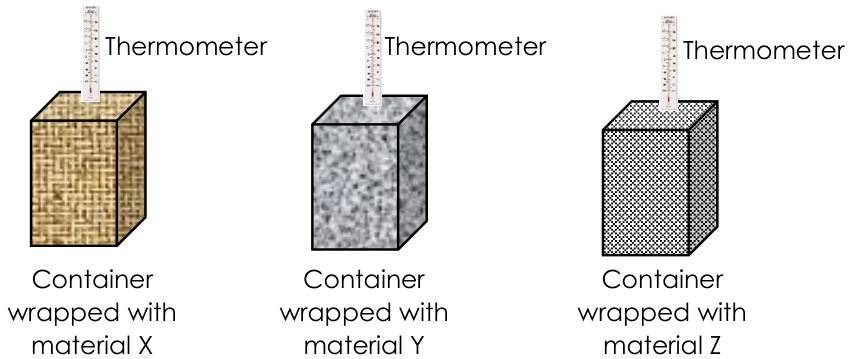
Karlos conducted an experiment as shown below. The containers were filled completely with equal amount of boiling water and left on a plane surface. He recorded the temperature of the water in each container at intervals of 5 minutes for one hour. Which of the following could be the possible objective(s) of his experiment?
I. To find out which containers is a better conductor of heat
II. To find out how fast boiling water loses heat to its surroundings
III. To find out which material can best keep the water warm for a longer time
IV. To find out whether the thickness of the different materials would affect the time for the water to cool.
A. III only
B. I and III only
C. II and IV only
D. I, II and IV only
Editorial review: explain the science and whether the original choices give a unique answer.
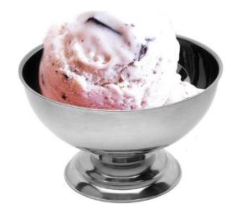
Jose placed some ice cream into a metal bowl as shown below. He noticed that the ice cream started to melt very quickly. The side of the bowl also felt cold when he touched it with his hands. Which one of the following statements best explains Jose’s observation?
Each option gives: Melting of ice cream; Bowl felt cold to touch.
A. The ice cream lost heat to its surroundings; The bowl lost heat to the ice cream
B. The ice cream lost heat to the bowl; The bowl gained heat from the ice cream
C. The ice cream gained heat from its surroundings; The bowl gained heat from Jose’s hand
D. The ice cream gained heat from the bowl; The bowl gained heat from Jose’s hand
Editorial review: explain the science and whether the original choices give a unique answer.
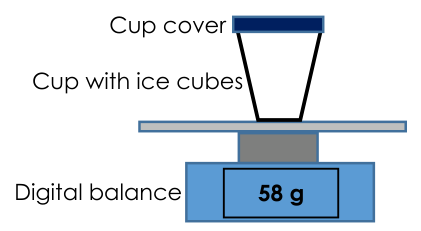
A sealed styrofoam cup of ice was place on a digital balance as shown below. The mass of the cup of ice is 58g. Assuming that any water droplets formed on the cup is insignificant, what would the reading on the scale be when all the ice cubes in the cup had melted?
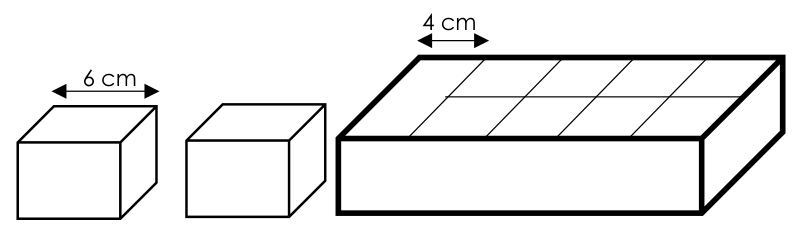
The diagram below shows that some identical wooden blocks were put into a tray. Which of the following statements correctly explain why the remaining two wooden blocks were unable to fit into the tray?
I. the blocks have fixed shape
II. the blocks have fixed volume
III. the blocks cannot be compressed
Editorial convention: use the ordinary rigid-block model and the illustrated single-layer arrangement.
The information about substance A is shown below:
• It boils at 200 °C
• It is a solid at 30 °C
• It turns into a liquid at 44 °C
Based on the information above, which of the following statement(s) about substance A is/are correct?
I. It freezes at 150 °C
II. It is a gas at 320 °C
III. It remains at the liquid state at 120 °C
Editorial convention: compare the same pure substance at unchanged pressure.
Two neutral insulators P and H are rubbed together. After a while, insulator H becomes positively charged. Which of the following statements could have happened?
Insulator P lost some electrons to insulator H.
Insulator H lost some electrons to insulator P.
Insulator H gained positive charge from insulator P.
Insulator P gained positive charge from insulator H.
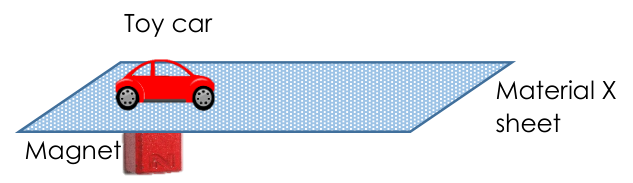
Larry’s car moved when he moved the magnet under the sheet of Material X. What conclusions can you make based on Larry’s experiment?
P - Material X can be made of plastic.
Q - The magnet has lost its magnetism.
R - The toy car is made of magnetic material.
The diagram below show forces, F1, F2 and F3 exerted on two identical blocks P and Q at the same time on the same surface. Which of the following shows the correct amount of forces for F1, F2 and F3 such that Block P will move to point A while Block Q remains stationary?
Options are in the order F1, F2, F3.
Editorial convention: blocks start at rest; use the shown forces and neglect friction for this comparison.
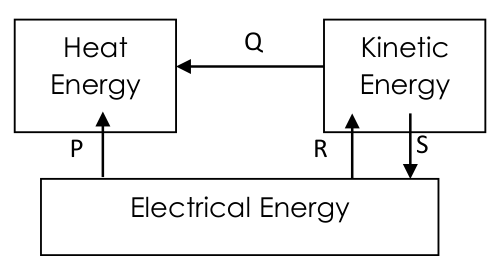
The diagram below shows that energy can be converted from one form to another, through activities P, Q, R and S. Which of the following could activities P, Q, R and S be?
Options are in the order P, Q, R, S.
Rubbing of sticks; Using a toaster; Using a stand fan; Turning a turbine
Using a toaster; Rubbing of sticks; Using a stand fan; Turning a turbine
Turning a turbine; Using a stand fan; Rubbing of sticks; Using a toaster
Using a toaster; Rubbing of sticks; Turning a turbine; Using a stand fan