Skip to content / Đến nội dung
ThichHocToan.com

PIMSO 2025 - Science - Primary 2 - National Round

Question 1

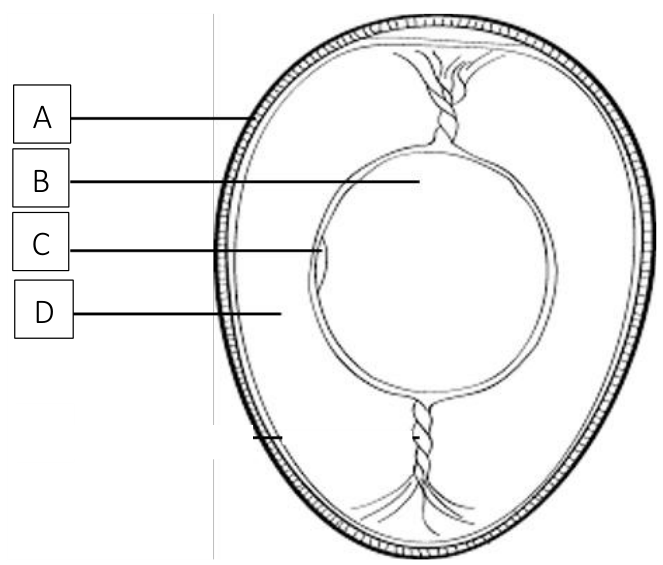
The diagram below shows the longitudinal section of a fertilized chicken egg. In which part of the egg would the chick embryo develop?

Question illustration

Source: https://edis.ifas.ufl.edu/pdf/4H/4H36800.pdf
  1. A
  2. B
  3. C
  4. D

Question 2

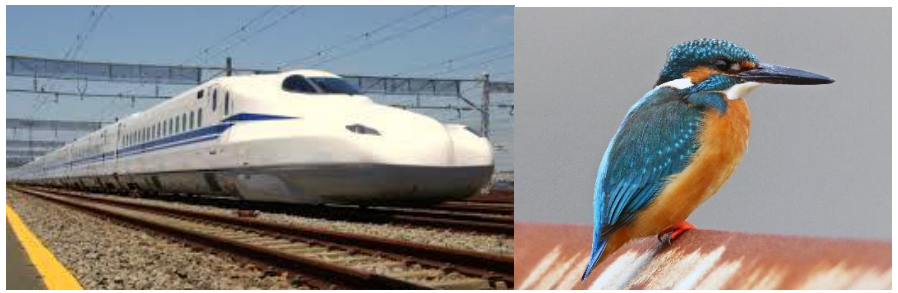
The engineering behind the nose shape of the Japanese bullet train was inspired from the beak of kingfisher. How is that so?

Question illustration

Sources: https://www.jrailpass.com/blog/wp-content/uploads/2019/08/shinkansen-n700s.jpg ; https://cdn.download.ams.birds.cornell.edu/api/v1/asset/168729731/1800

A. The bullet train can be built longer than an average train.
B. It enables the bullet train to run at a higher speed with less drag.
C. It enables the bullet train to run silently inside tunnels.
D. The bullet train can run more smoothly and comfortably at higher speed.

Editorial review: explain which design benefits are supported and which wording is too strong.

Question 3

Some plants can grow in the harshest conditions by means of adaptation. Which of the following choices is not an adaptation for water conservation?

Editorial convention: distinguish direct reduction of water loss from collection of water.
  1. Waxy epithelium
  2. Fine shallow roots
  3. Tough spines
  4. Hair-like spines

Question 4

Micronutrients, although needed by the body in smaller quantities, are vital in the upkeep of functions and processes of the body. Deficiencies of these micronutrients can therefore lead to symptoms and diseases. Which micronutrient is improperly paired with its deficiency symptom?
  1. Vitamin A: Blindness
  2. Vitamin B12: Brittle bones
  3. Iodine: Enlarged thyroid
  4. Calcium: Muscle cramps

Question 5

Which of the following bones underwent the most significant change in response to the evolution towards upright gait of modern humans?
  1. Skull
  2. Ribs
  3. Spinal column
  4. Pelvic bone

Question 6

How can the virus that causes the COVID-19 disease enter the body by touching on infected surfaces?
  1. The virus enters the body through the nose from the hand.
  2. The virus enters the body through the nose from the infected surface.
  3. The virus enters the body through the wound opening in the skin.
  4. The virus enters the body through the pores in the skin.

Question 7

Which of the following properties are the same for 100 g of steel and 100 g of cloth?
  1. Mass
  2. Color
  3. Density
  4. Volume

Question 8

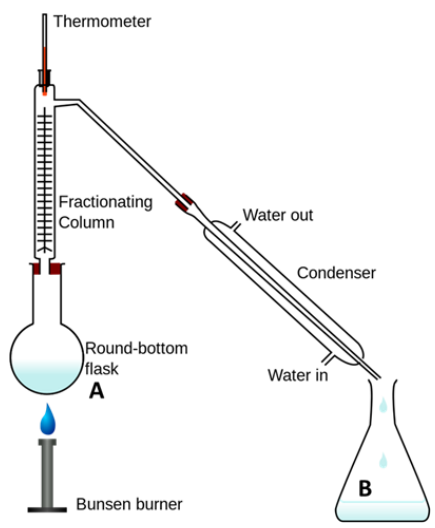
Distillation is a process used to purify liquids such as water. A diagram is shown below. In the first stage of the process (labeled A), the liquid is heated to a temperature that will transform it to the gas phase. Then, in the second stage (B), the gas is trapped and allowed to cool down to return it to the liquid phase. What process does the heating do to the liquid in the first stage?

Question illustration

Adapted from Theresa Knott; derivative work John Kershaw. CC BY-SA 3.0. https://commons.wikimedia.org/w/index.php?curid=4219544
  1. Condensation
  2. Heating
  3. Melting
  4. Evaporation

Question 9

Rod failed a mathematics exam, so he wants to hide the paper from his parents. But he wants to throw it in the proper bin. Which bin should he throw it to?

A. In the bin that has the symbol Question illustration
B. In the bin that has the symbol Question illustration
C. In the bin that has the symbol Question illustration
D. It is a failed math test; any bin will do

Editorial review: explain the scientific ambiguity in the original choices.

Question 10

When one mixes two liquids of equal volume, what would the resulting volume be?

A. Less than the total volume of the liquids
B. More than the total volume of the liquids
C. Equal to the total volume of the liquids
D. Half the total volume

Editorial review: explain the scientific ambiguity in the original choices.

Question 11

Sodium chloride is one of the most abundant minerals on Earth and an essential nutrient for many animals and human beings. It is commonly known as ___________.
  1. Sugar
  2. Salt
  3. Sand
  4. Cement

Question 12

Which of the following statements is correct?
  1. Gas has a fixed shape and size.
  2. Liquid has a fixed shape and size.
  3. Solid has fixed shape and size.
  4. Solid does not have shape and size.

Question 13

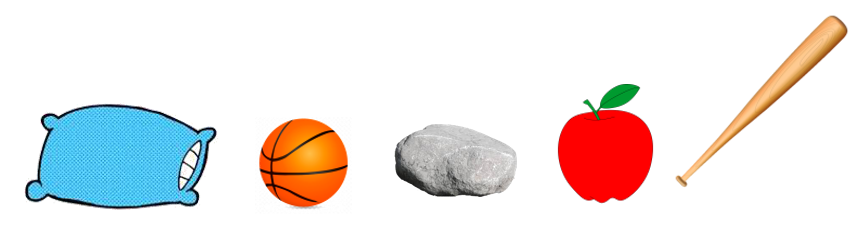
Which of these will bounce the highest when dropped onto a floor?

Question illustration

Editorial assumption: ordinary pictured objects, dropped from the same height onto the same floor.
  1. a pillow
  2. a stone
  3. a ball
  4. an apple

Question 14

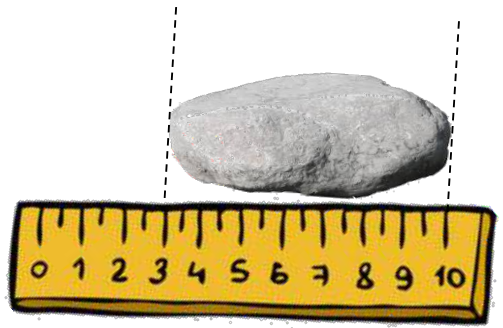
Lorena has this pebble. How many centimeters (cm) long is the pebble?

Question illustration
  1. 2
  2. 5
  3. 7
  4. 9

Question 15

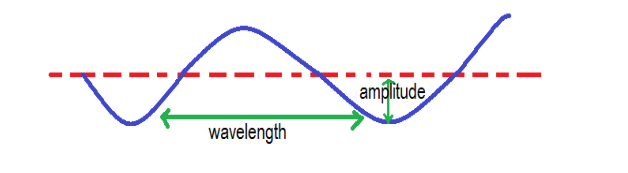
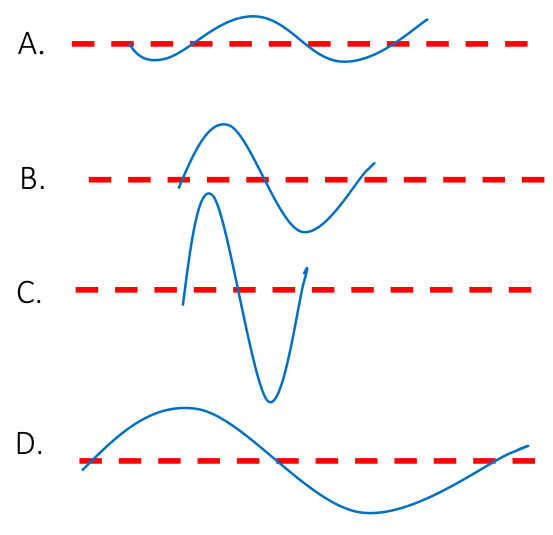
Transverse waves are often used to represent sound waves. A large amplitude indicates a loud sound and short wavelength indicates a high-pitched sound. The diagram below illustrates a portion of a sound wave. Which diagram illustrates a sound wave that is louder than the one shown above? (C)

Question illustration

Question illustration

Source note: the parenthetical letter is already printed in the original question.

A. A (see original diagrams)
B. B (see original diagrams)
C. C (see original diagrams)
D. D (see original diagrams)

Editorial review: explain the scientific ambiguity in the original choices.

Question 16

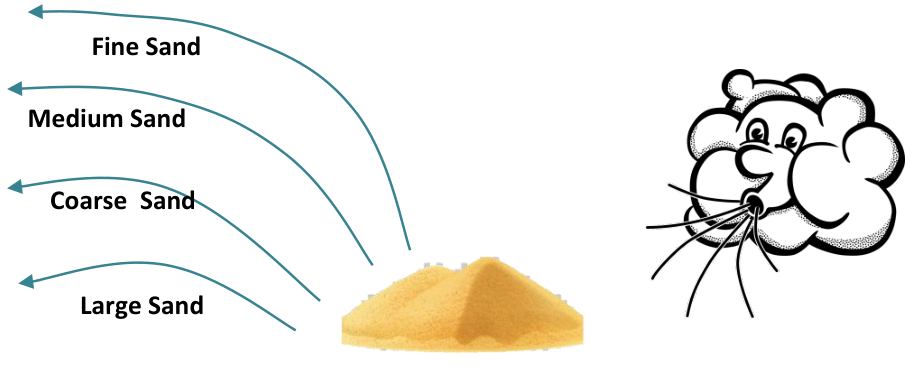
This diagram shows the effect of wind on sand grains of different sizes. What size of sand grains are likely to be moved farthest by the wind?

Question illustration
  1. Large sand
  2. Medium sand
  3. Coarse sand
  4. Fine sand

Question 17

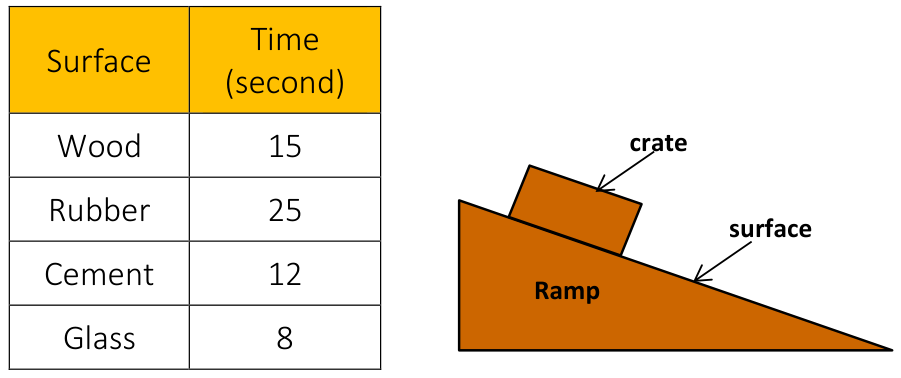
Friction is a force that slows down the movement of objects. Some students recorded the time it took for one crate to slide down four ramps. The ramps were the same except for their surfaces. Which surface caused the most friction with the block?

Question illustration
  1. cement
  2. glass
  3. wood
  4. rubber

Question 18

A ripe apple is detached from a branch and undergoes free fall motion. As it falls to the ground, the apple's speed ______.
  1. increases
  2. increases then decreases
  3. decreases
  4. constant

Question 19

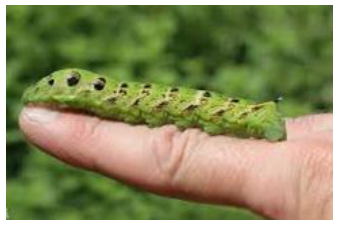
Mr. Cruz found a caterpillar in his garden. He puts it on his finger and took a picture as shown below. What does his finger help to show?

Question illustration
  1. temperature of the caterpillar
  2. sex of the caterpillar
  3. age of the caterpillar
  4. size of the caterpillar

Question 20

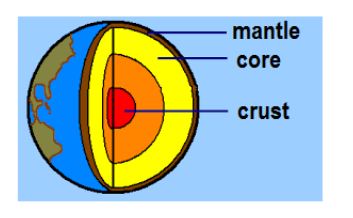
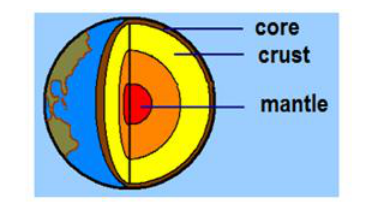
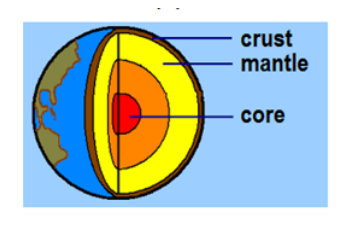
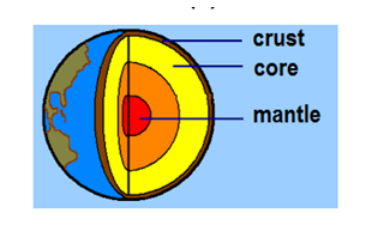
The Earth has three layers, namely, the crust, the mantle, and the core.
• The crust is where all living things live.
• The crust is made up of solid rock and it is the thinnest of the three layers.
• The mantle is very hot and consists of mainly semi-solid rock.
• The core is made up of metals; it is the deepest and hottest layer.
Which diagram correctly matches the above information about the layers of the earth?
  1. Question illustration
  2. Question illustration
  3. Question illustration
  4. Question illustration