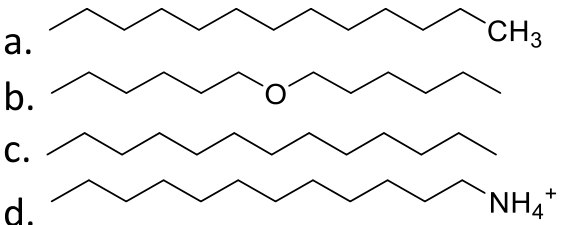
Proteins undergo posttranslational modifications, which are reversible or irreversible chemical changes that are catalyzed by enzymatic reactions. These modifications can affect the localization, interactions, functions, and half-life of proteins. Which of the following modifications contributes to covalent interactions between proteins?
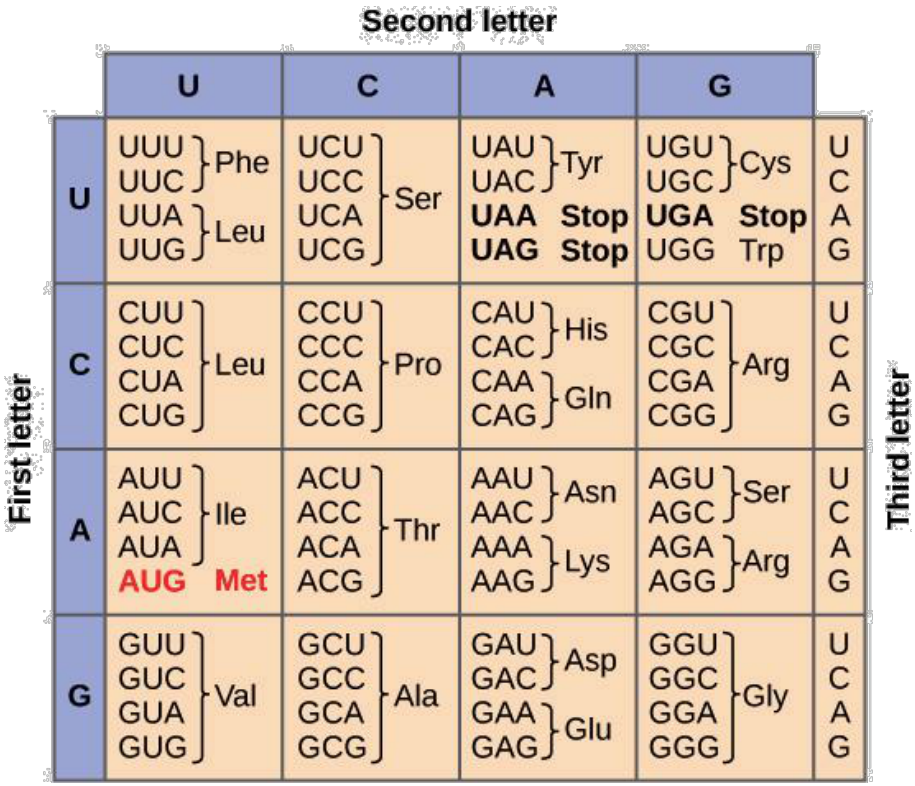
The following sequences show a partial segment of a DNA, wherein the first sequence encodes the wild-type hypothetical protein, while the second sequence contains a mutation. What could be inferred with the protein encoded by the mutated DNA? #1 5’- GTGATAGCTTTGATAAGCGAAAGTTTGGAGAAGCTG-3’ #2 5’- GTGATAGCTTTGATAAGCGAGAGTTTGGAGAAGCTG-3’ Source: https://www.khanacademy.org/
Protein from mutated DNA has one different amino acid.
Protein from mutated DNA has a shorter amino acid sequence.
Protein from mutated DNA has a longer amino acid sequence.
Protein from mutated DNA has a completely different amino acid sequence.
Protein from mutated DNA has no changes in amino acid sequence.
Senescence is a mechanism wherein cells disable themselves from undergoing cell division, which may be triggered by stressors such as DNA damage. Therefore, senescence also protects cells from becoming cancerous. In which phase of the cell cycle are senescent cells typically arrested?
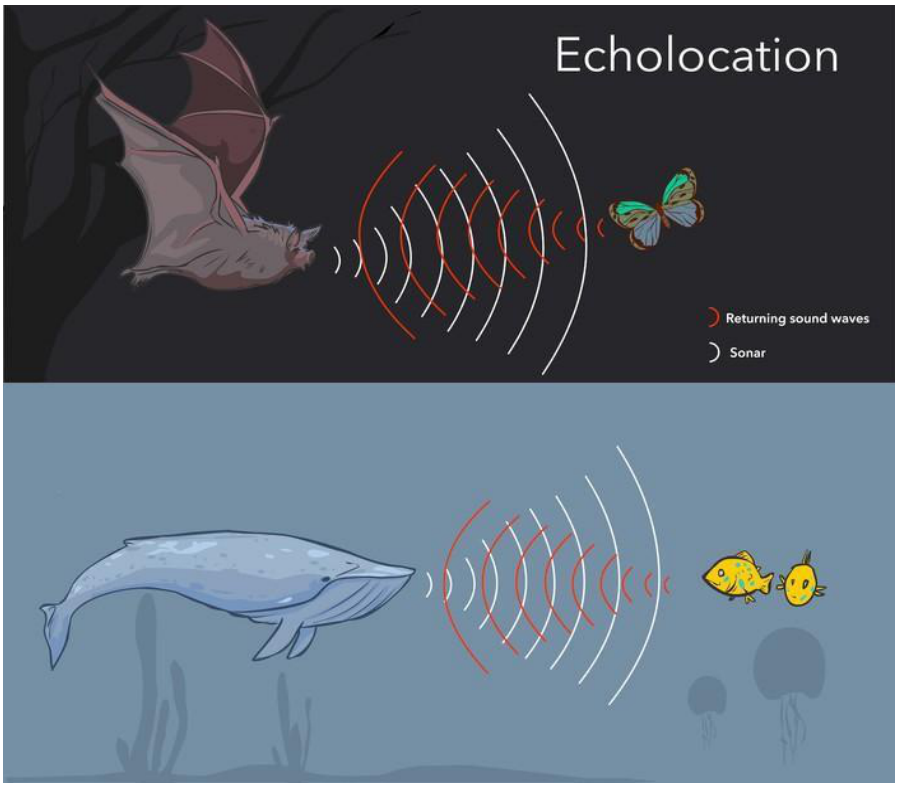
Bats and whales both developed echolocation as a tool for navigation. Which evolutionary mechanism occurred between bats and whales? Source: https://www.sciencefocus.com/
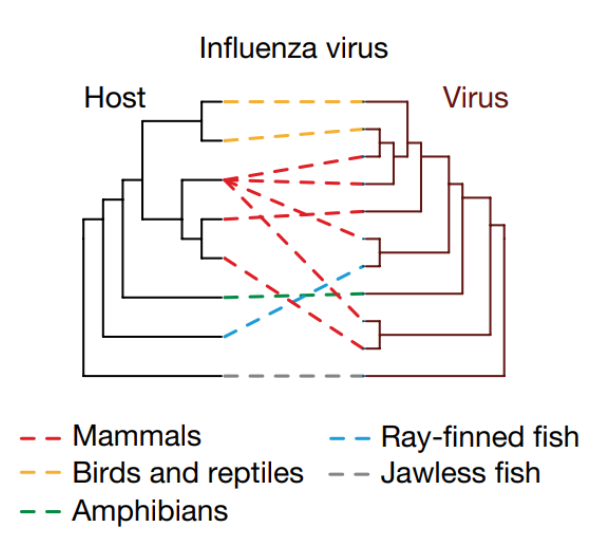
The following image shows the phylogenetic tree of influenza viruses (right) and their animal hosts (left). What could be inferred about the evolutionary history between influenza viruses and their animal hosts? Reference: Shi M, Lin XD, Chen X, Tian JH, Chen LJ, Li K, Wang W, Eden JS, Shen JJ, Liu L, Holmes EC. Nature. 2018 Apr 12;556(7700):197-202.
Influenza viral infection were passed on through different generations
Influenza viruses evolved together with their animal hosts
Influenza viruses switched animal hosts through the course of evolution
Influenza viruses reinfected mammals in different time points of evolution
After months of exposure in air, 1.9 g of nail made of steel rusted partially. The rusting process, forming a compound of iron and oxygen (which comes from air) stopped only once the whole surface of the nail was covered in rust, effectively protecting the iron under the surface from rusting. What can you say about the mass of this nail upon rusting?
The insides were protected so the mass should still be 1.9 g because the rusting stops
The mass should be less than 1.9 g because the insides were protected
The mass should still be 1.9 g because of the law of conservation of mass
The mass should be more than 1.9 g because of oxygen incorporates in the material
Nothing meaningful could be said based on the information given
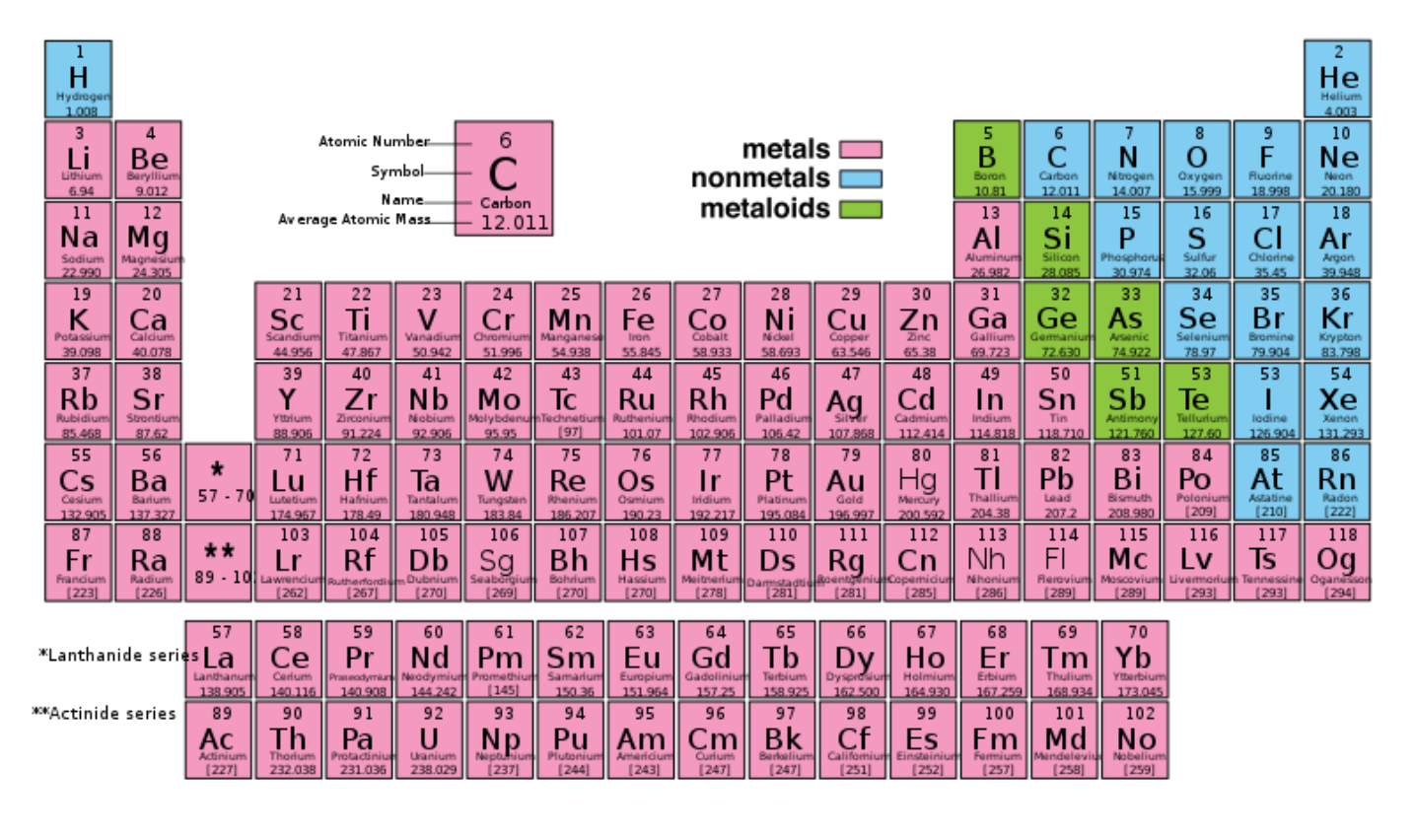
The Philosopher’s Stone have been the subject of many myths and legends. In the Harry Potter series, the Philosopher’s Stone was sought by Voldemort because it produces the Elixir of Life which could grant immortality. Historically, the field of alchemy, which arguably eventually led to the scientific study of chemistry, aimed to make this legendary stone since it is fabled to be able to transform base metals such as lead (Pb) to precious metals such as gold (Au). With modern theories of the atomic model, this is known to be impossible chemically but feasible by nuclear methods, i.e. by changing the nuclear components of Pb. What nuclear transformation would be necessary to change lead (Pb) to gold (Au)? (Hint: refer to the periodic table below)
Even if adobo has many varieties, one main component unites this popular Filipino dish: acidity. This flavour is usually due to vinegar that contains acetic acid. Acetic acid is a weak acid, with a so that only a small amount dissociates in water in an equilibrium reaction: CH₃COOH + H₂O ⇌ CH₃COO⁻ + H₃O⁺ Identify all the bases in this reaction.
The amount of helium in a balloon is difficult to determine because it is difficult to weigh. However, it is possible by knowing some quantities. A helium balloon was found to have a volume of 6.8 L at 30 °C and 1 atm. Determine the mass of helium inside the balloon. Use R=0.0821 L-atm/mol-K, M=4 g/mol for He
Several phenomena/observations in the 19th to early-20th century could not be explained by classical Newtonian physics, demanding new physical theories which eventually led to the development of quantum mechanics. The following lists these phenomena EXCEPT ONE. Which of the following is NOT a phenomenon that contributed to the development of quantum mechanics?
Discrete colors of line spectra of elemental gasses
Two resistors, one of which has resistance R1 = 6 Ω and the other of unknown resistance R2 = XX, are connected in series in an electrical circuit and an external voltage of 12 V is connected to them. If the power through the circuit totals 18 W, determine the resistance R2.
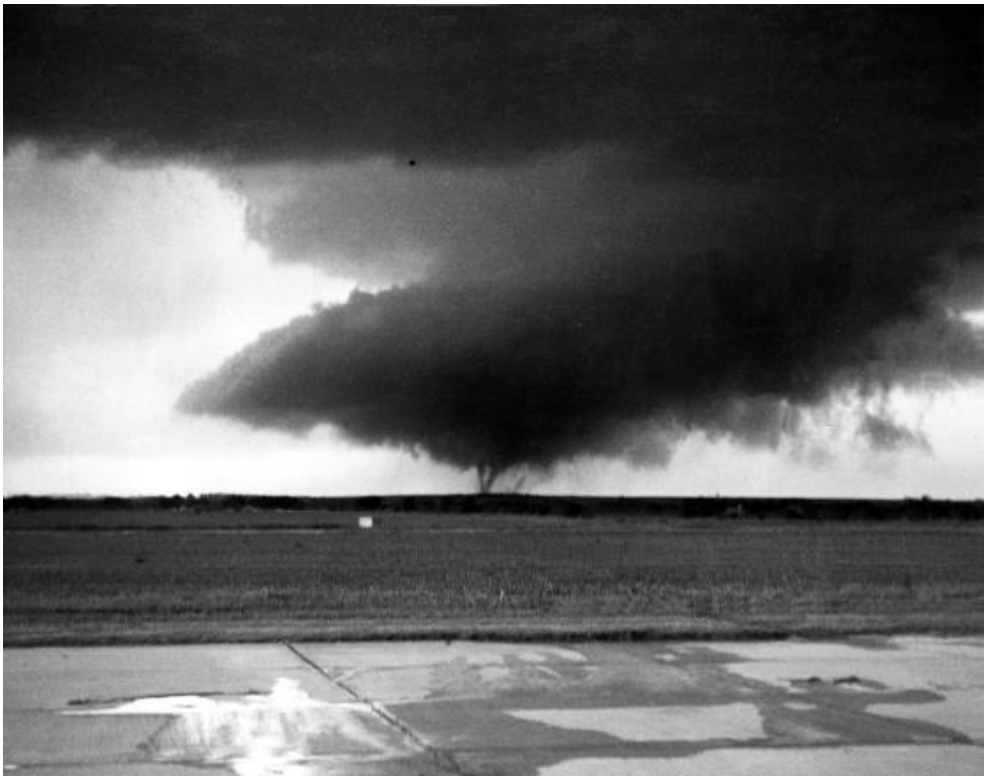
Which of the following variables causes a tornado formation? Source: https://commons.wikimedia.org/
A. Differences in sizes of cloud droplets in the thunderstorm
B. Differences in temperature of cloud droplets in the thunderstorm
C. Differences in electrical current in the thunderstorm
D. Differences in wind directions in the thunderstorm
E. Differences in wind temperature in the thunderstorm
Editorial review: discuss the contributing mechanisms and whether one uniquely correct option follows.