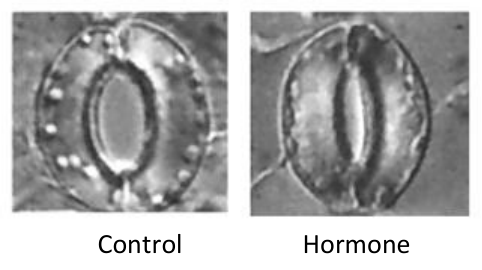
The following bright field images show stomatal guard cells, wherein the right guard cell was treated with a particular hormone, while the left guard cell was treated with control. What was the hormone used in the experiment? Control Hormone
Arrange the following events when a sperm cell fertilizes the ovum. 1) Acrosomal reaction 2) Fast block to polyspermy 3) Cortical reaction 4) Plasma membrane fusion 5) Sperm nucleus enters the ovum
Original choices:
A. 1, 4, 2, 3, 5
B. 1, 4, 5, 3, 2
C. 3, 4, 2, 1, 5
D. 3, 4, 5, 1, 2
E. 4, 1, 3, 2, 5
Editorial review: explain the scientific result and evaluate the printed wording and choices.
Bats have played a significant role as natural reservoir for zoonotic viruses, some of which have caused major epidemics in the human population. Which of the following viruses does not utilize bats as its reservoir?
Original choices:
A. Ebola virus
B. Marburg virus
C. SARS-CoV-2
D. Zika virus
E. Influenza A virus
Editorial review: explain the scientific result and evaluate the printed wording and choices.
After months of exposure in air, 1.9 g of nail made of steel rusted partially. The rusting process, forming a compound of iron and oxygen (which comes from air) stopped only once the whole surface of the nail was covered in rust, effectively protecting the iron under the surface from rusting. What can you say about the mass of this nail upon rusting?
Editorial assumption: Assume the rust remains attached; the source’s protective-rust statement is evaluated in the solution.
The insides were protected so the mass should still be 1.9 g because the rusting stops
The mass should be less than 1.9 g because the insides were protected
The mass should still be 1.9 g because of the law of conservation of mass
The mass should be more than 1.9 g because of oxygen incorporates in the material
Nothing meaningful could be said based on the information given
Camille the chemist is given a mixture of two liquids A and B and the following table showing their properties:
A: Density 0.79 g/ml; freezing point −98 °C; boiling point 65 °C; colorless; completely miscible in water and acetone.
B: Density 0.97 g/ml; freezing point −95 °C; boiling point 110 °C; colorless; 0.53 g/L in water, completely miscible in ethanol.
What is the best separation method should you use to purify the mixture?
An unknown compound was determined to contain only carbon and hydrogen. 12.0 g sample of the compound was found to contain 1.60 g hydrogen. A chemical engineer in a factory received a 6.0 kg sample of the compound for analysis. From the given information, determine the mass of carbon in the sample received.
Original choices:
A. 0.80 kg
B. 0.8 kg
C. 5.20 kg
D. 5.2 kg
E. None of the above
Editorial review: explain the scientific result and evaluate the printed wording and choices.
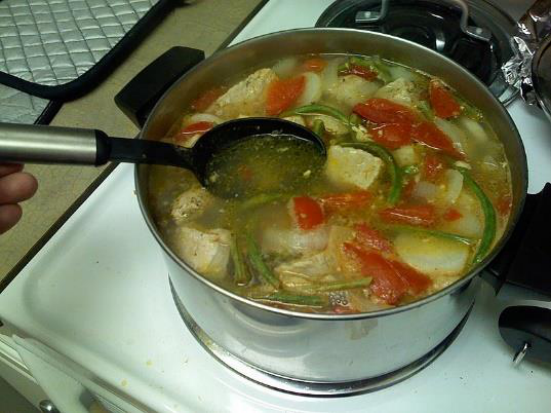
You are helping your parents to cook sinigang, a popular Filipino dish composed of meat and vegetables in a clear sour broth: They asked you to boil some water to make soup and notify them as soon as the water starts to boil at 100 °C. You told them that it started to boil after ten minutes, but they are not yet ready preparing the meat and vegetables. So to conserve energy, they asked you to lower the heat. You lowered the heat just enough so that some bubbles still appear to rise to the top of the water, although it is not boiling vigorously anymore. What is the temperature of the water at this point?
Editorial assumption: Assume continued boiling at the same pressure.
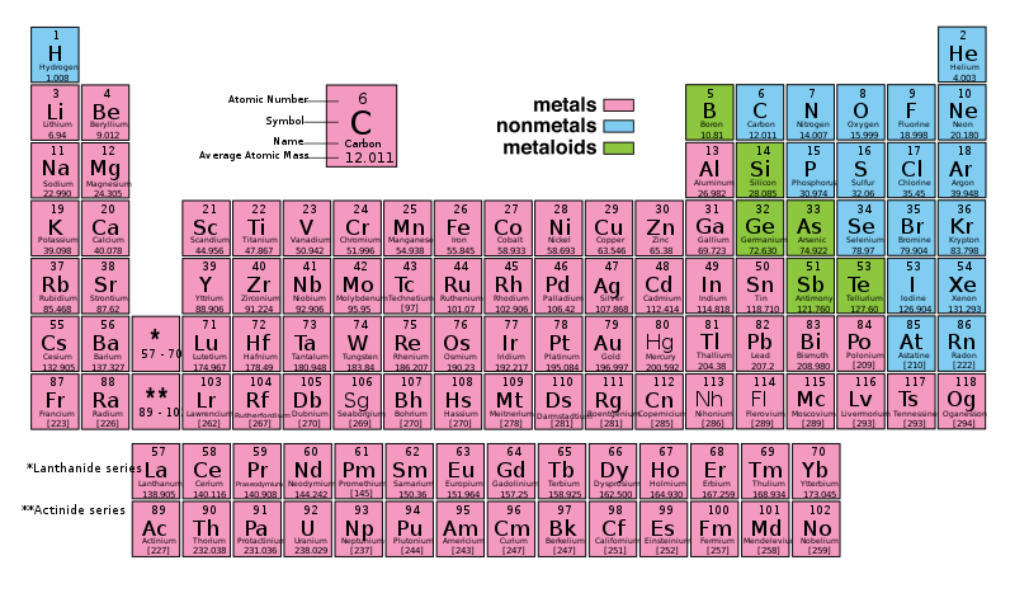
The Philosopher’s Stone have been the subject of many myths and legends. In the Harry Potter series, the Philosopher’s Stone was sought by Voldemort because it produces the Elixir of Life which could grant immortality. Historically, the field of alchemy, which arguably eventually led to the scientific study of chemistry, aimed to make this legendary stone since it is fabled to be able to transform base metals such as lead (Pb) to precious metals such as gold (Au). With modern theories of the atomic model, this is known to be impossible chemically but feasible by nuclear methods, i.e. by changing the nuclear components of Pb. What nuclear transformation would be necessary to change lead (Pb) to gold (Au)?
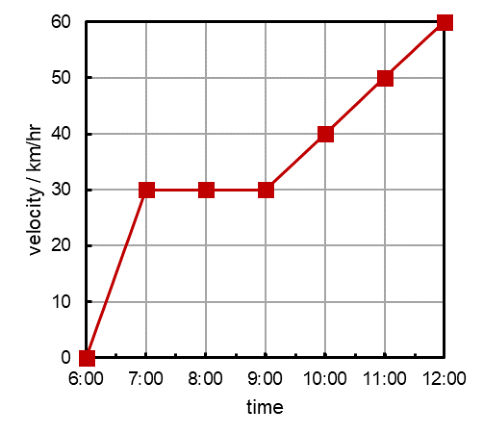
A ship leaves Manila bay at 6:00. Shown below is the distance travelled by the ship over time. What was the average acceleration the ship during the first two hours?
Editorial assumption: For grading, use the plotted velocity-axis label; the original distance wording is retained and discussed.
Mount Pinatubo in Luzon, Philippines erupted in 1991, and caused a global cooling effect for two years. Which volcanic gas released by Mount Pinatubo was the major cause of this phenomenon?