Skip to content / Đến nội dung
ThichHocToan.com

BEBRAS 2026 Grade 11-12 Sample Ext

Question 1

In a machine, a bar may tilt left (value 0) or right (value 1). A falling ball may change one or more bars before stopping. The first illustration shows how one bar changes state.
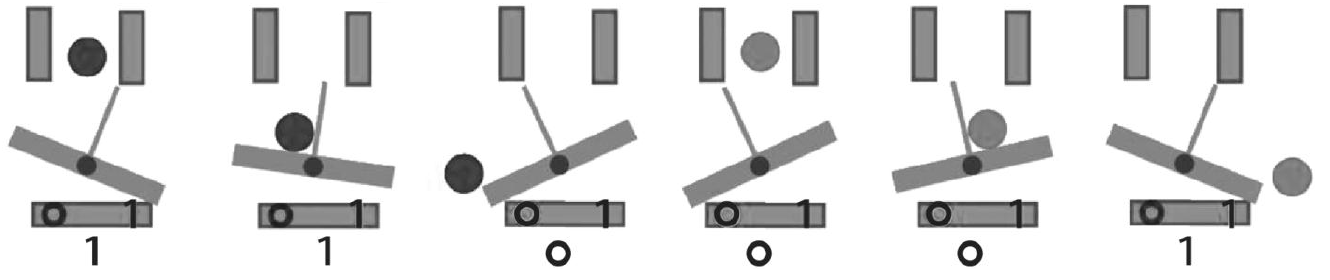
Question illustration

The next illustration shows the states after two balls have fallen; 0000, 0001, and so on encode the four bars.
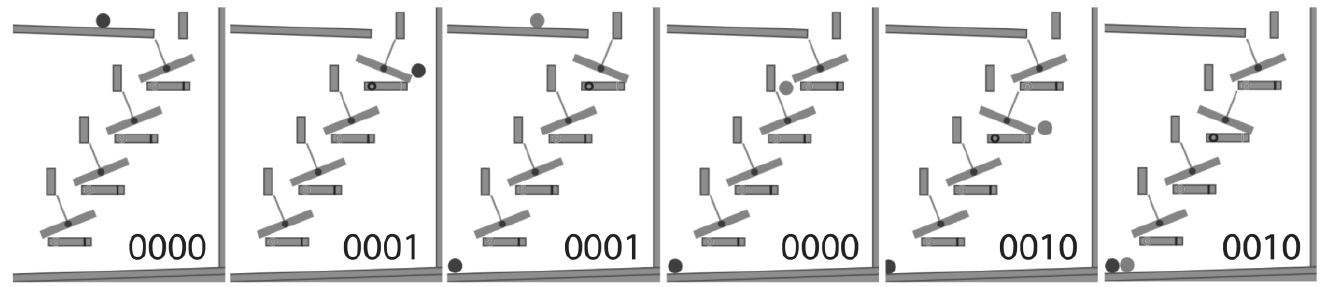
Question illustration

If 10 more balls now fall one at a time, which state will the bars represent?
  1. 1010
  2. 0110
  3. 0111
  4. 1100

Question 2

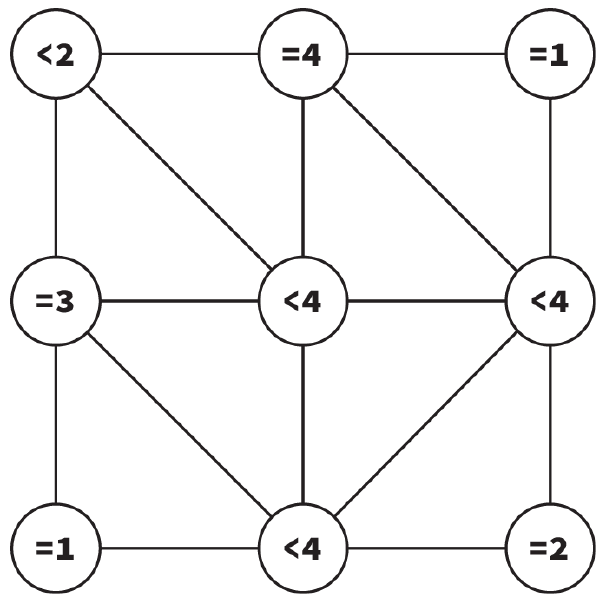
Nine towns are represented by circles. Two towns are adjacent exactly when their circles are joined by a segment. A town is a “green zone” if it has never had a Covid-19 infection. Each label gives the number of adjacent green zones; for example, <4 means fewer than four.

Question illustration

How many of the nine towns are green zones?
  1. 4
  2. 5
  3. 6
  4. 7

Question 3

Five friends stand from left to right: Anjali, Bernard, Chandra, Damini, Eshwar.

Question illustration

Anjali spells a ten-letter word correctly to Bernard, for example V-I-S-I-B-I-L-I-T-Y. Bernard whispers it to Chandra with one error: either substituting one letter (for example V-I-Q-I-B-I-L-I-T-Y) or omitting one letter (for example V-I-S-I-B-I-L-I-Y). Chandra makes one such error when telling Damini, and Damini makes one when telling Eshwar. If the original word is A-D-V-E-N-T-U-R-E-S, how many of these sequences could Eshwar hear?
- A-D-E-N-U-R
- A-D-D-E-N-T-U-R-E-S
- A-D-V-E-N-T-U-R-E
- A-V-E-N-G-E-R-S
- D-E-N-T-U-R-E
  1. 1
  2. 2
  3. 3
  4. 4

Question 4

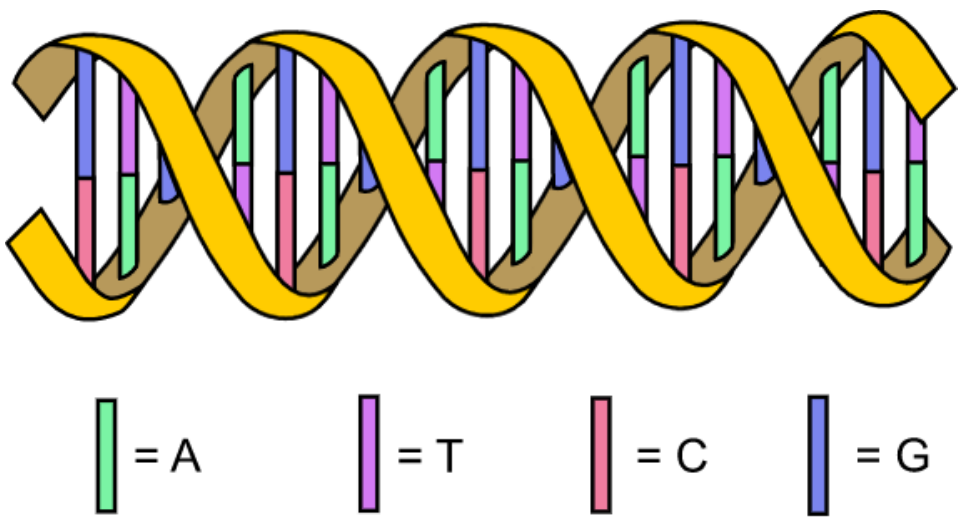
DNA is formed from four nucleobases: Adenine (A), Guanine (G), Cytosine (C), Thymine (T). Mutations create a new sequence.

Question illustration

A species called Vormi has three kinds of mutation:
- Substitution: change one base to another, e.g. AGGTC → AGGTA.
- Deletion: remove one base, e.g. AGGTC → AGTC.
- Duplication: duplicate one base next to itself, e.g. AGGTC → AGGTTC.

Starting from GTATCG, which sequence cannot be produced in three mutations?
  1. GCAATG
  2. ATTATCCG
  3. GAATGC
  4. GGTAAAC

Question 5

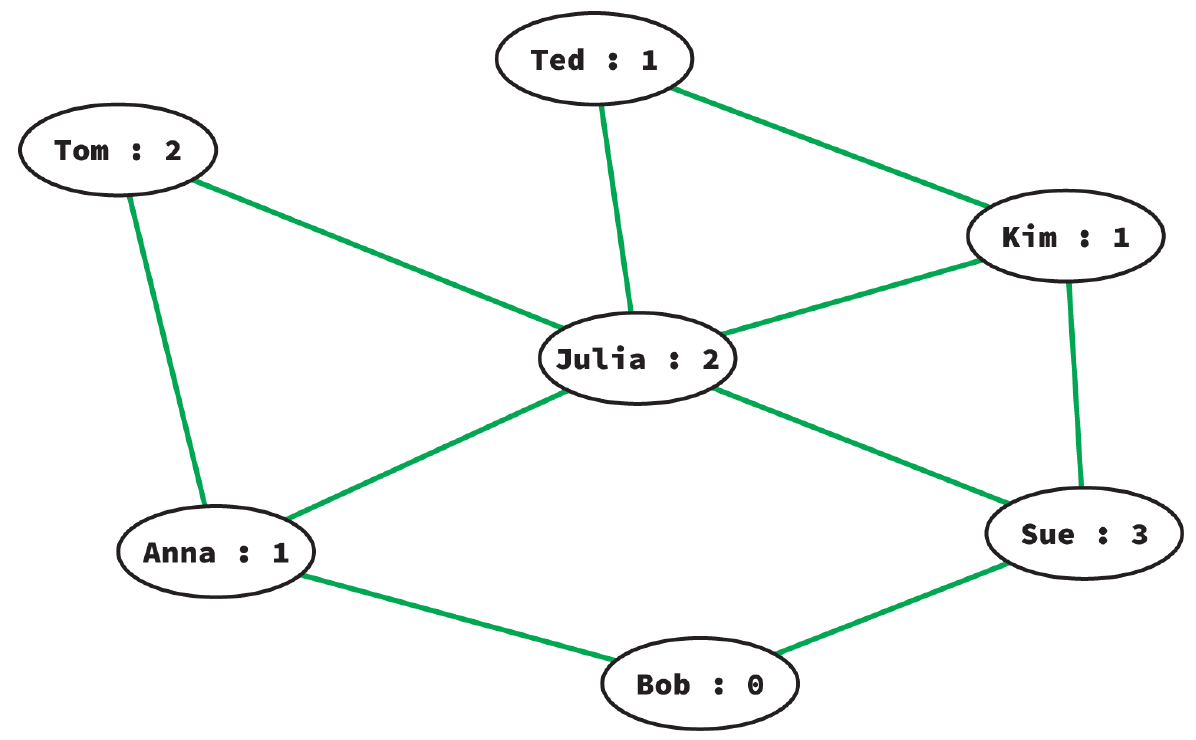
Seven friends attend a New Year party. An edge means two people know each other. For every such pair, exactly one brings a gift for the other. Numbers show the maximum number of gifts each person can give.

Question illustration

Which statement is not necessarily true?
  1. Neither Tom nor Sue receives a gift.
  2. Julia receives a gift from Sue.
  3. Anna and Kim each receive two gifts.
  4. Ted receives a gift from Julia.

Question 6

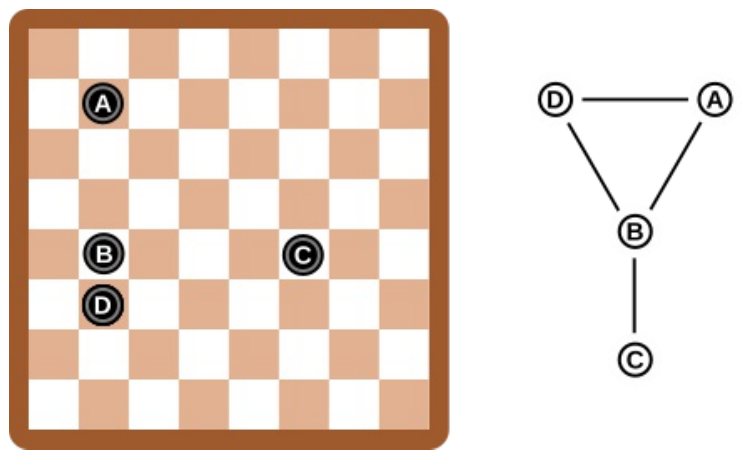
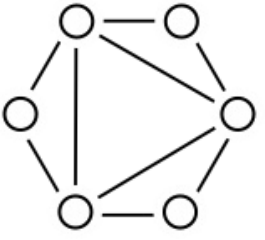
Beavers turn a board position into a graph: draw one circle per piece; join two circles exactly when their pieces share a row or a column; draw nothing else. Here is an example.

Question illustration

Now consider the six pieces on this board.

Question illustration

Which of the four graphs correctly represents this position?
  1. Question illustration
  2. Question illustration
  3. Question illustration
  4. Question illustration

Question 7

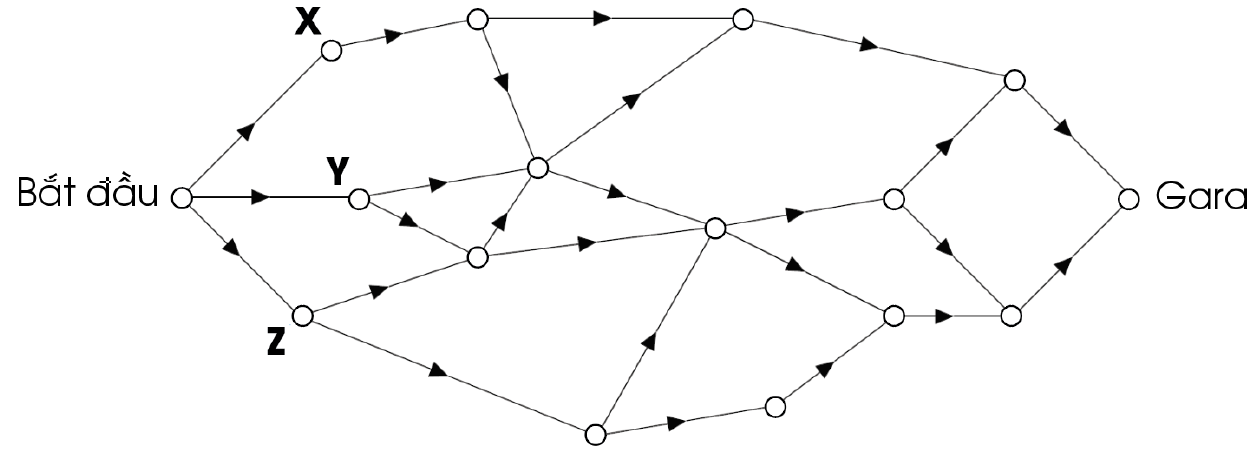
Tim and Dan alternate choosing a move for a car along the one-way roads shown. Tim moves first and wants Dan to be the player who drives into the Garage. Both play optimally.

Question illustration

Where should Tim send the car on his first turn to guarantee this? In the image, “Bắt đầu” means Start and “Gara” means Garage.
  1. X
  2. Either X or Y
  3. Either Y or Z
  4. Tim cannot force a win.

Question 8

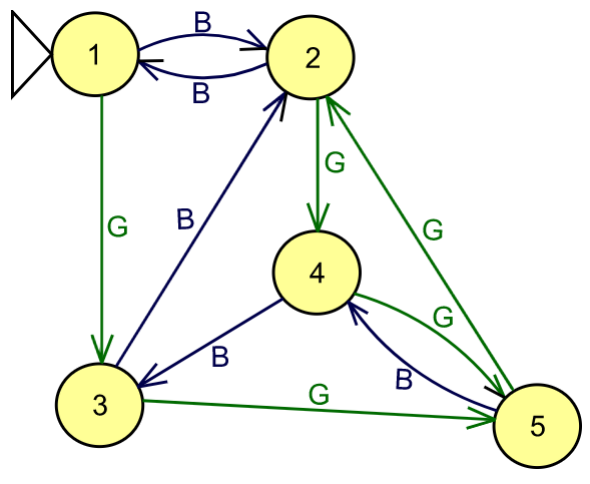
A special instrument has red (R), blue (B), and green (G) keys and five notes numbered 1–5. Begin by pressing R, which plays note 1. Subsequent notes depend on the previous note and the key as shown.

Question illustration

R always plays note 1. A tune is happy if its last two notes are both 1. For example R-G-B-B-R produces 1-3-2-1-1, a happy tune; R-G-B-R-B produces 1-3-2-1-2, which is not happy. Which key sequence produces a happy tune?
  1. R-B-B-G-B-R
  2. R-G-G-G-B-R
  3. R-B-G-B-G-R
  4. R-G-G-B-G-R

Question 9

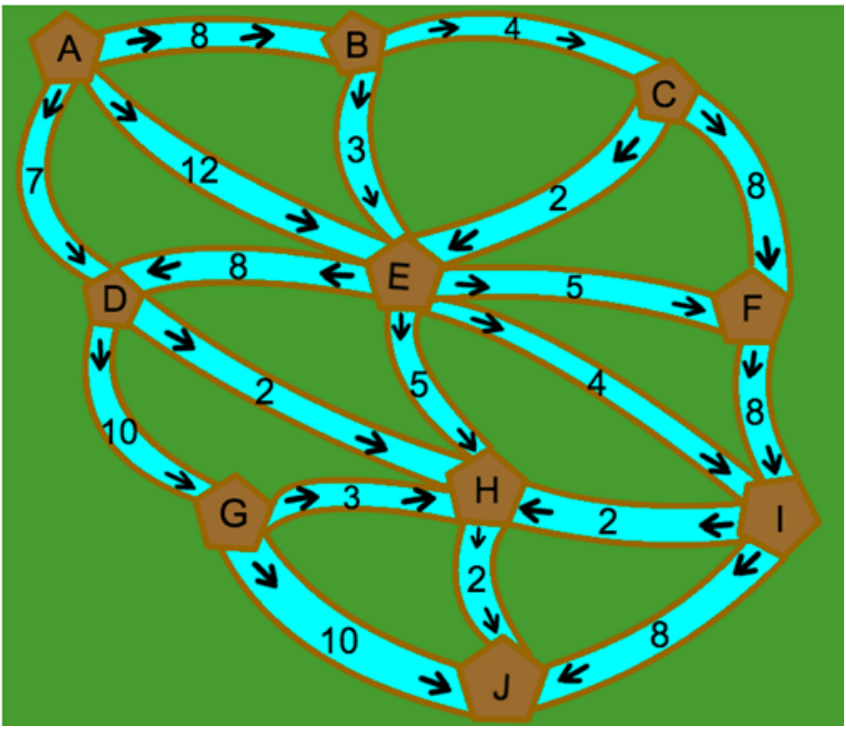
A beaver swims from town A to town J only downstream, following arrows. Each river label is the number of logs collected on that river. The beaver chooses a route collecting as many logs as possible.

Question illustration

How many towns does this route pass through, excluding A and J?
  1. 5
  2. 6
  3. 7
  4. 8

Question 10

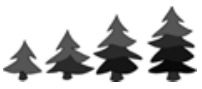
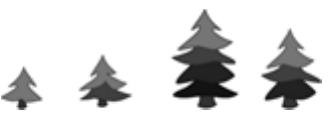
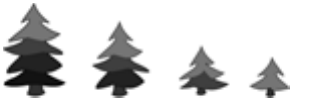
A beaver has 16 fir trees of four heights, four of each height. Trees of the same type have the same height, and different types have different heights. The four types, from shortest to tallest, are shown here.

Question illustration

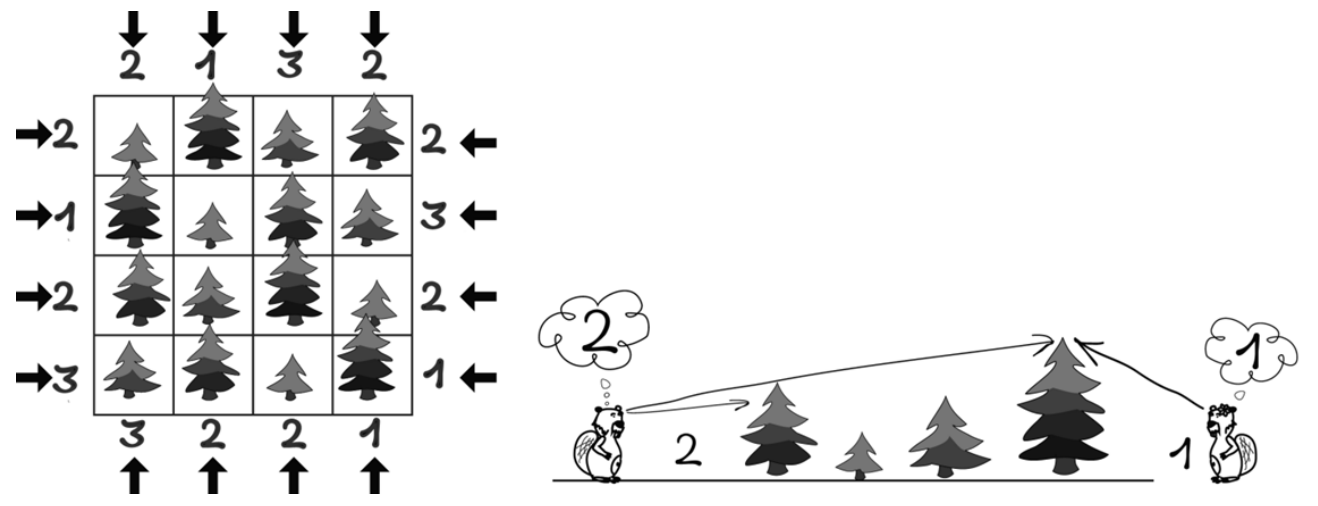
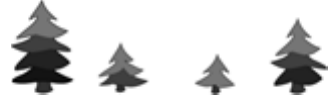
Plant them in a 4×4 garden so every row and column contains each type exactly once. A sign around the garden records how many trees are visible along that row or column: a taller tree hides shorter trees behind it. The example illustrates the rule.

Question illustration

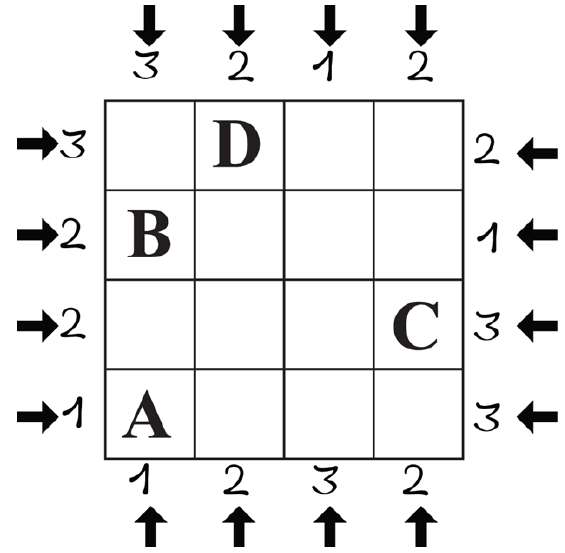
Here are the signs for a new garden.

Question illustration

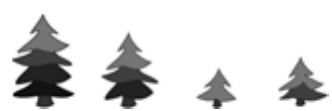
Which option gives the trees at A,B,C,D, in that order?
  1. Question illustration
  2. Question illustration
  3. Question illustration
  4. Question illustration

Question 11

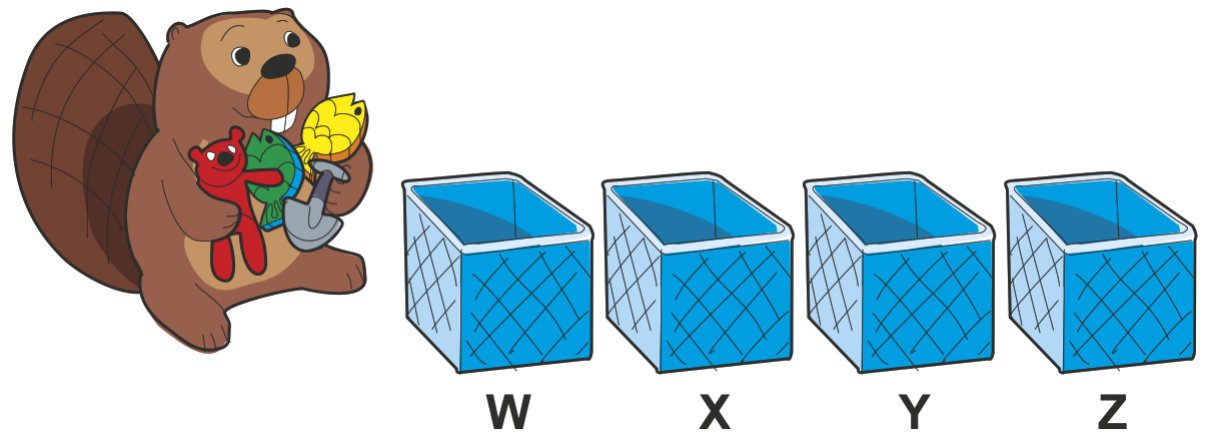
A beaver wants to put four toys into the four boxes shown.

Question illustration

In each of the following groups, at least one of its three conditions must be true:
1. X contains a toy; Y contains no toy; Z contains no toy.
2. W contains a toy; X contains a toy; Z contains no toy.
3. X contains no toy; Y contains no toy; Z contains a toy.
4. W contains no toy; X contains no toy; Y contains no toy.
5. X contains no toy; Y contains a toy; Z contains no toy.

What is the greatest number of toys the beaver can store while satisfying these conditions?

Editorial convention (not stated explicitly in the source): each box holds at most one toy.
  1. 1
  2. 2
  3. 3
  4. 4

Question 12

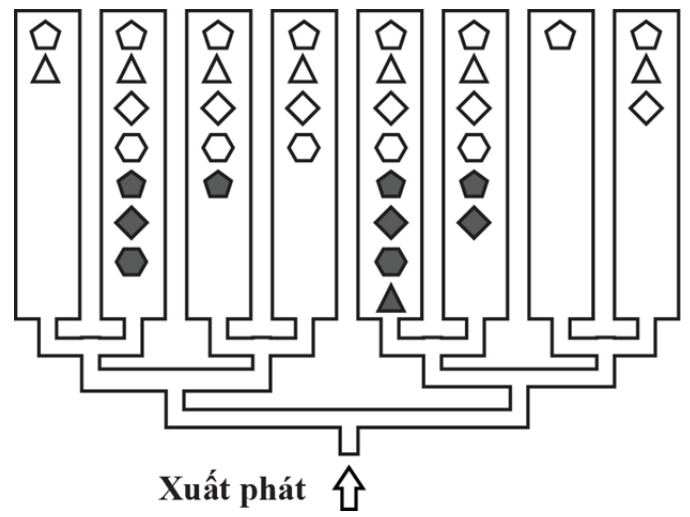
A gem-collecting game has a robot and the branching map shown.

Question illustration

Starting at “Xuất phát” (Start), the robot moves continuously. At each fork, its controller chooses a branch. At a dead end, it collects all gems there. Alex and Bob alternate decisions, with Alex moving first. Alex wants as many gems as possible; Bob wants as few as possible. Both know the other's goal and reason optimally. How many gems will the robot collect?
  1. 2
  2. 4
  3. 5
  4. 8

Question 13

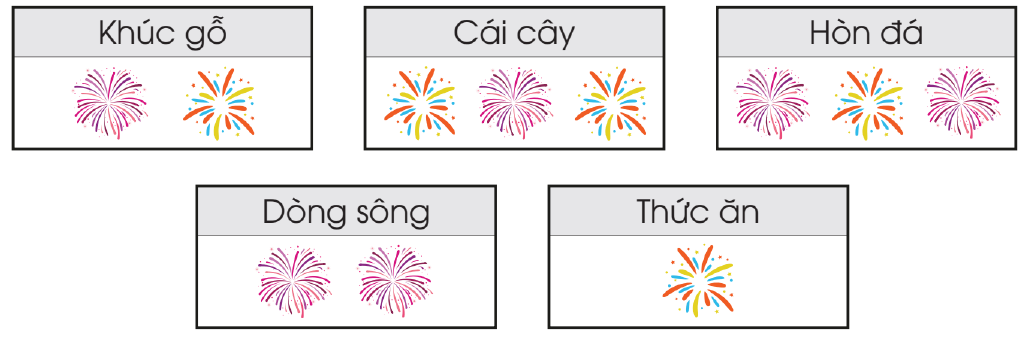
Two beavers on opposite sides of a forest communicate with fireworks. They use only the five words shown in these code cards.

Question illustration

The Vietnamese labels mean: Khúc gỗ=log, Cái cây=tree, Hòn đá=stone, Dòng sông=river, Thức ăn=food. For example, “food, log, food” is sent as follows.

Question illustration

Some sequences can be interpreted in more than one way. How many interpretations does this sequence have?

Question illustration

  1. 2
  2. 3
  3. 4
  4. 5

Question 14

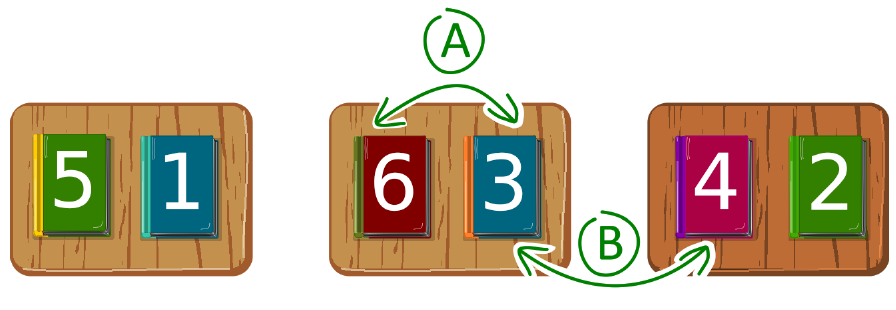
Six books sit on three tables as shown.

Question illustration

A type-1 swap exchanges the two books on the same table (example A). A type-2 swap exchanges consecutive books across two neighbouring tables (example B). One round consists of one or more consecutive swaps all of the same type. What is the minimum number of rounds needed to arrange the books as 1,2,3,4,5,6 from left to right?
  1. 3
  2. 4
  3. 5
  4. 6

Question 15

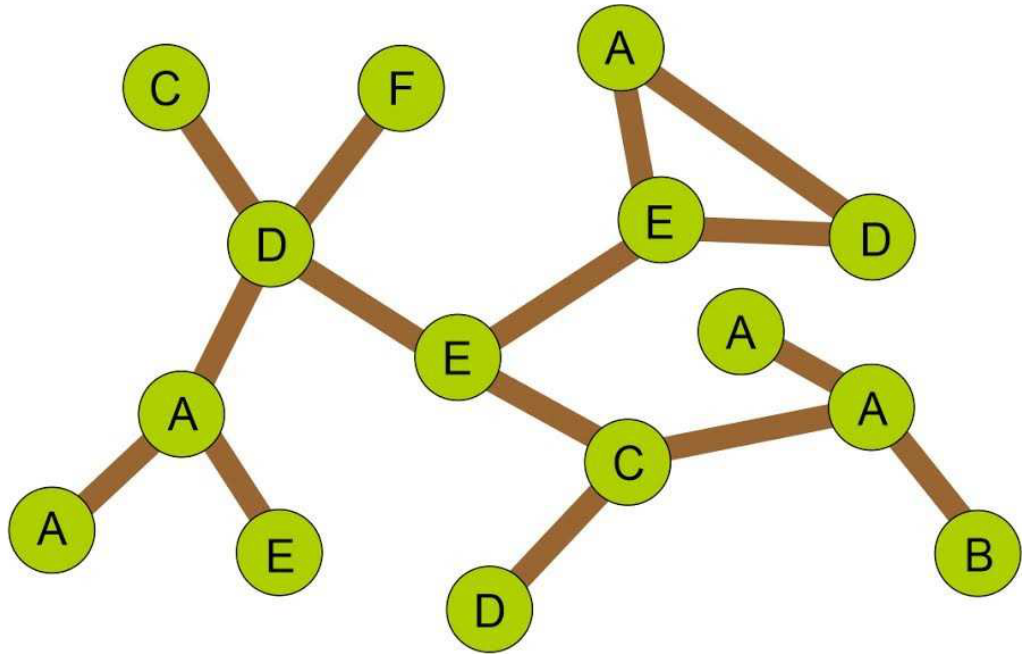
The park map uses green circles for trees and brown segments for paths. Each tree has a letter label.

Question illustration

Alex and Bob record the tree labels they pass:

Alex: B A A A C E D E E D A.

Bob: F D C D A E A D E D A.

They start simultaneously and each takes the same amount of time to traverse any one path segment. How many times do they meet?
  1. 1
  2. 2
  3. 4
  4. They never meet.