Skip to content / Đến nội dung
ThichHocToan.com

BEBRAS 2026 Grade 7-8 Round 2 Ext

Question 1

Nine guests arrive at a party by car. The car park has three columns, each holding three cars one behind another. On arrival, a car must occupy the first available place in one column. A car can leave only if no other car is behind it in that column. In the example, E can leave immediately, but D must wait for F to move.
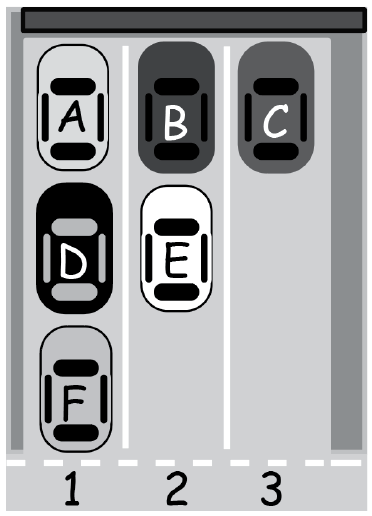
Question illustration

The cars arrive in the order A, B, C, D, E, F, G, H, I. They want to leave in the order G, D, F, I, H, C, B, A, E. Which arrangement meets both requirements?
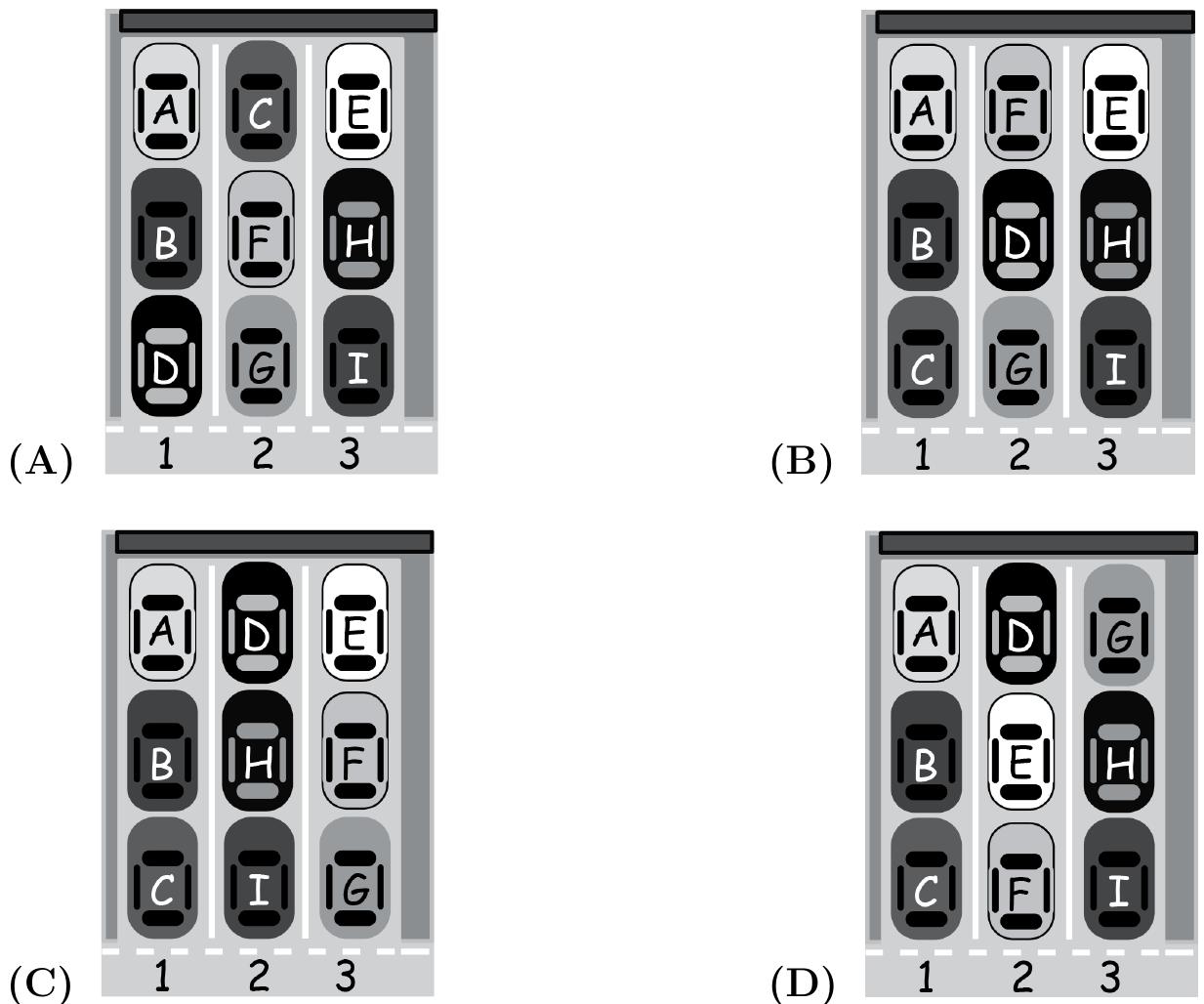
Question illustration
  1. Arrangement A
  2. Arrangement B
  3. Arrangement C
  4. Arrangement D

Question 2

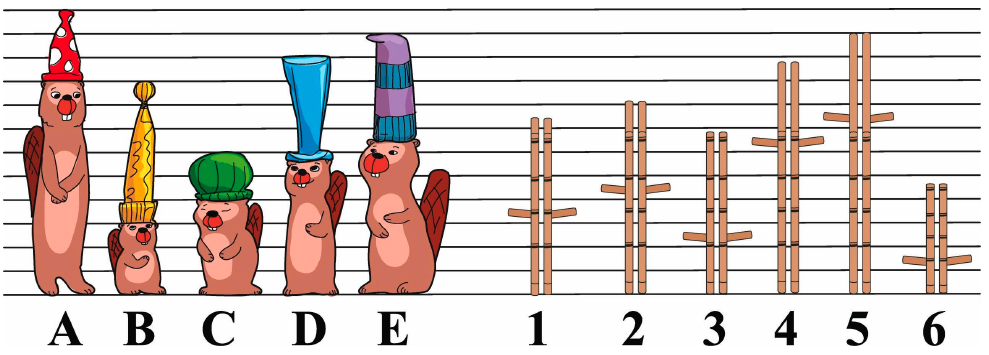
The beavers must choose suitable stilts so they all have the same total height, including hats and stilts. Which pairing works?

Question illustration
  1. A4, B2, C5, D1, E3
  2. A4, B2, C6, D1, E3
  3. A6, B5, C6, D1, E3
  4. A6, B2, C5, D1, E3

Question 3

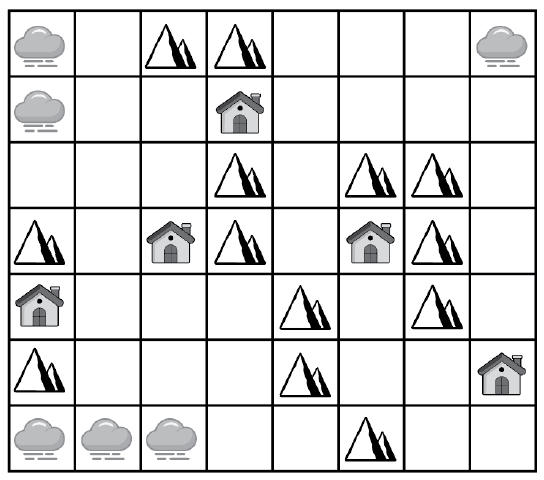
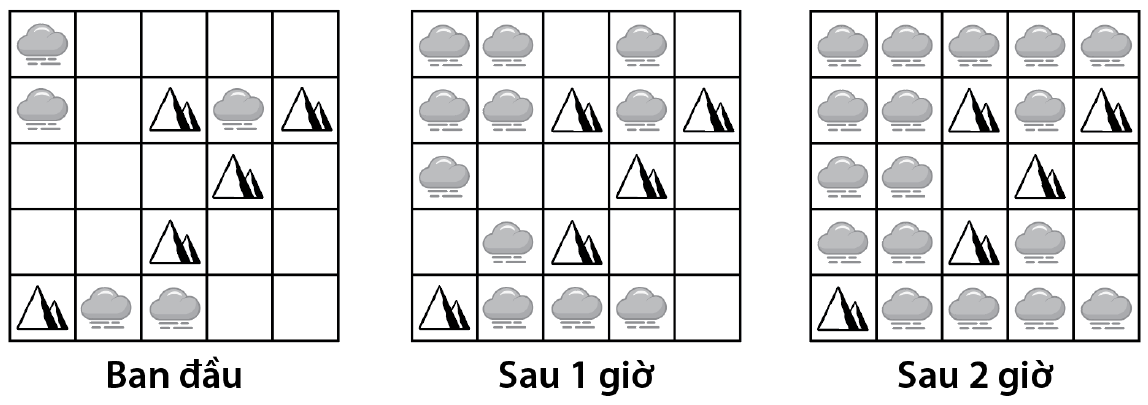
Fog is spreading across Bebrasland. The terrain is a square-cell grid. Fog starts in the marked cells; each hour it spreads to horizontally or vertically adjacent cells, but never into mountain cells. The example shows the initial map, after one hour, and after two hours, respectively.

Question illustration

For the following map, what is the smallest number of hours until fog covers every house?

Question illustration
  1. 6
  2. 7
  3. 8
  4. 9

Question 4

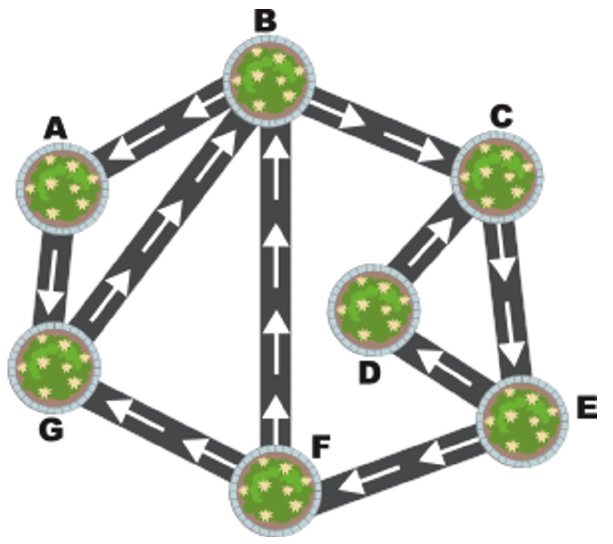
The city has seven parks connected by ten one-way roads, as shown. Currently a resident can travel from any park to any other park.

Question illustration

Beaver wants to close one road for an art exhibition. Which roads could be closed, one at a time, while preserving travel between every pair of parks?
  1. GB or FG
  2. FB or CE
  3. FB or FG
  4. GB or CE

Question 5

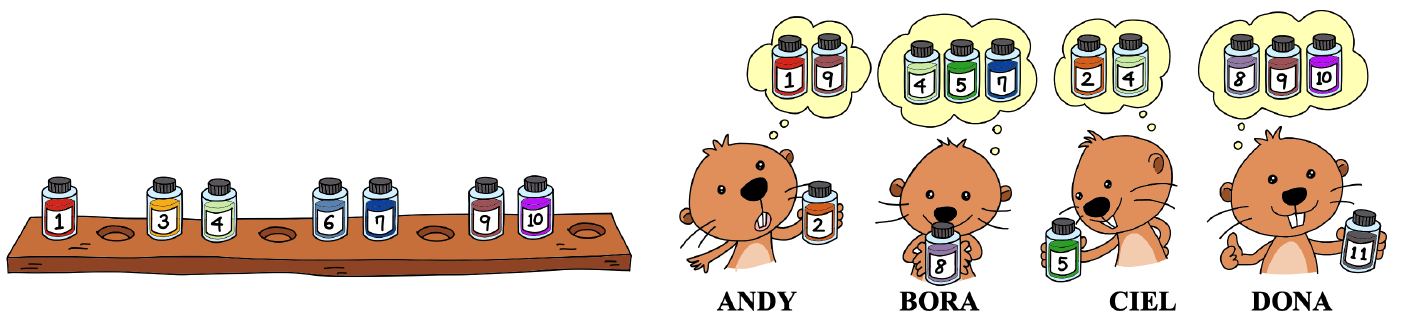
Sand painting uses colored sand and quick-drying glue, so every required color must be collected before painting starts. There are eleven numbered jars of different colors. The teacher gave one jar to each pupil. The picture shows the jars ANDY, BORA, CIEL and DONA hold, the other jars each needs, and the jars still available.

Question illustration

A pupil must obtain all required colors before starting. After finishing, the pupil returns every jar used. Anyone needing a jar held by someone else must wait until it is returned. Who finishes last?
  1. ANDY
  2. BORA
  3. CIEL
  4. DONA

Question 6

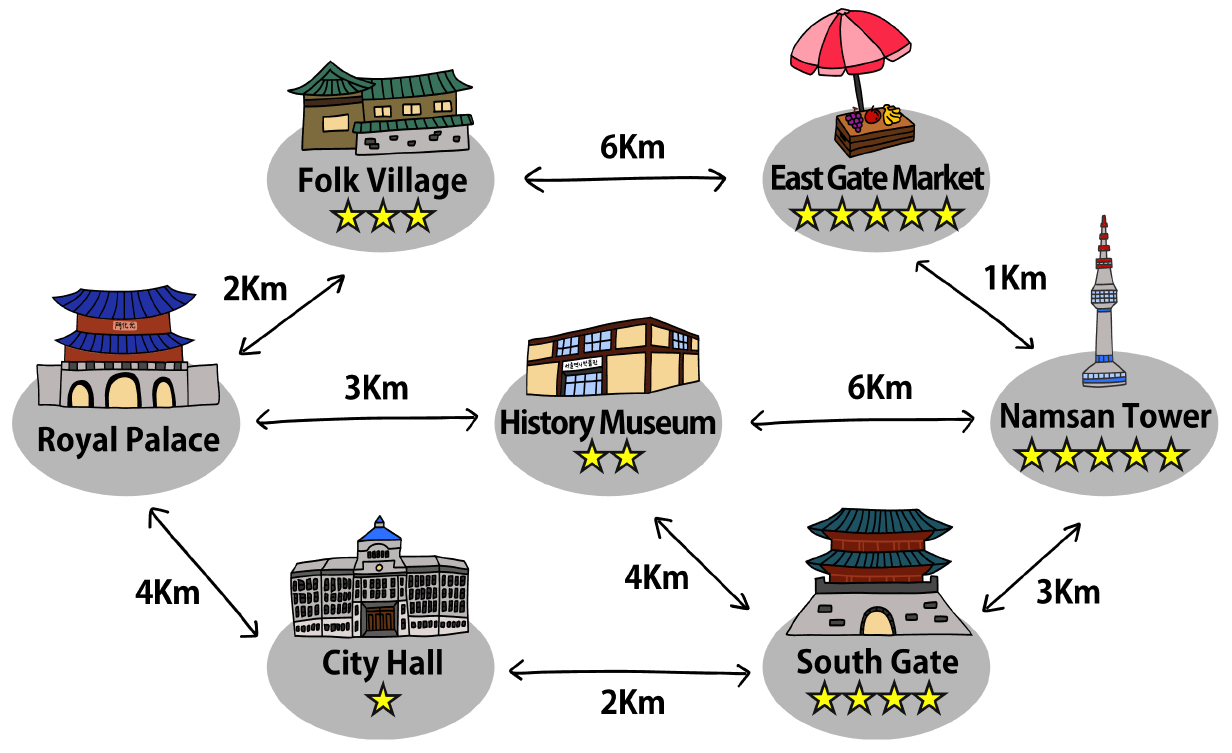
Seoul provides tourist buses between the attractions shown. Edge labels are distances, and stars show the satisfaction rating for each attraction.

Question illustration

After visiting Royal Palace, Susie wants to visit other attractions by bus, but her travel card has only 10 km of travel remaining. She wants the greatest total star rating of the attractions she visits. Which attraction will she visit last?
  1. East Gate Market
  2. Namsan Tower
  3. South Gate
  4. History Museum

Question 7

George encodes a word in two steps:
1. Read left to right and concatenate the letters in odd-numbered positions. For example, bread gives bed.
2. Read right to left and append all the remaining letters. Thus bread becomes bedar after both steps.
Repeated encoding eventually returns the original word. For example, milk returns after three encodings: milk → mlki → mkil → milk. How many encodings are needed for society to return to its original form?
  1. 4
  2. 5
  3. 6
  4. 7

Question 8

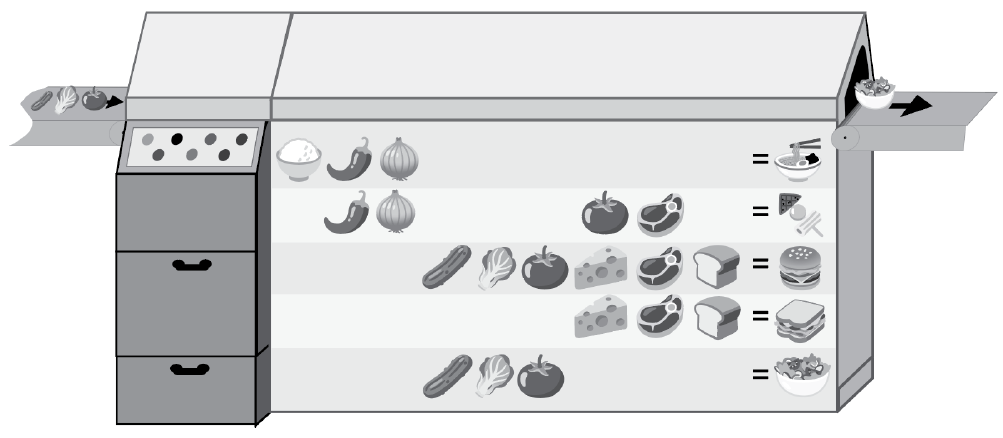
A food factory uses a machine to match its input ingredients to the five recipes shown.

Question illustration

Every recipe must match exactly: consecutive ingredients in the listed order, without skipping any ingredient within the recipe. Ingredients cannot be reused. Unused ingredients pass through as raw outputs. For this example input:

Question illustration

the machine can group the ingredients as follows:

Question illustration

and produce two dishes plus one raw ingredient:

Question illustration

For the following input, what is the smallest total number of dishes and raw ingredients in the output?

Question illustration
  1. 7
  2. 8
  3. 9
  4. 10

Question 9

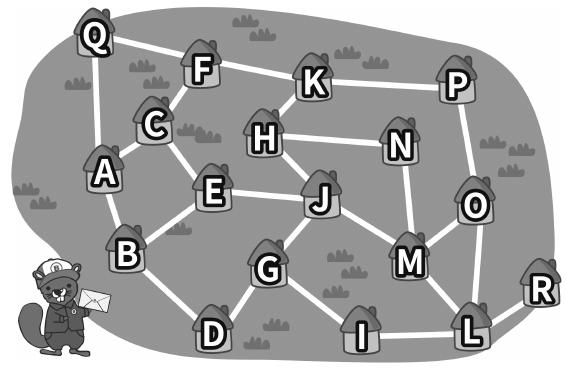
An island has eighteen villages connected as shown. Each village has many messengers. Whenever a village originates or newly receives information, its messengers send it to every directly connected neighboring village on the following day.

Question illustration

For example, information from A reaches B, C, Q after one day, D, E, F after two days, and continues until everyone receives it. If new information starts at J, what is the smallest number of days until every village receives it?
  1. 3
  2. 4
  3. 5
  4. 6

Question 10

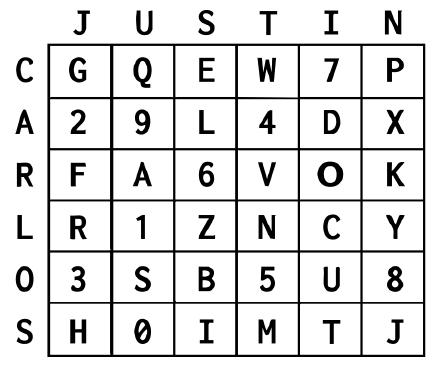
Justin and Carlos use the following 6 × 6 table to encode secret messages. JUSTIN labels the columns; CARLOS labels the rows.

Question illustration

For each character: if it is in the table, replace it by its row key followed by its column key; otherwise leave it unchanged. For example, KEY! becomes RNCSLN!, and 10CAKES becomes LUSULIRURNCSOU. Which letter is used most often when encoding 4BEAVERS!?
  1. Letter S
  2. Letter R
  3. Letter C
  4. Letter U

Question 11

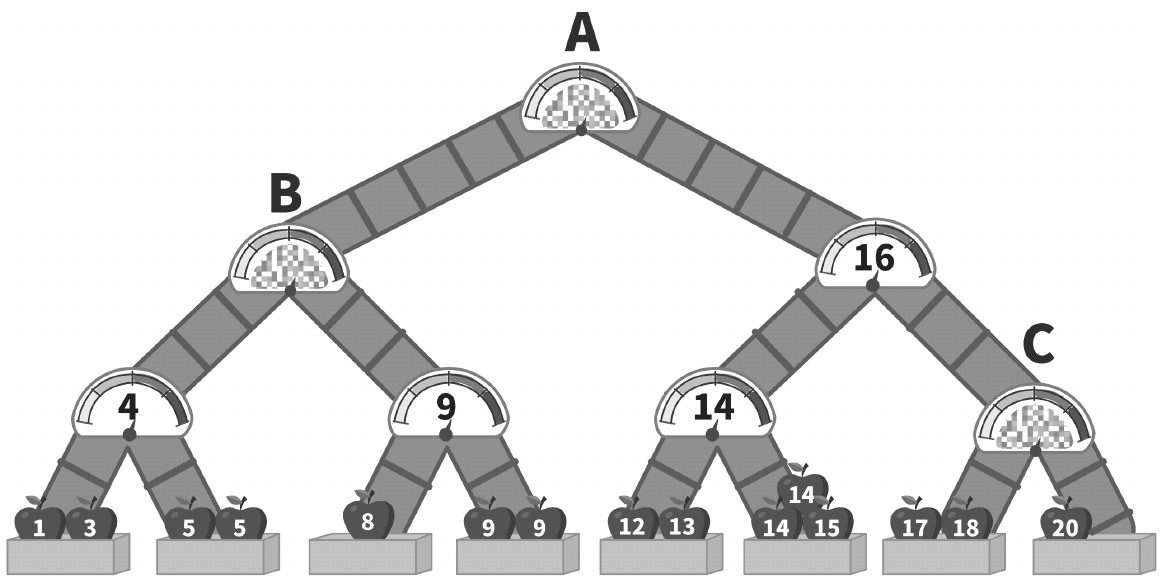
Beaver sorts apples by weight into eight grades, each sent to its own packing area. In the automatic sorter, an apple falls right at a sensor if its weight is at least the displayed threshold; otherwise it falls left. Some apples have already been sorted as shown, but displays A, B and C are broken.

Question illustration

Which triple could be the thresholds A, B, C, in that order?
  1. 12 – 7 – 20
  2. 10 – 5 – 18
  3. 11 – 6 – 17
  4. 13 – 8 – 19

Question 12

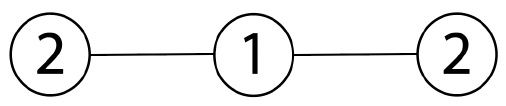
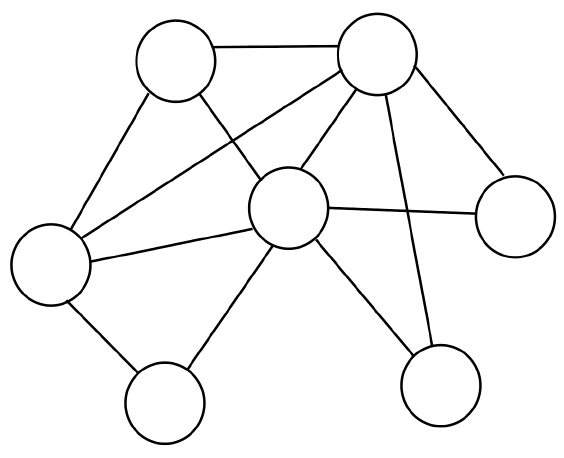
School exams must be scheduled over five available days, Day 1 to Day 5. Each exam is a circle. Two circles are connected exactly when the exams share candidates and therefore must occur on different days. Follow these rules:
1. Connected exams cannot use the same day.
2. Schedule exams with more connections before those with fewer.
3. Always use the earliest possible day: try Days 1, 2, 3, 4, then 5.
4. Aim to use as few days as possible.
For example, three exams, one conflicting with both others, need at least two days:

Question illustration

For these seven exams, what is the minimum number of days, and what is the greatest number of exams held on one day in that schedule?

Question illustration
  1. At least 3 days; at most 3 exams on one day
  2. At least 4 days; at most 2 exams on one day
  3. At least 4 days; at most 3 exams on one day
  4. At least 5 days; at most 2 exams on one day

Question 13

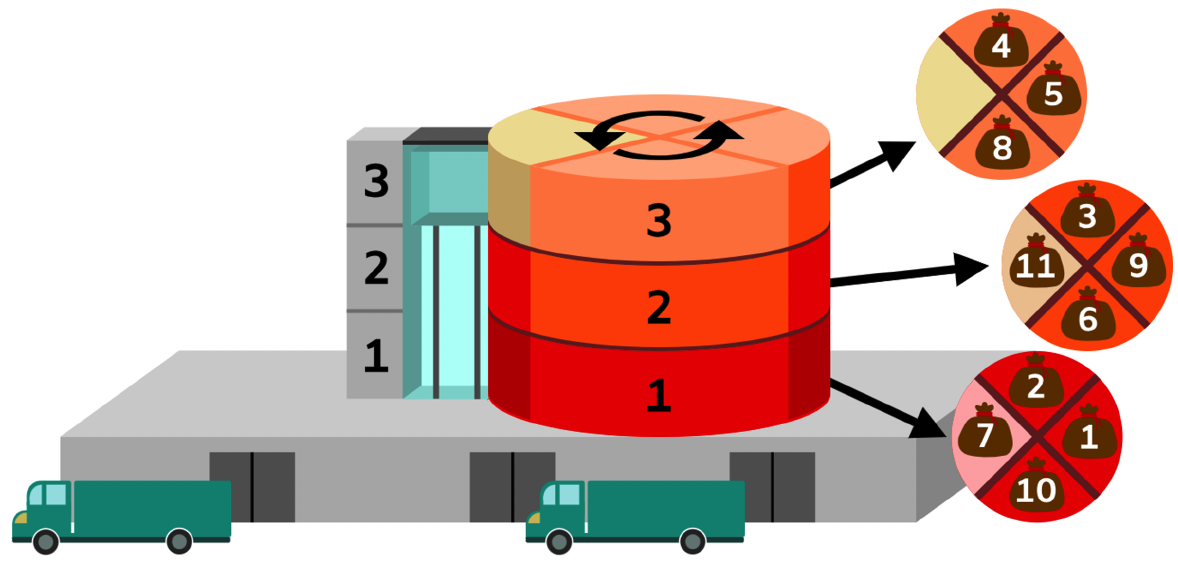
A warehouse has four levels: the unloading area and floors 1, 2, 3. A robot uses a lift between floors. Each upper floor has four rotating compartments; eleven bags occupy the compartments shown.

Question illustration

The commands are:
- MU: move the lift up one floor.
- MD: move the lift down one floor.
- R: rotate the storage platform at the robot’s current floor one position counterclockwise.
- L: take one bag from the compartment beside the lift into the lift.
- U: unload one bag from the lift onto the truck.
For example, starting on floor 2, MU, R, R, R, L, MD, R, R, L, MD, MD, U, U moves bags 8 and 9 onto the truck.
Starting on floor 1 in the original arrangement, which bags are moved to the truck by R, R, L, MU, MU, R, R, MD, R, L, MD, MD, U, U?
  1. Bags 3 and 5
  2. Bags 1 and 5
  3. Bags 1, 3 and 5
  4. Bags 1 and 3

Question 14

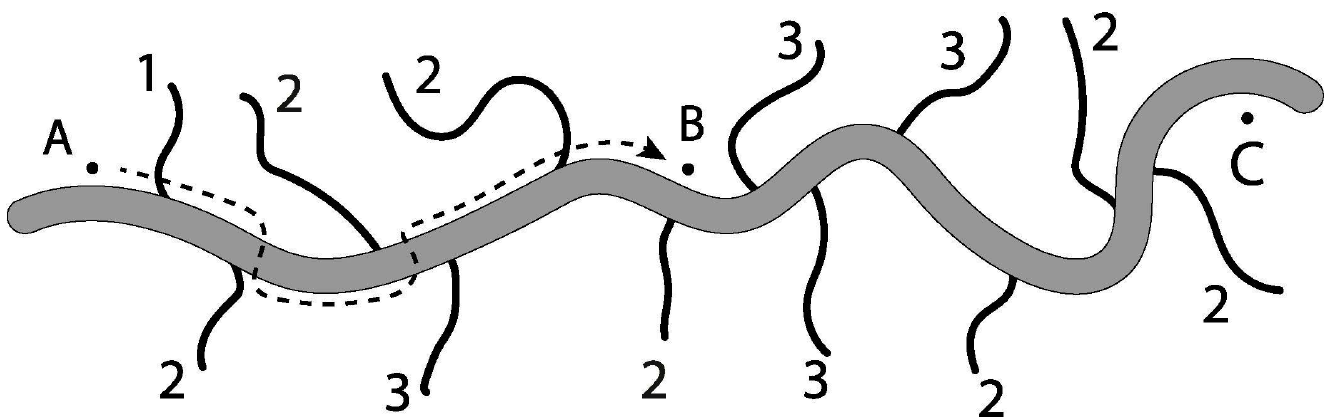
Three beaver villages A, B, C lie beside the gray river. Black tributary streams flow into it. Beavers travel along the banks, crossing streams and, if useful, the river. Each river crossing takes 2 minutes; each stream crossing takes the number of minutes written beside it. For example, the dashed A-to-B route takes 7 minutes of crossing time.

Question illustration

What is the least total crossing time, in minutes, for a trip from A to C along the riverbanks?
  1. 12
  2. 14
  3. 15
  4. 16

Question 15

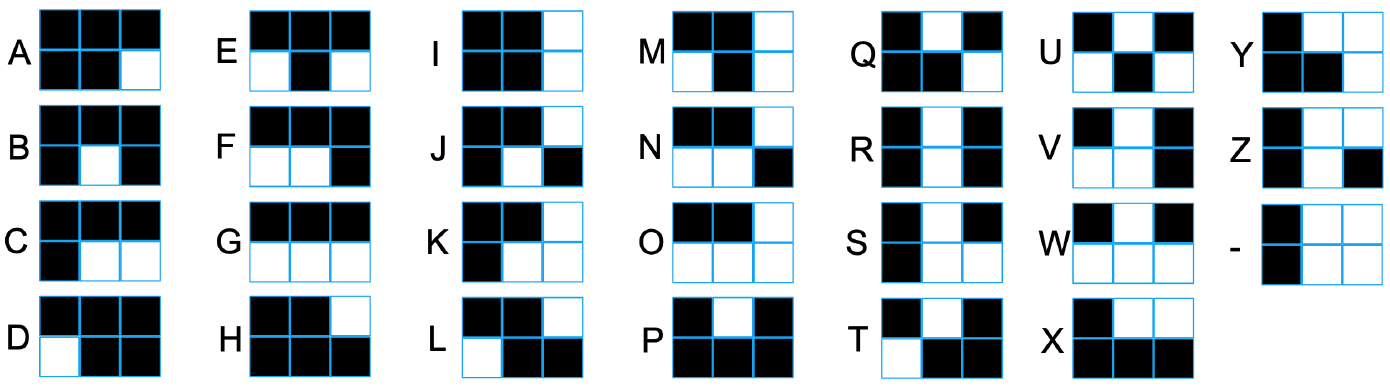
Beaver encodes letters using 3 × 2 cards as shown.

Question illustration

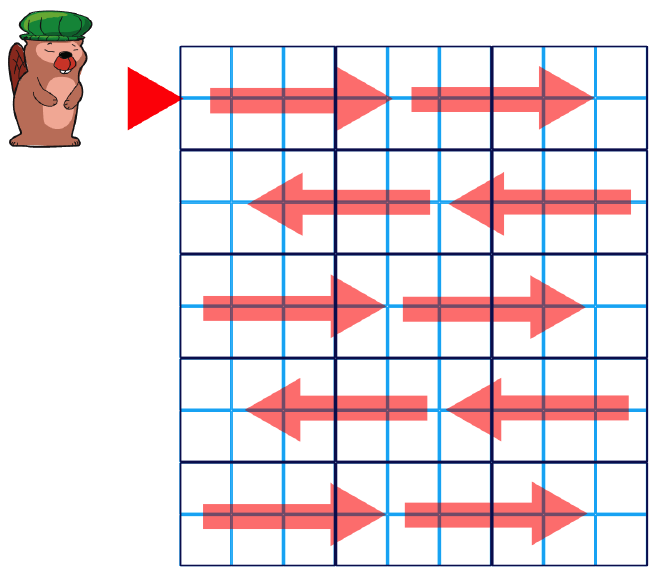
To decode a message, Beaver follows the arrows and reads each card in the orientation seen while walking.

Question illustration

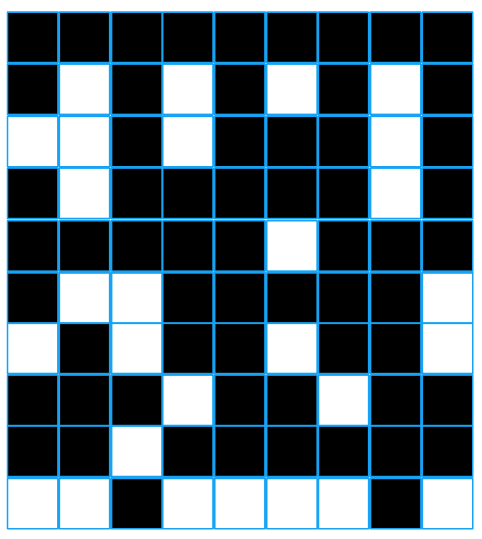
Which letter occurs most often in this message?

Question illustration
  1. Letter L
  2. Letter R
  3. Letter E
  4. Letter B