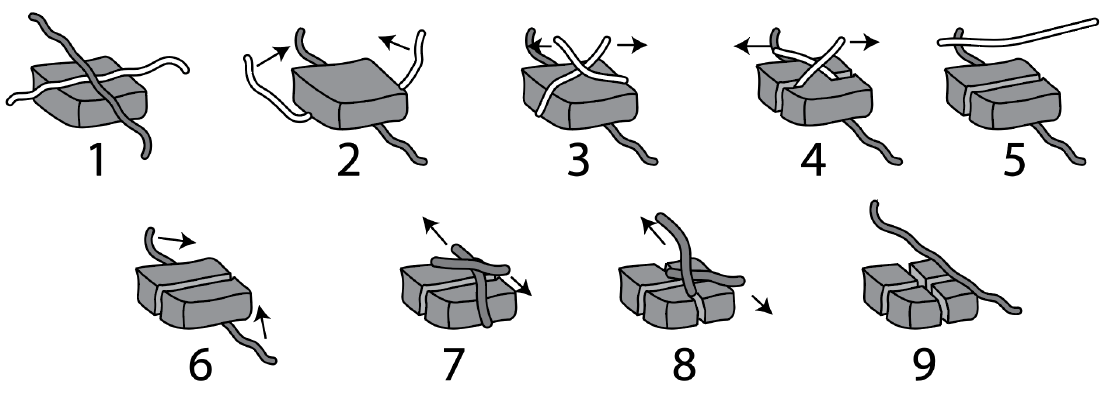
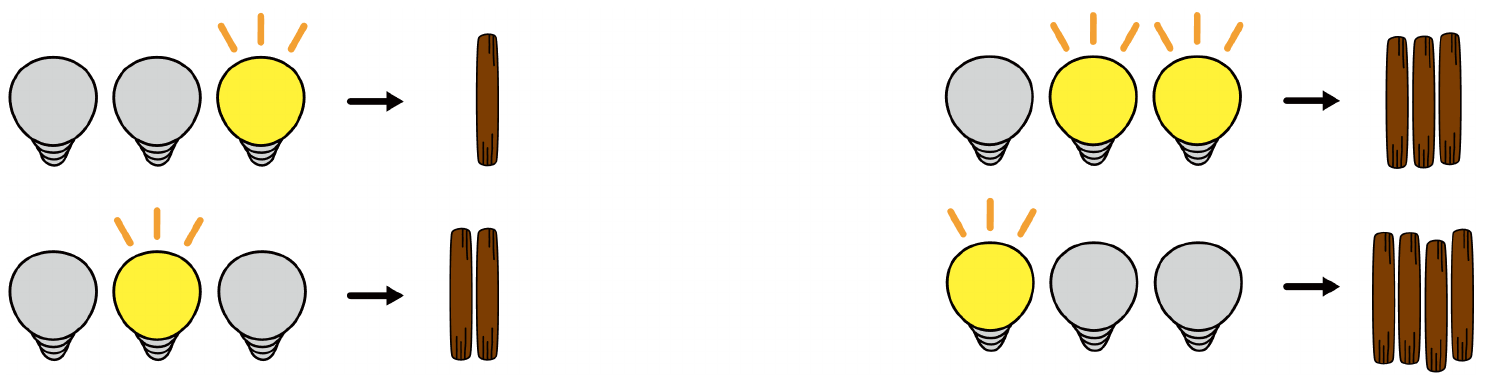
Sticky rice cake is often cut with strings rather than a knife because the cake is sticky. These pictures show one-string cutting.
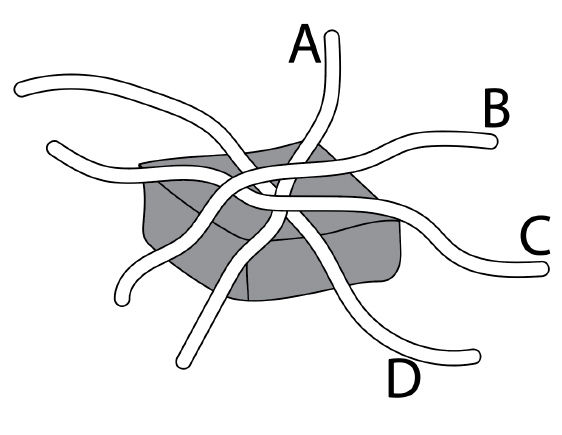
Several strings may also be used, but must be pulled in the right order so they do not catch on each other. In the two-string example, pull the white string before the grey string; reversing that order traps the grey string.
In what order should the four strings below be pulled?
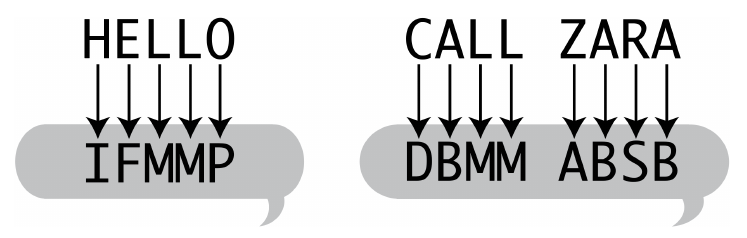
Alice and Bob are spies. They use the alphabet ABCDEFGHIJKLMNOPQRSTUVWXYZ and encrypt each letter by replacing it with the next letter; Z becomes A. The examples are HELLO→IFMMP and CALL ZARA→DBMM ABSB.
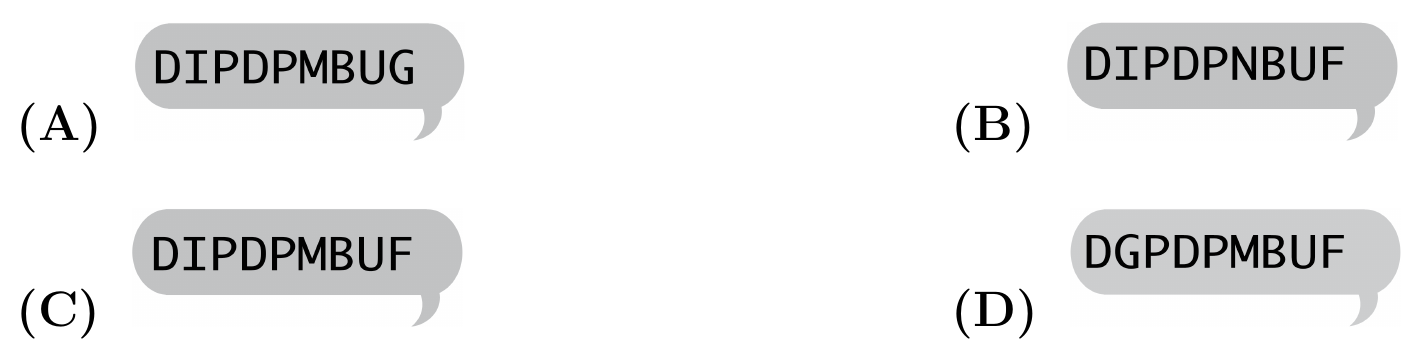
Bob wants to send CHOCOLATE. Which encrypted message should he send?
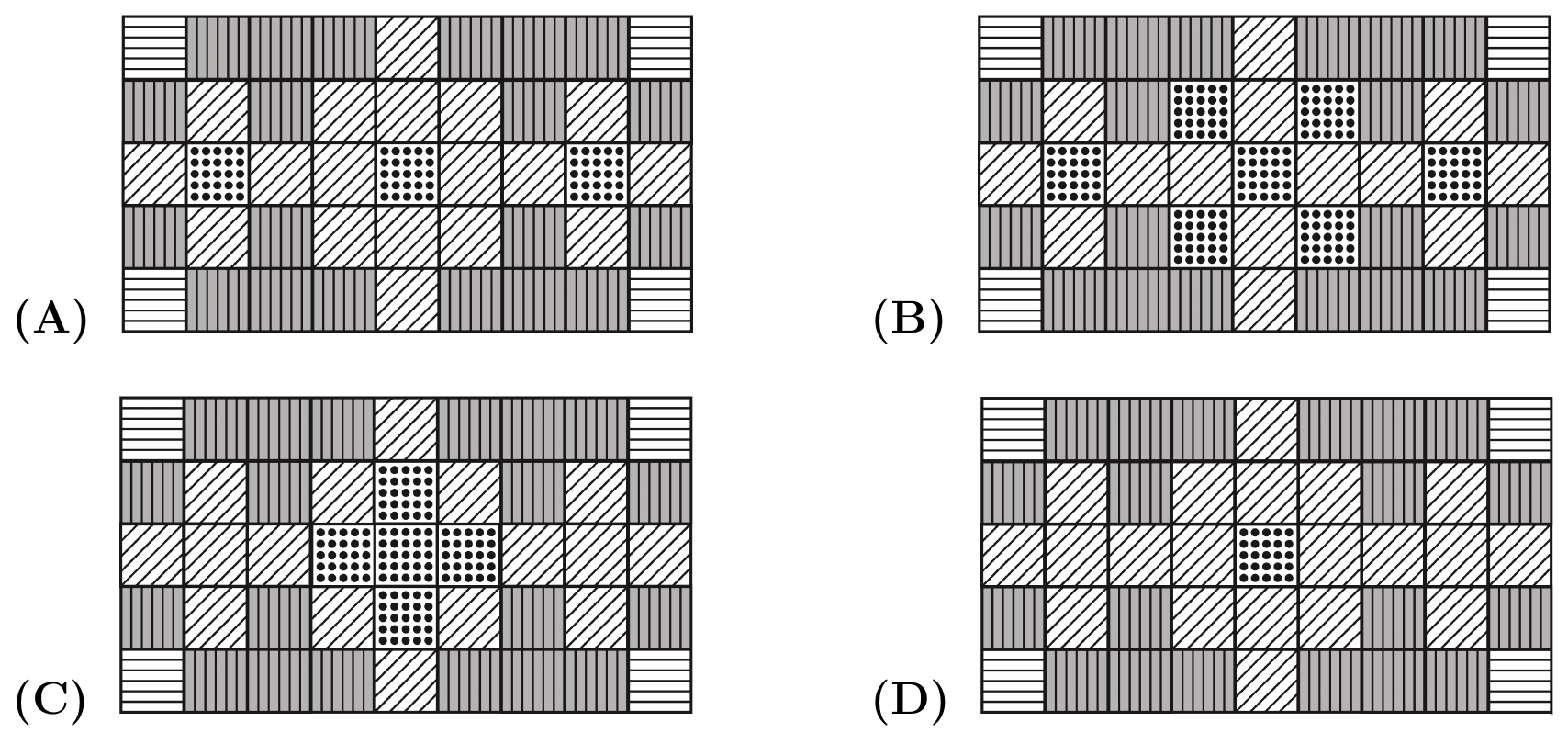
A robot embroiders carpets using four coded patterns: 00 horizontal lines, 11 dots, 01 diagonal lines, 10 vertical lines.
It follows each row from left to right, and rows from top to bottom. The program is:
- Row 1: 00-10-10-10-01-10-10-10-00
- Row 2: 10-01-10-01-01-01-10-01-10
- Row 3: 01-11-01-01-11-01-01-11-01
- Row 4: 10-01-10-01-01-01-10-01-10
- Row 5: 00-10-10-10-01-10-10-10-00
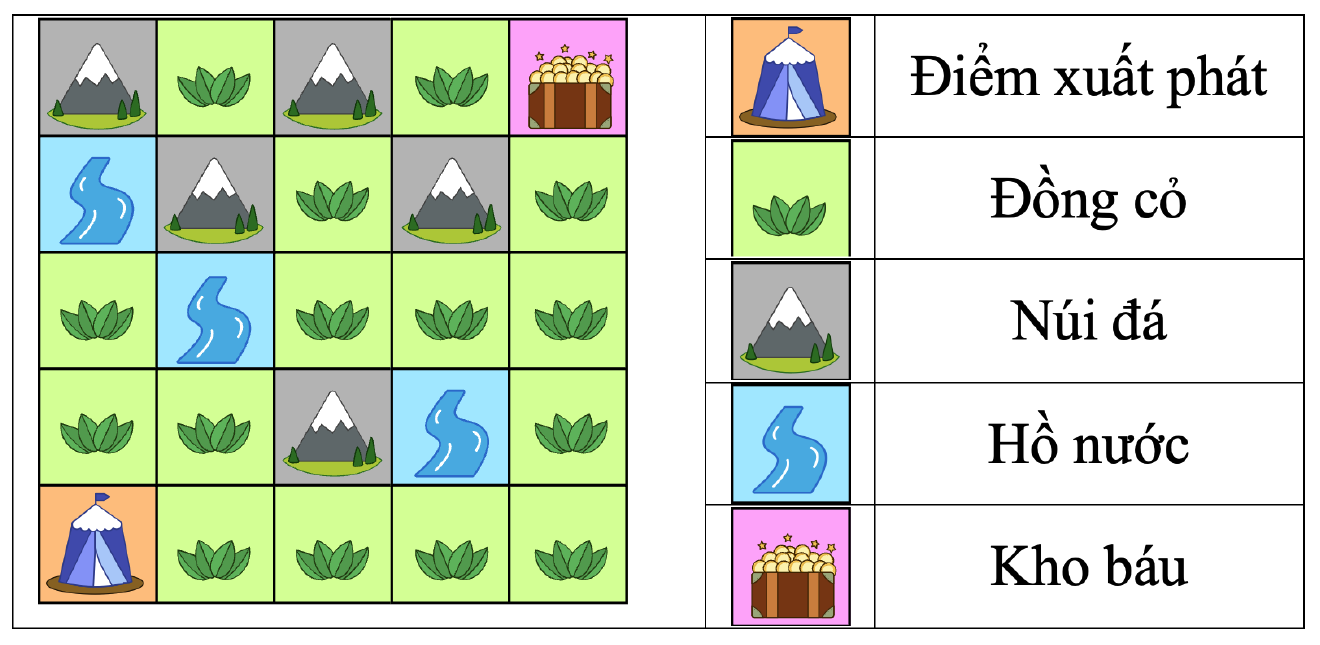
Starting at the tent, reach the treasure while never entering a lake and entering at least one mountain cell. Each move goes one cell vertically or horizontally. Which instruction sequence is valid?
Saro is inviting 150 guests. Every day Saro writes exactly 15 invitations and gives them to the beaver at the end of that day. Early the next morning the beaver begins delivering; because of the long distances, it can deliver only 10 invitations per day. How many have been delivered by the end of day 9?
Rescue calls are served by urgency: high before medium before low. Calls at the same urgency are served in the order received. Six calls arrive in this order:
1. Broken traffic lights (low)
2. Broken arm (medium)
3. Heart attack (high)
4. House fire (high)
5. Broken leg (medium)
6. Leaking pipe (low)
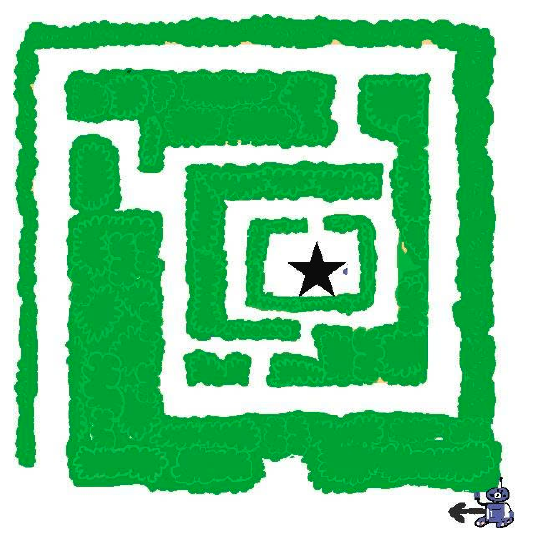
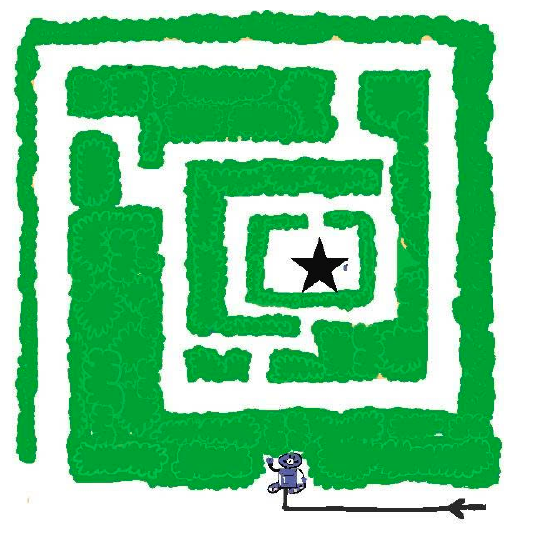
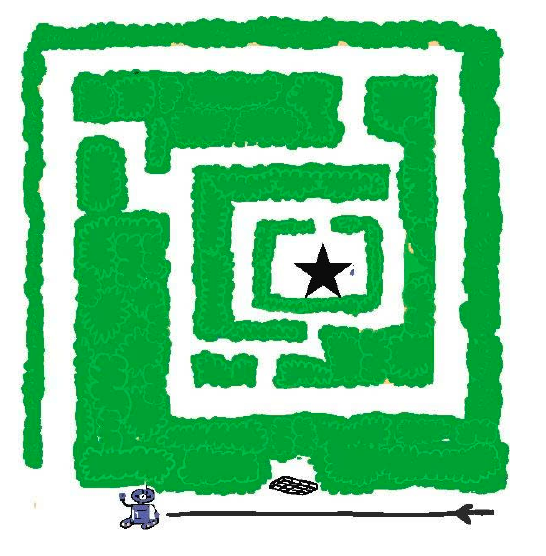
A faulty robot must reach the repair station marked with a star.
It always turns right if a right-hand path exists; otherwise it goes straight. It never turns left. Without help it may take a wrong path and get stuck, as shown.
Walls can be added to block wrong turns; the example places the first wall.
What is the minimum total number of such walls needed?
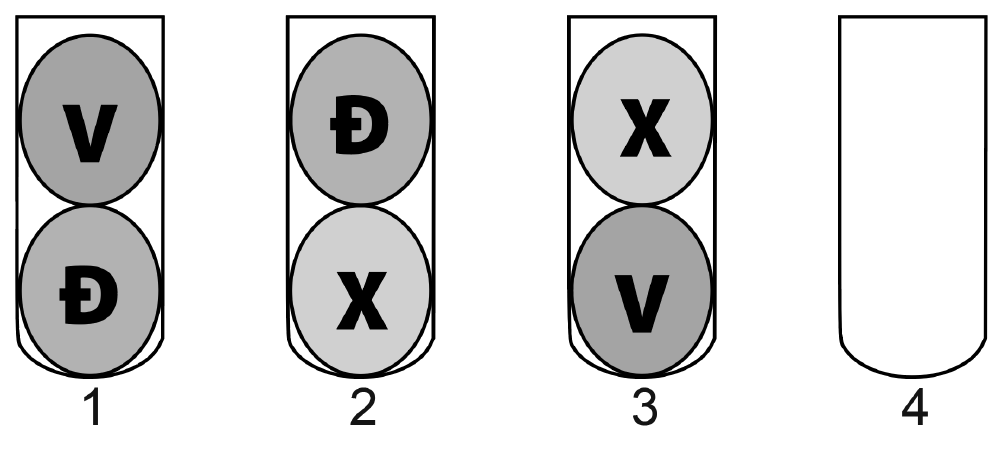
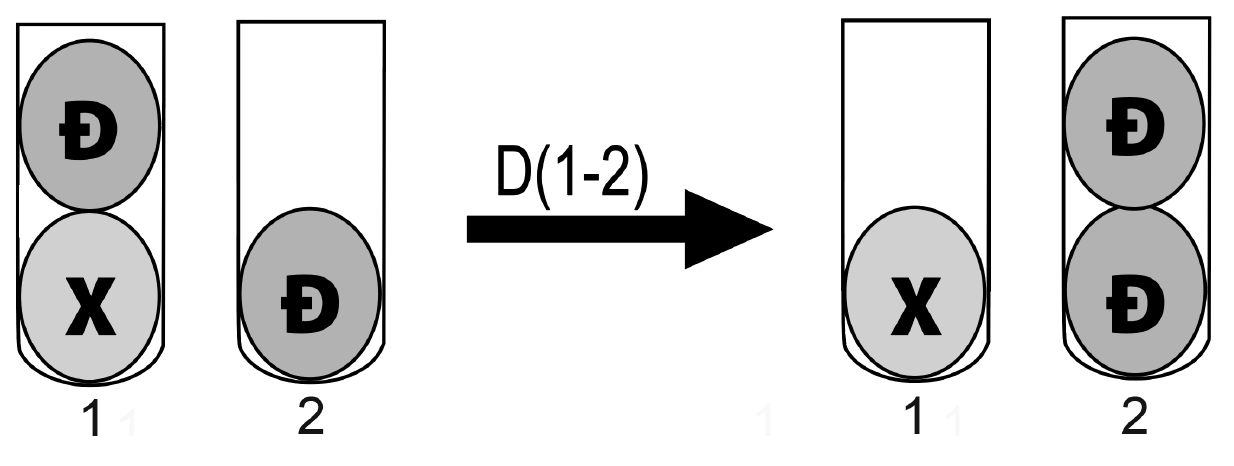
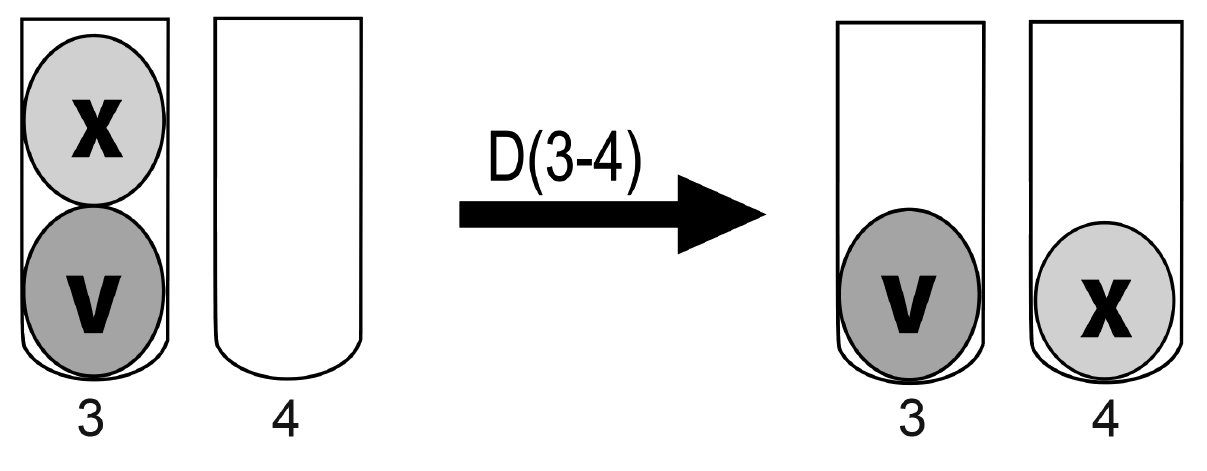
Bob has four tubes, each holding at most two round sweets. The first three are full and the fourth is empty. Colours are blue (X), red (Đ), yellow (V); the source uses letters on grey circles. Bob wants each colour grouped in its own tube.
A move D(i-j) transfers the top sweet of tube i to tube j, which must have space. These two independent examples explain D(1-2) and D(3-4).
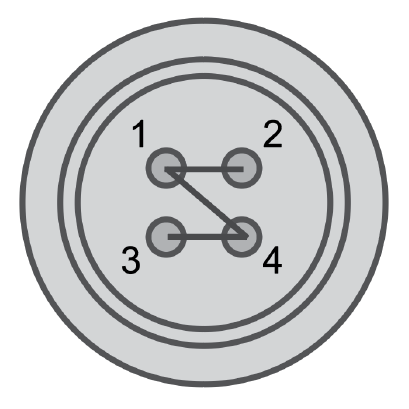
A sewing machine stitches through button holes in the order of an input number string. For example, 2143 draws the illustrated thread on a four-hole button.
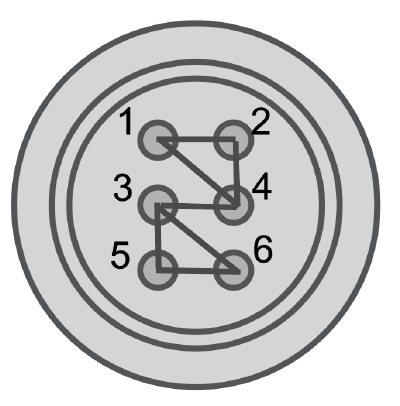
Which number string produces the following thread pattern on a six-hole button?
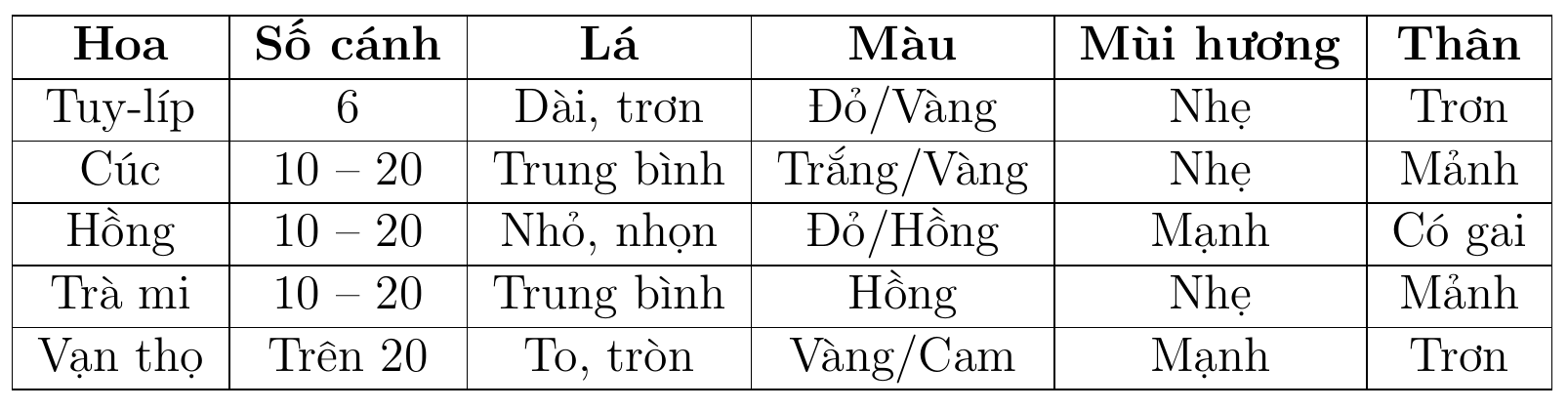
In English, each row lists petals; leaves; colour; scent; stem:
- Tulip: 6; long and smooth; red/yellow; mild; smooth.
- Daisy: 10-20; medium-sized; white/yellow; mild; thin.
- Rose: 10-20; small and pointed; red/pink; strong; thorny.
- Camellia: 10-20; medium-sized; pink; mild; thin.
- Marigold: more than 20; large and round; yellow/orange; strong; smooth.
The beaver grows one of these types. Each question asks about one feature, and the beaver answers accurately. What is the minimum number of questions that guarantees identifying the type?
Editorial convention: a colour answer gives the actual observed colour of the individual flower, not the entire list of possible colours printed for its type.
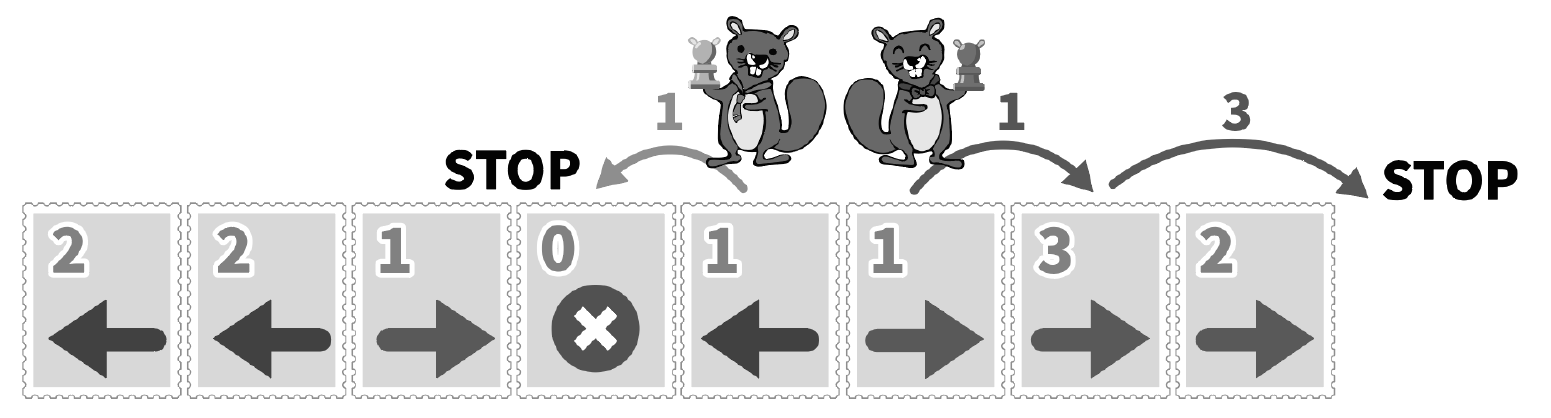
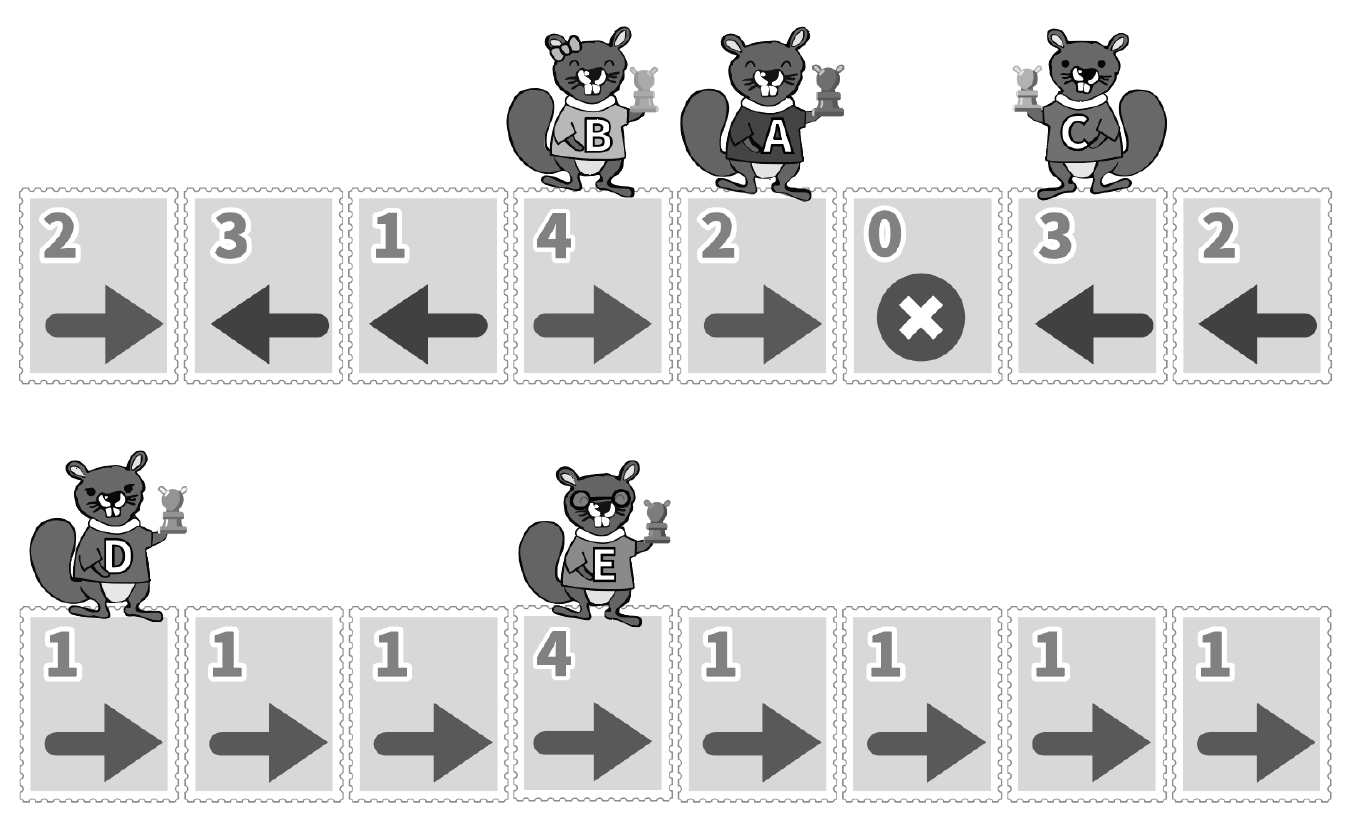
Each jumping board has eight cells with a number and a left/right arrow. Choose a starting cell, then jump the indicated number of cells in its arrow direction. Continue until landing on 0 or leaving the board. Add the number of every visited cell, including the start, to the score. Highest total wins. The example players score 1 and 4.
Five players start on the two boards below. Who wins?
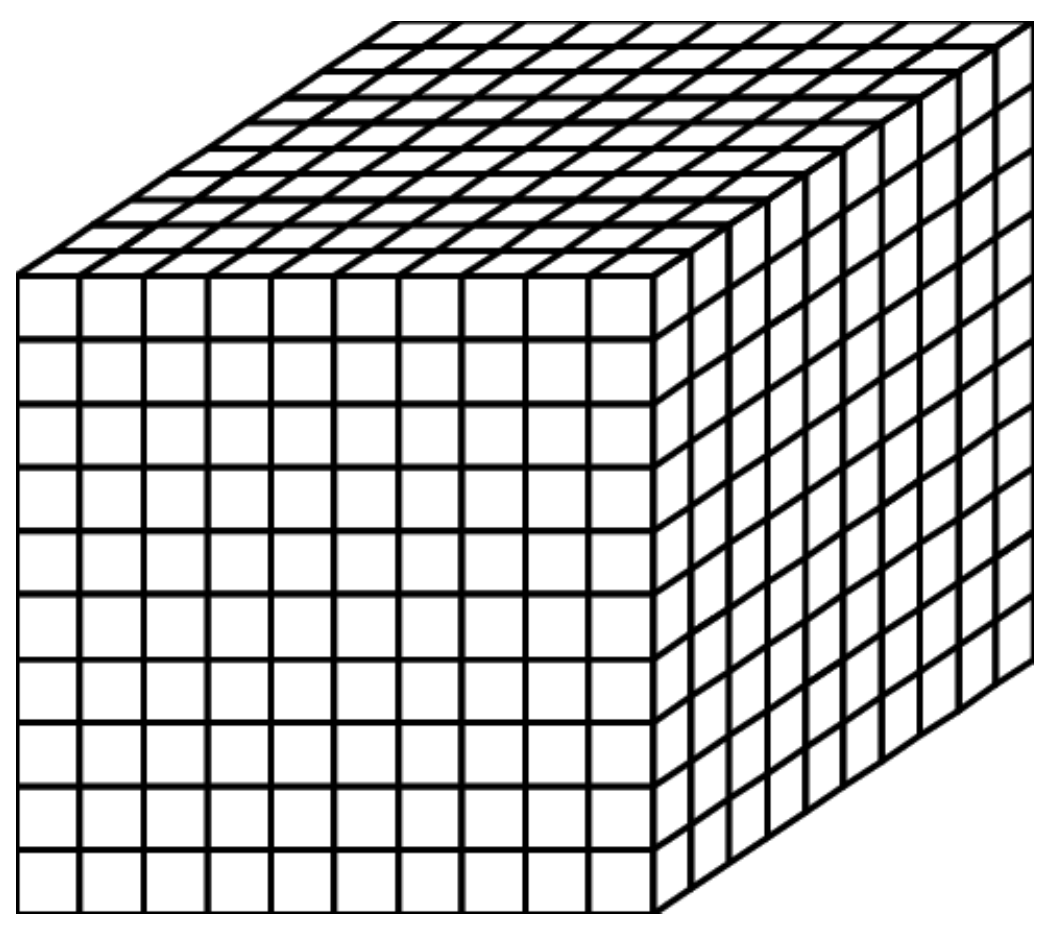
Nam and Mai bake a cube-shaped birthday cake. They cover every face except the bottom with white chocolate. Then they divide each edge into ten equal parts and cut the cake into small cubes as shown.
How many small cubes have exactly two chocolate-covered faces?