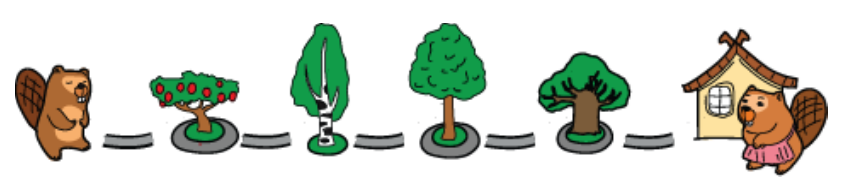
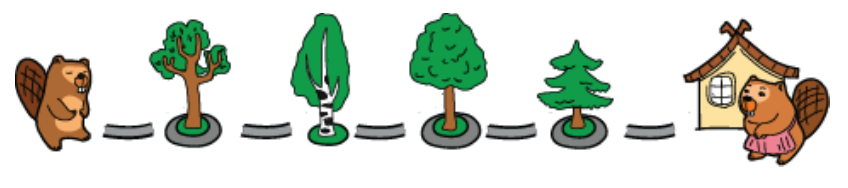
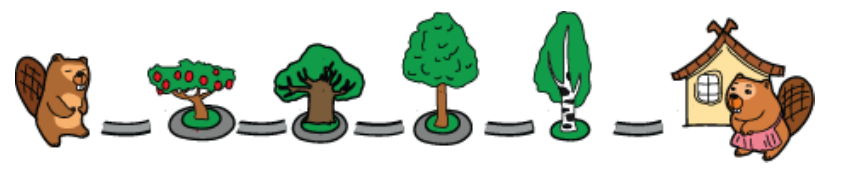
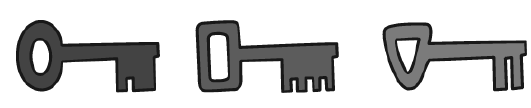
Bob designs a robot beaver that follows these commands.
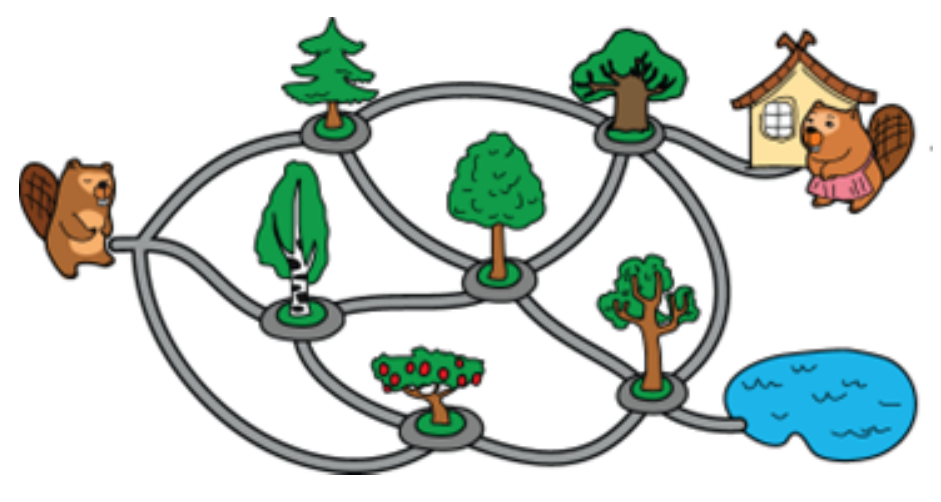
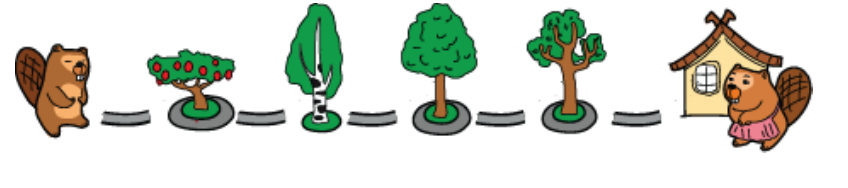
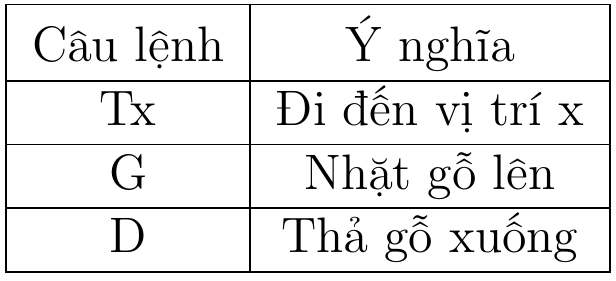
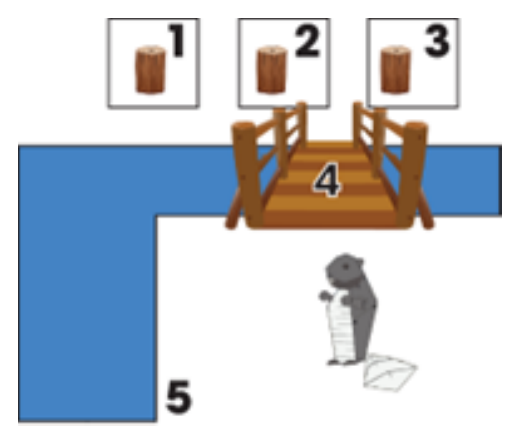
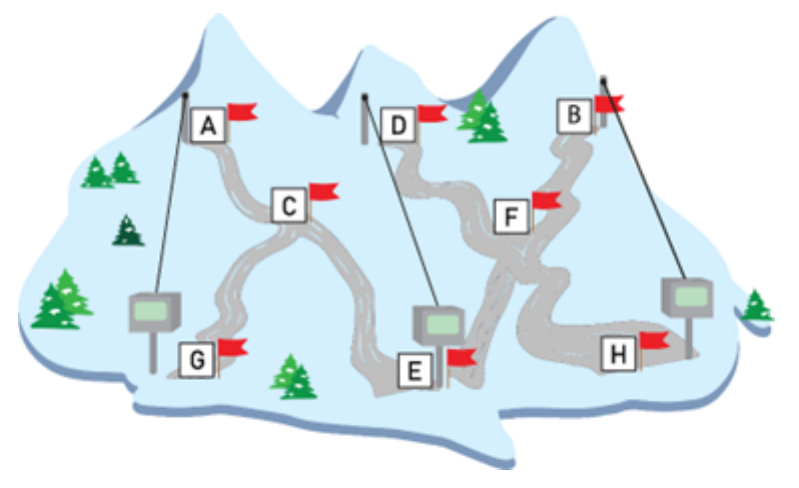
English translation: Tx = go to location x; G = pick up wood; D = put down wood. For example, T4T2GT4D sends the robot to the bridge, then location 2, to pick up wood, back to the bridge, and to put down the wood. The robot works in this forest:
Which program collects the wood at locations 1, 2 and 3 and puts it at location 5? To cross the river, the robot must use the bridge.
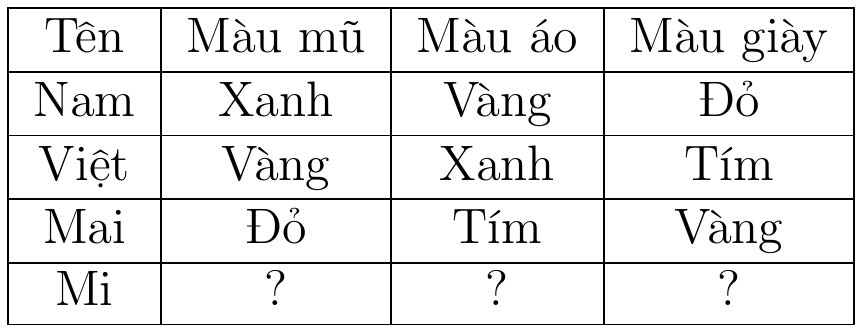
Nam, Việt, Mai and Mi each wear a hat, shirt and shoes in blue, red, purple or yellow. No two children have the same hat color, shirt color or shoe color.
The table columns are Name / Hat / Shirt / Shoes. Nam: blue / yellow / red. Việt: yellow / blue / purple. Mai: red / purple / yellow. Mi: unknown in all three columns. What colors are Mi’s hat, shirt and shoes?
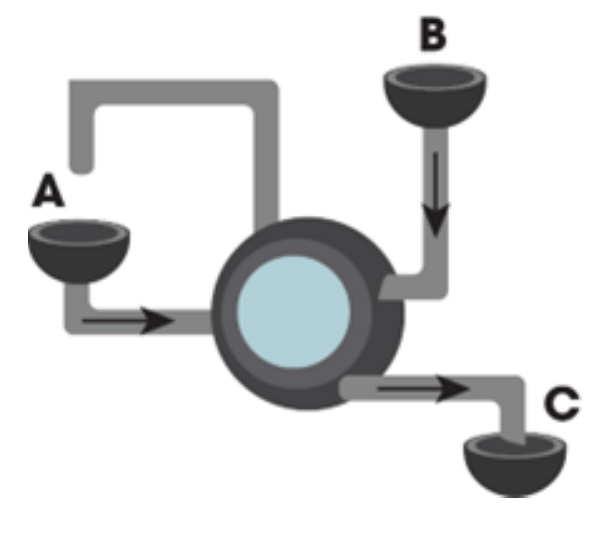
It operates as follows:
- Trays A and B contain some balls.
- If B is empty, the machine moves all balls from A to C.
- If B is not empty, the machine creates and adds to A as many new balls as are currently in B, then destroys one ball in B and repeats the process.
Initially A contains 2 balls and B contains 5. How many balls will C contain at the end?
Beaver can go uphill only by cable car and downhill only by skiing. Beaver wants to take every cable-car ride exactly once and ski down every distinct downhill path exactly once. At which point must Beaver start?
Every year, the beavers choose a “lucky queen” as follows:
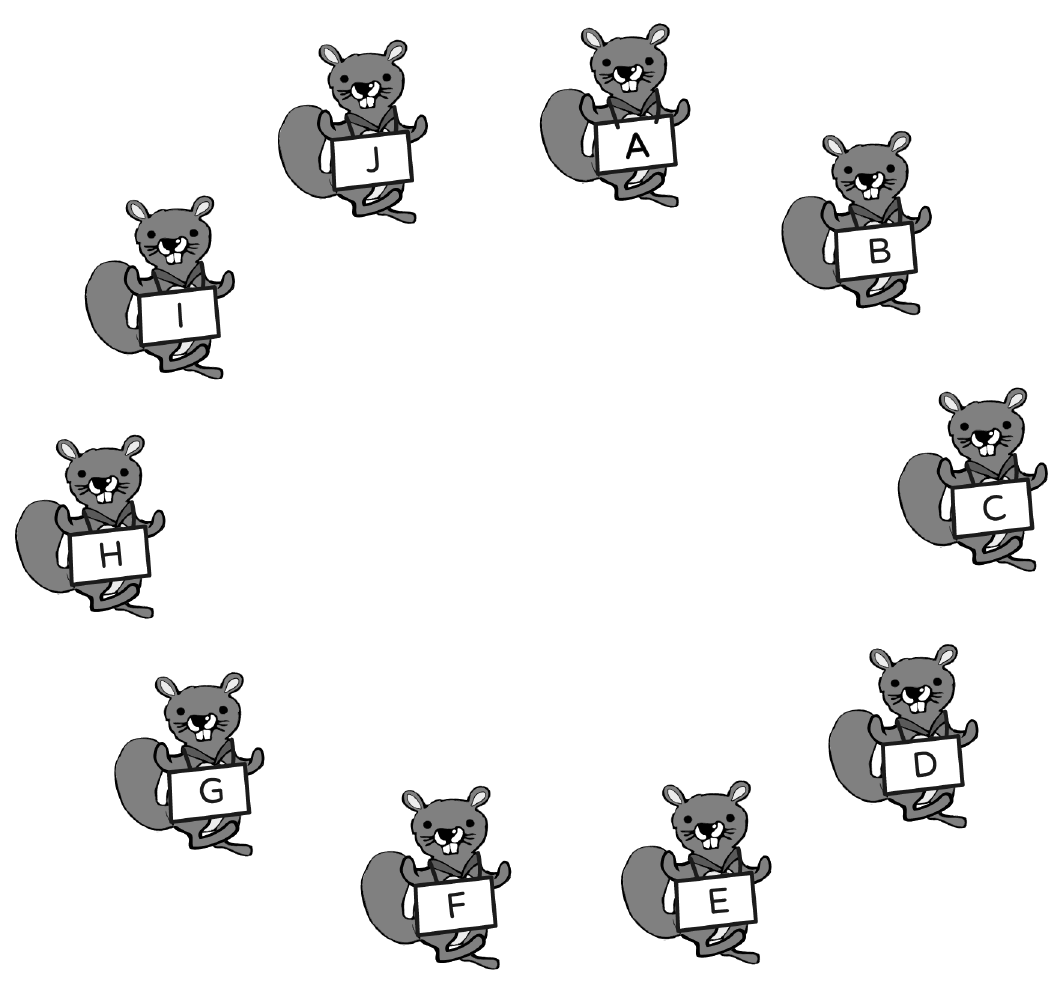
- Each participant receives a letter card. They stand clockwise in consecutive letter order around a circle.
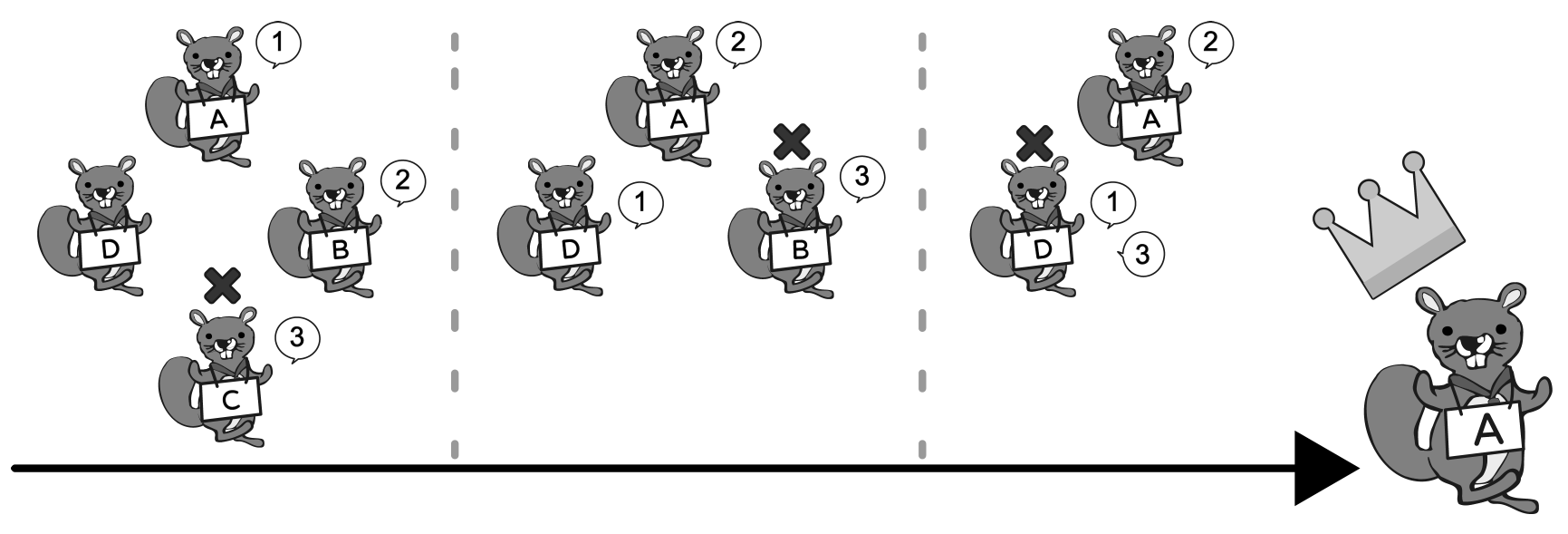
- Starting with A, they count 1, 2, 3 clockwise. Anyone who says 3 is eliminated; the next remaining beaver restarts at 1. Continue until one remains.
- The last remaining beaver is the lucky queen.
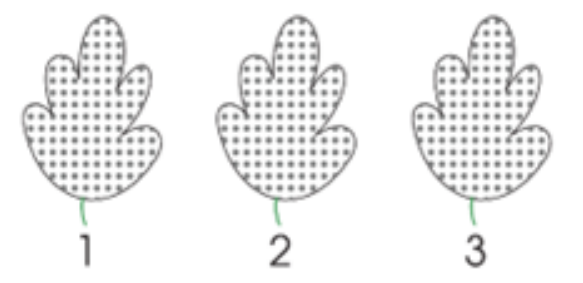
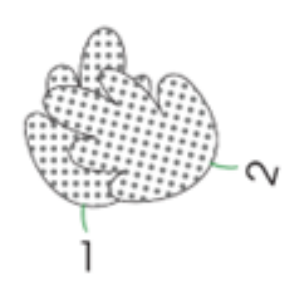
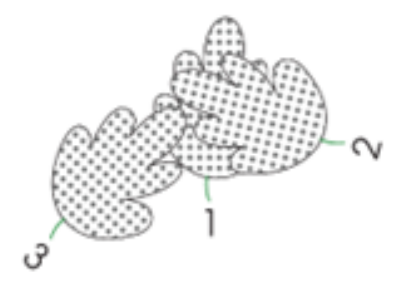
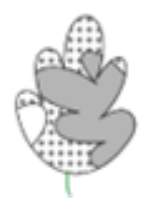
This illustrates the case of four participants:
What if there are ten participants holding A, B, C, D, E, F, G, H, I, J?
Beaver must distribute five items among Fuzzy, Wuzzy and Izzy. Each person values each item differently, as shown.
Columns mean Item 1, Item 2, Item 3, Item 4, Item 5. Fuzzy’s values are 10, 13, 8, 5, 3; Wuzzy’s are 2, 11, 4, 5, 6; Izzy’s are 6, 10, 6, 4, 8. For example, Fuzzy values item 1 at 10 units, while Izzy values it at only 6 units. If Wuzzy has items 4 and 5, Wuzzy has 11 units of value. Beaver A envies Beaver B if A considers B’s items to have greater total value than A’s own items. All five items must be distributed so that no one envies anyone else. What total value could Fuzzy receive? Select all valid options.
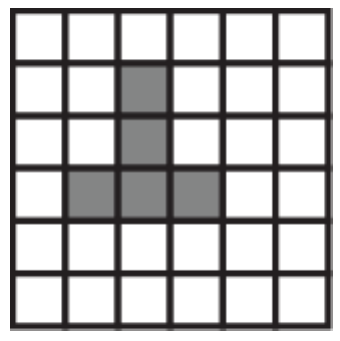
Beaver’s country has 36 cities arranged as the 6×6 square grid below. Two cities are adjacent if their squares share a vertex.
Each city is either densely populated (gray) or sparsely populated (white). Every year their populations change by these rules:
- A dense city remains dense if exactly 2 or 3 adjacent cities are dense; otherwise it becomes sparse.
- A sparse city becomes dense if exactly 3 adjacent cities are dense; otherwise it remains sparse.
How many dense cities are there after two years?
At a Bebras camp there are 20 boys and 22 girls. Some boys shake hands with some girls. Every girl shakes hands with exactly 10 boys, and every boy shakes hands with exactly A girls. What is A?
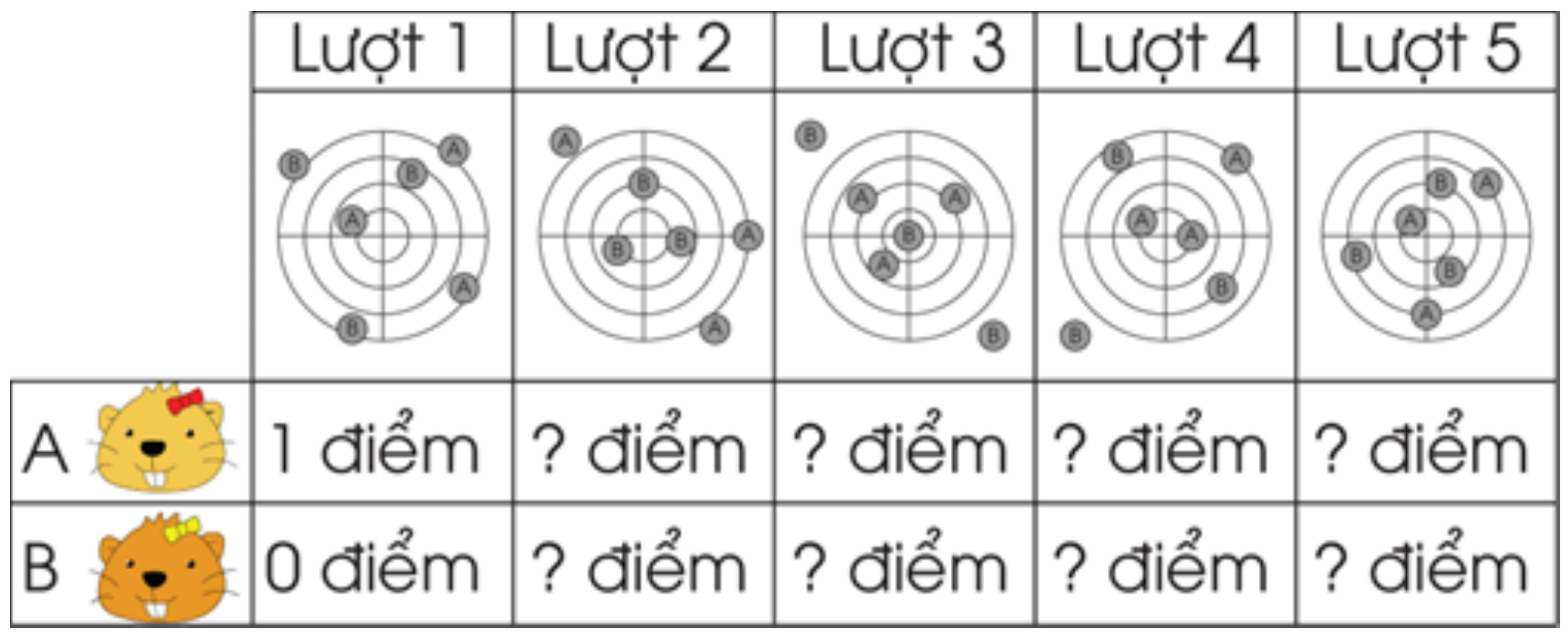
Two beavers play five rounds of darts with these rules:
- Each player throws three darts per round.
- The player with the dart nearest the center wins that round. The winner scores 1, 2 or 3 points according to how many of their darts are closer to the center than the opponent’s nearest dart.
The diagram shows all five rounds and the first-round scores.
“Lượt” means “Round”; “điểm” means “points”; A scores 1 and B scores 0 in round 1. What is the combined total score of the two players after five rounds?
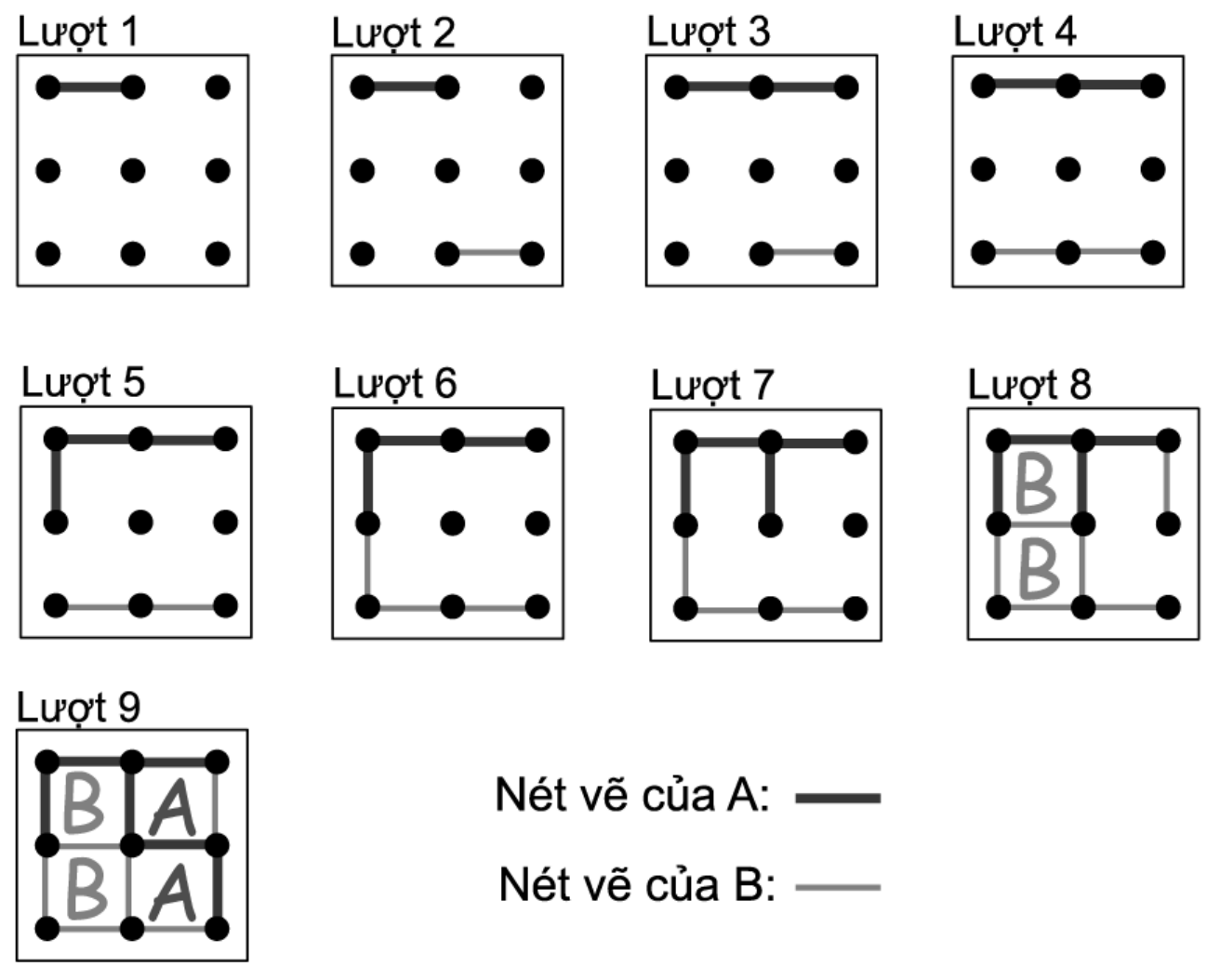
La Pipopipette is a two-player game. Players take turns drawing a horizontal or vertical segment between consecutive dots, aiming to complete as many squares as possible. Whenever a player completes a 1×1 square, they put their own mark in it and immediately draw another segment. The result depends on the number of squares marked by each player. The picture illustrates a draw on a 3×3 dot grid.
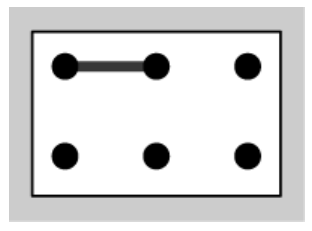
“Lượt” means “Turn”; the dark line denotes A’s move and the gray line B’s move. Alice and Bob are now playing on a 2×3 dot grid. The next picture shows Alice’s first move. On each turn, either player may choose a segment randomly.