Skip to content / Đến nội dung
ThichHocToan.com

BEBRAS 2021 Grade 3-4 Round 2 Ext

Question 1

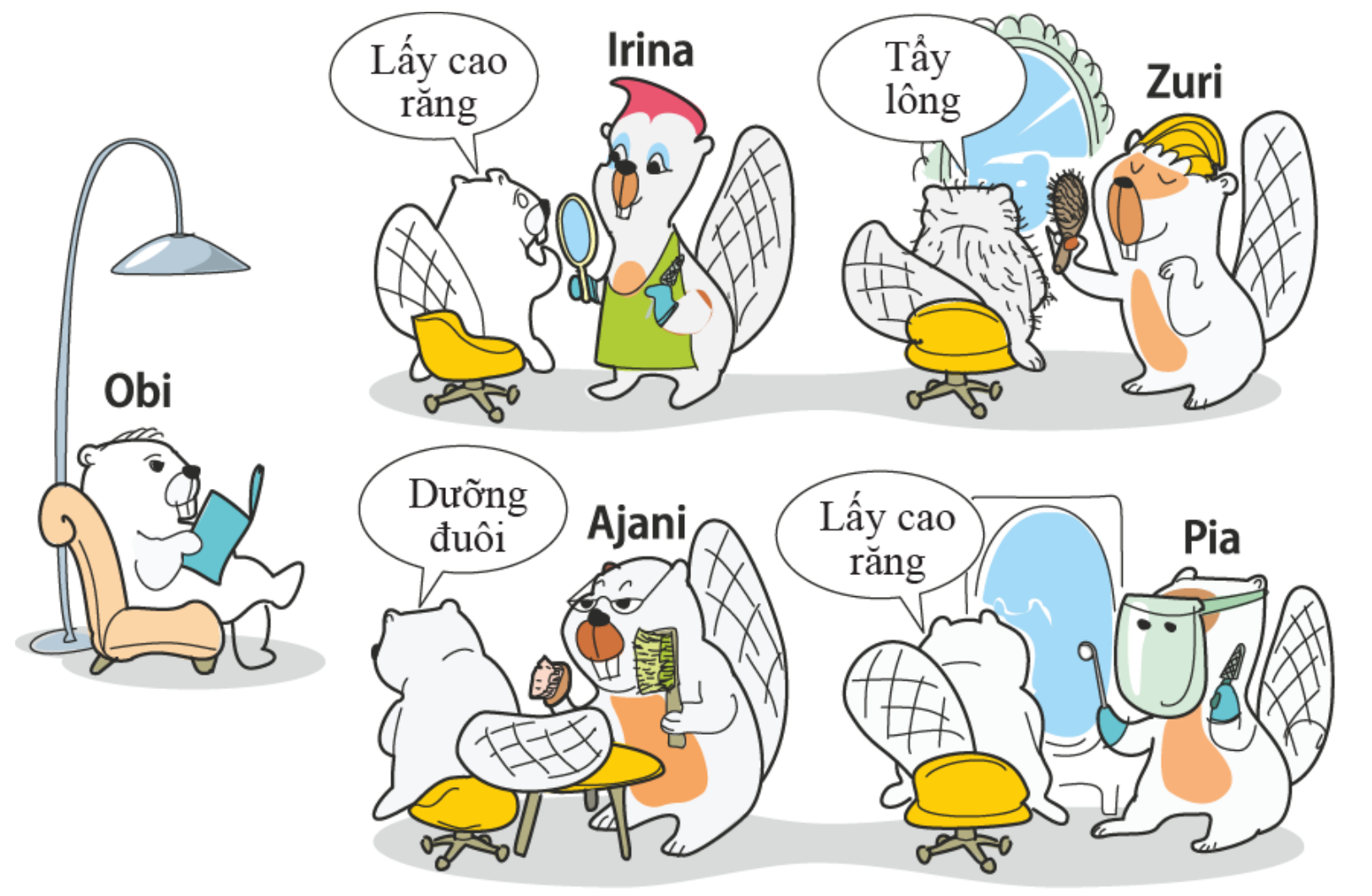
Four beavers work at a beauty salon: Irina, Ajani, Zuri and Pia. Each can perform depilation, tooth scaling and tail conditioning, taking 5, 8 and 15 minutes respectively. They all begin their current jobs together, as shown. Whoever finishes first will attend to Obi.
Question illustration

The pictured requests are: Irina—tooth scaling; Zuri—depilation; Ajani—tail conditioning; Pia—tooth scaling. Who will attend to Obi?
  1. Ajani
  2. Irina
  3. Zuri
  4. Pia

Question 2

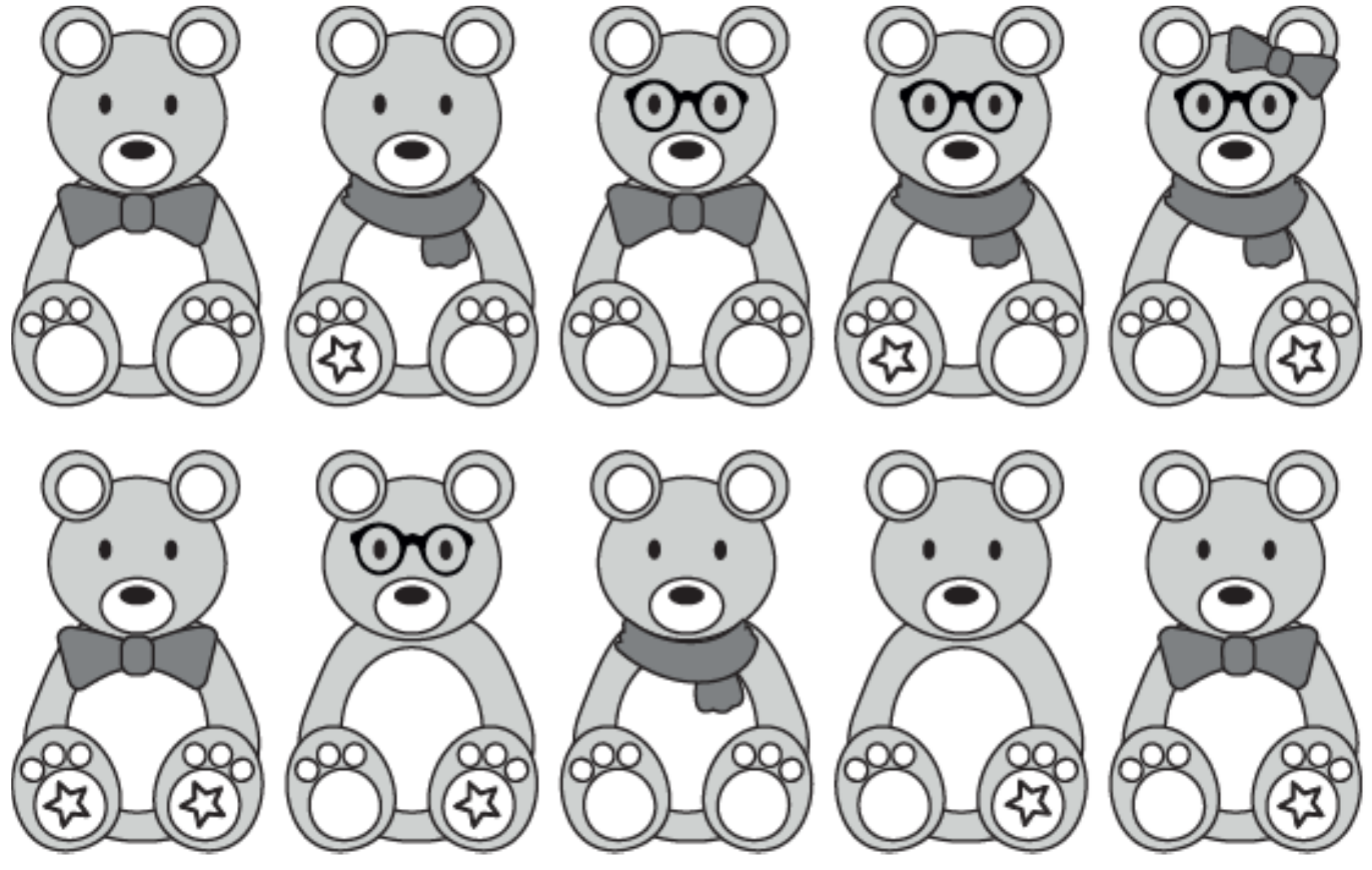
Ren may bring a teddy bear to school. It must wear a bow or a scarf, must not wear glasses, and must have exactly one star on its feet.

Question illustration

How many of the pictured bears satisfy all these requirements?
  1. 1
  2. 2
  3. 3
  4. 4

Question 3

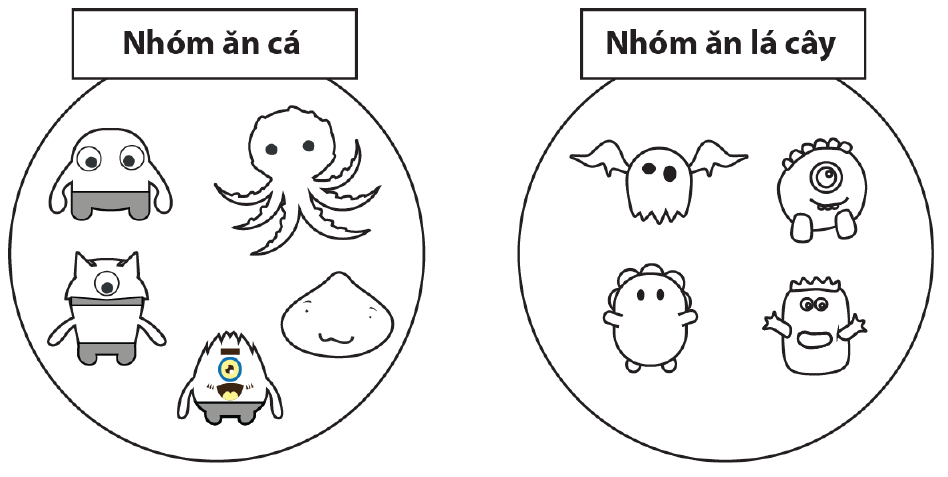
A beaver has alien friends shown in two groups: those who eat only fish (left) and those who eat only leaves (right).

Question illustration

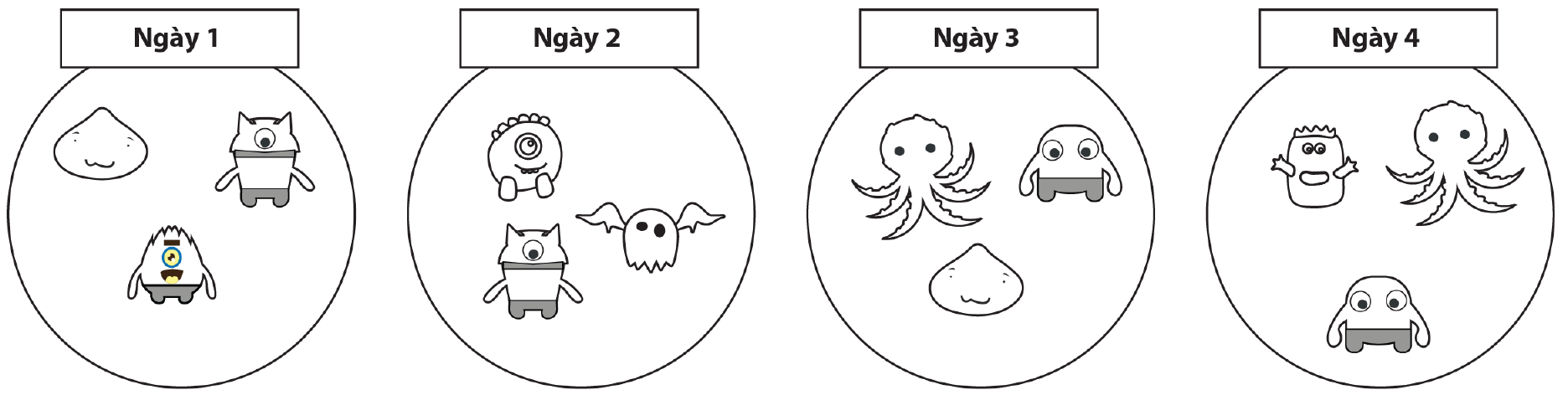
Last week it ate with the groups shown for Days 1–4, left to right. It must eat fish when none of its companions eats leaves.

Question illustration

On how many of those four days must the beaver eat fish?
  1. 1
  2. 2
  3. 3
  4. 4

Question 4

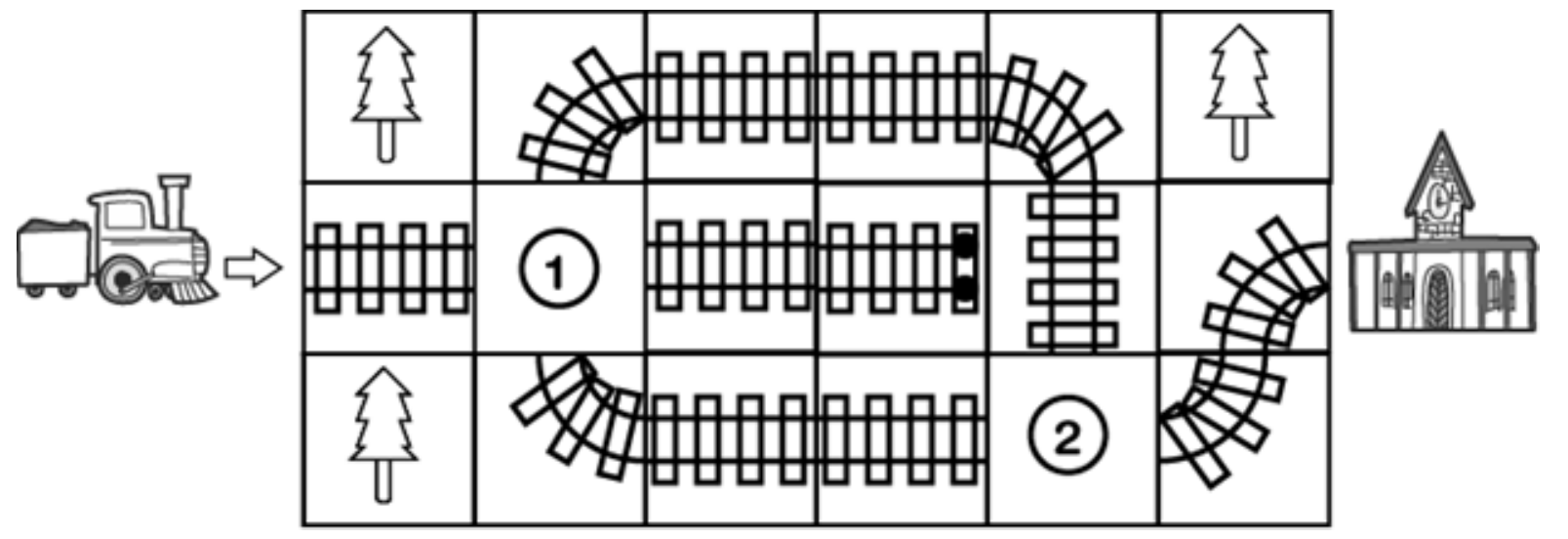
The beavers want to complete the railway so that the train can reach the station.

Question illustration

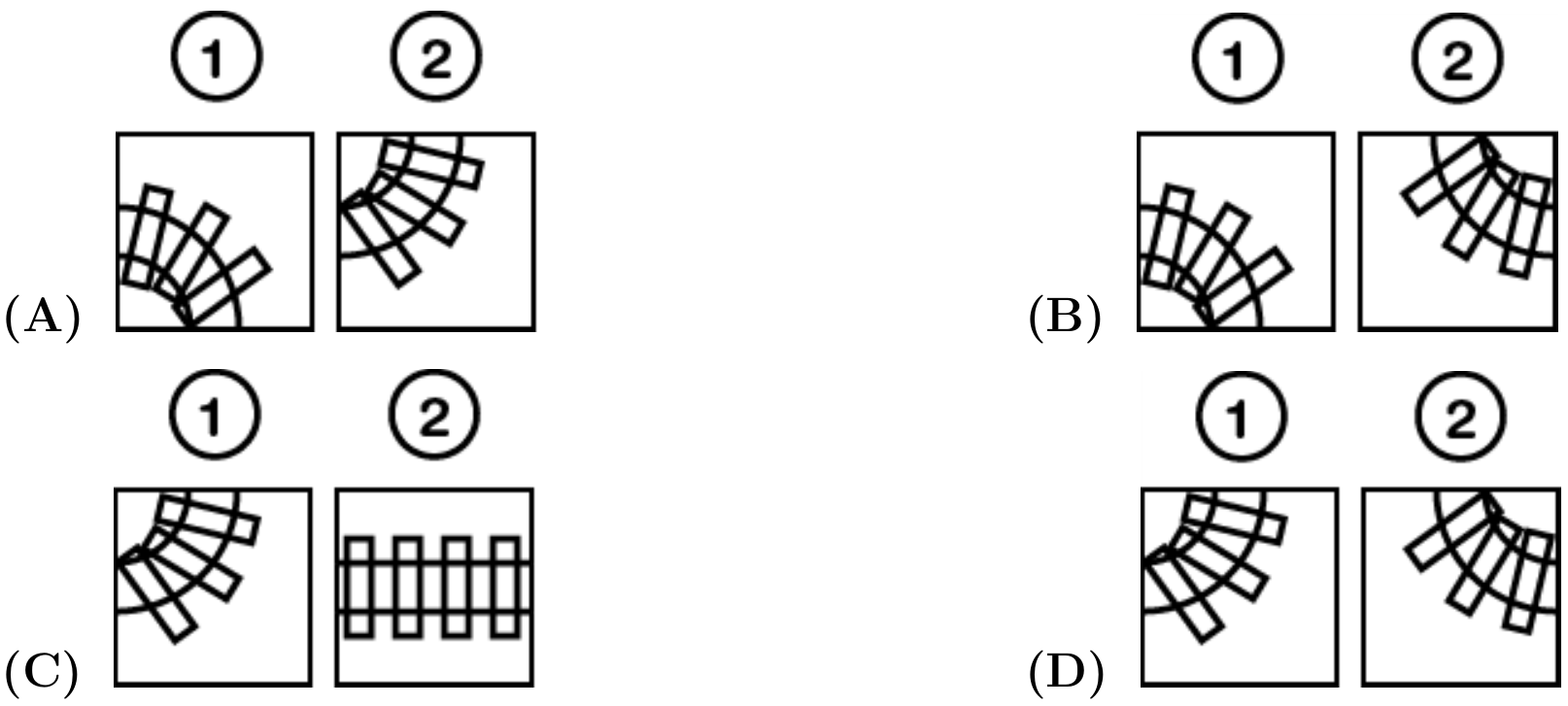
Which pair of track pieces below can fill positions 1 and 2 without rotating either piece?

Question illustration
  1. Pair A
  2. Pair B
  3. Pair C
  4. Pair D

Question 5

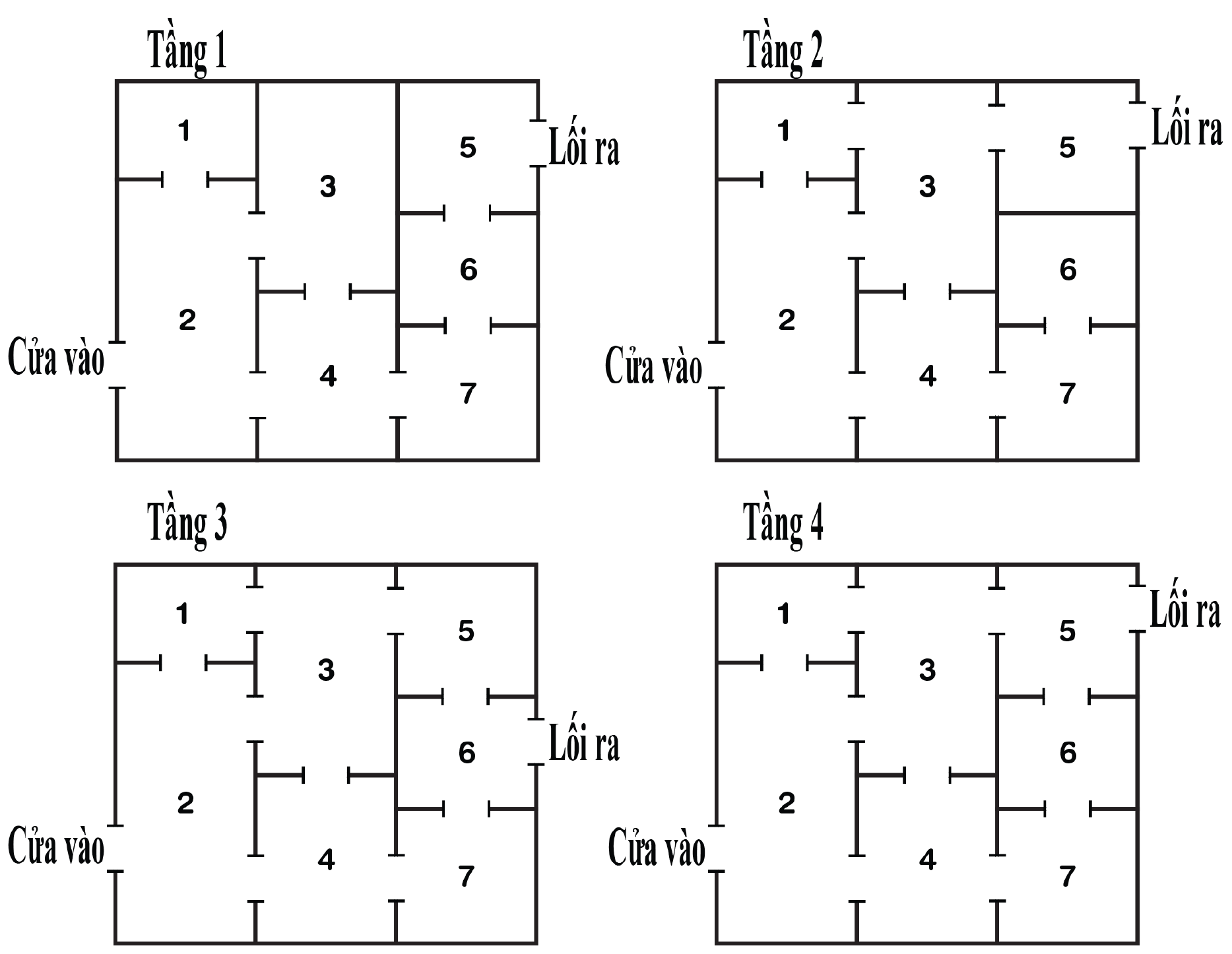
A museum has four floors. Each floor has seven rooms numbered 1–7 and doors connecting some rooms, as shown. In the diagrams, “Tầng” means floor, “Cửa vào” means entrance and “Lối ra” means exit.

Question illustration

On how many floors can a visitor enter, visit every room exactly once, and then leave through the exit?
  1. 1
  2. 2
  3. 3
  4. 4

Question 6

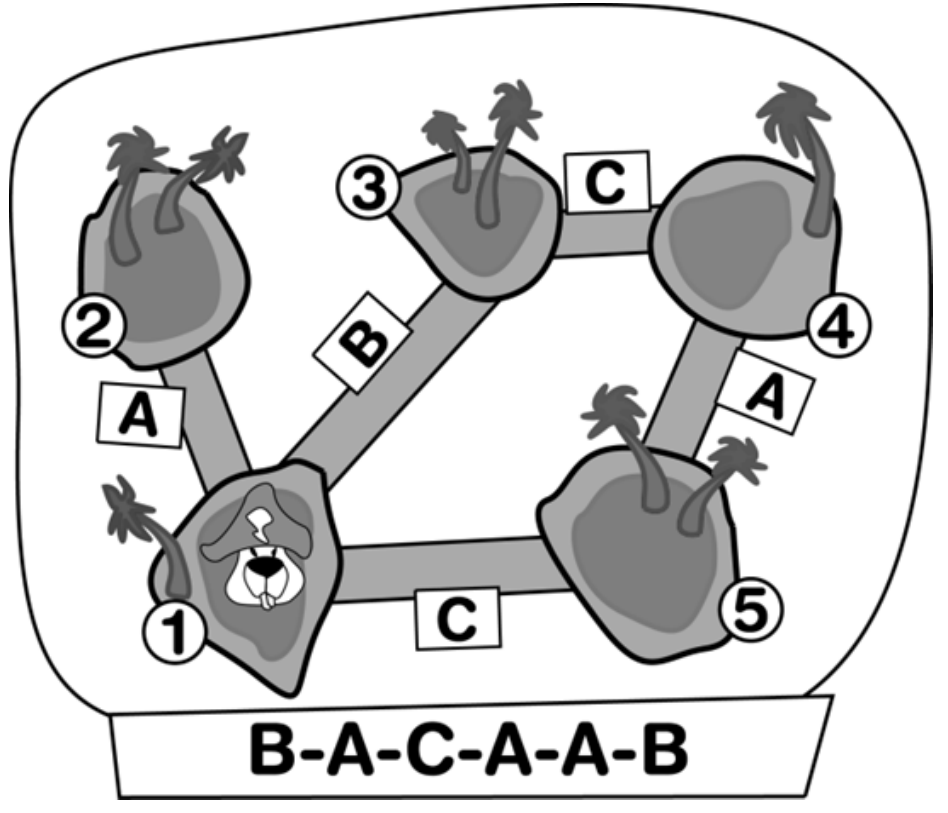
Pierre lives on island 1 and receives the code B−A−C−A−A−B. Each letter tells him which labelled bridge to cross to find treasure.

Question illustration

If the current island has no bridge with the requested letter, he skips that instruction. For example, starting at 1 with A−B−A, he first crosses to 2, skips B because no B bridge leaves 2, then crosses A back to 1. With the actual code, on which island is the treasure?
  1. Island 2
  2. Island 3
  3. Island 4
  4. Island 5

Question 7

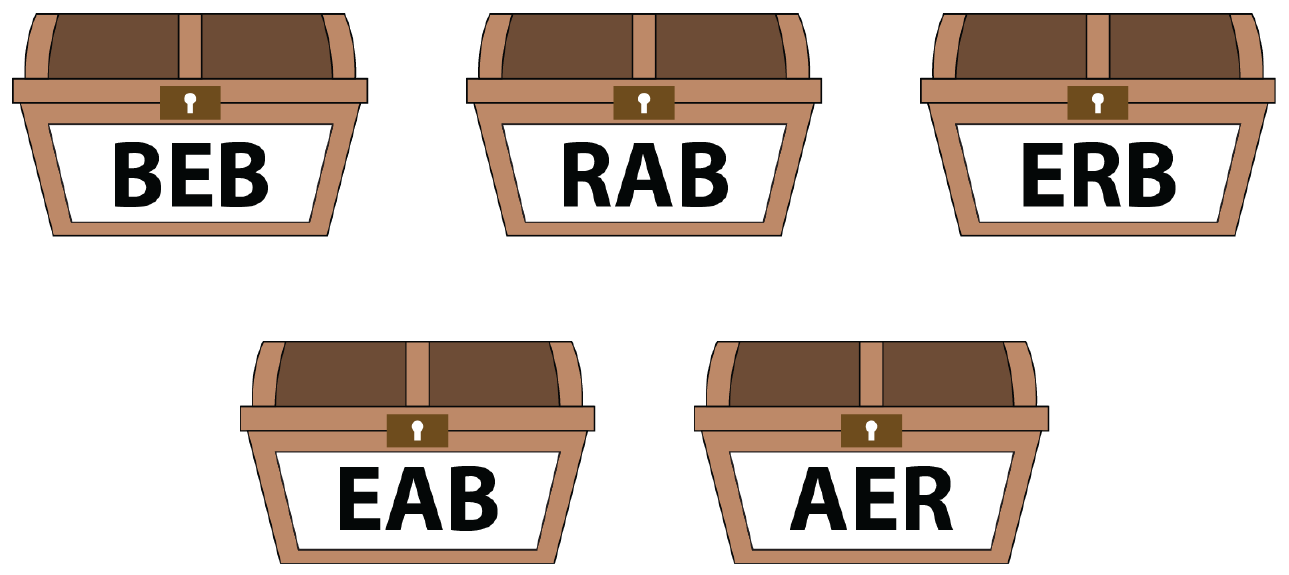
Alex has five coded chests.

Question illustration

There are five numbered keys. Equal digits correspond to equal letters, and different digits correspond to different letters. One key has lost its number. The four remaining numbers are shown below.

Question illustration

Which number belongs on the unlabelled key?
  1. 369
  2. 349
  3. 496
  4. 463

Question 8

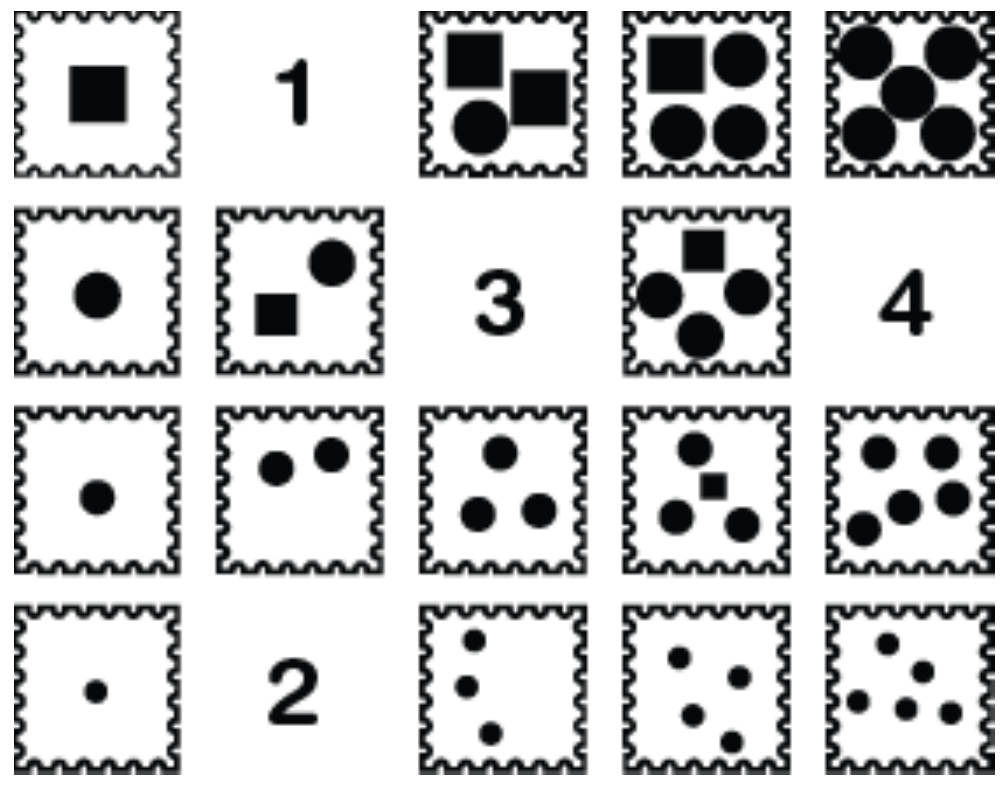
A beaver collects stamps and arranges them neatly according to a pattern. Some stamps have gone missing.

Question illustration

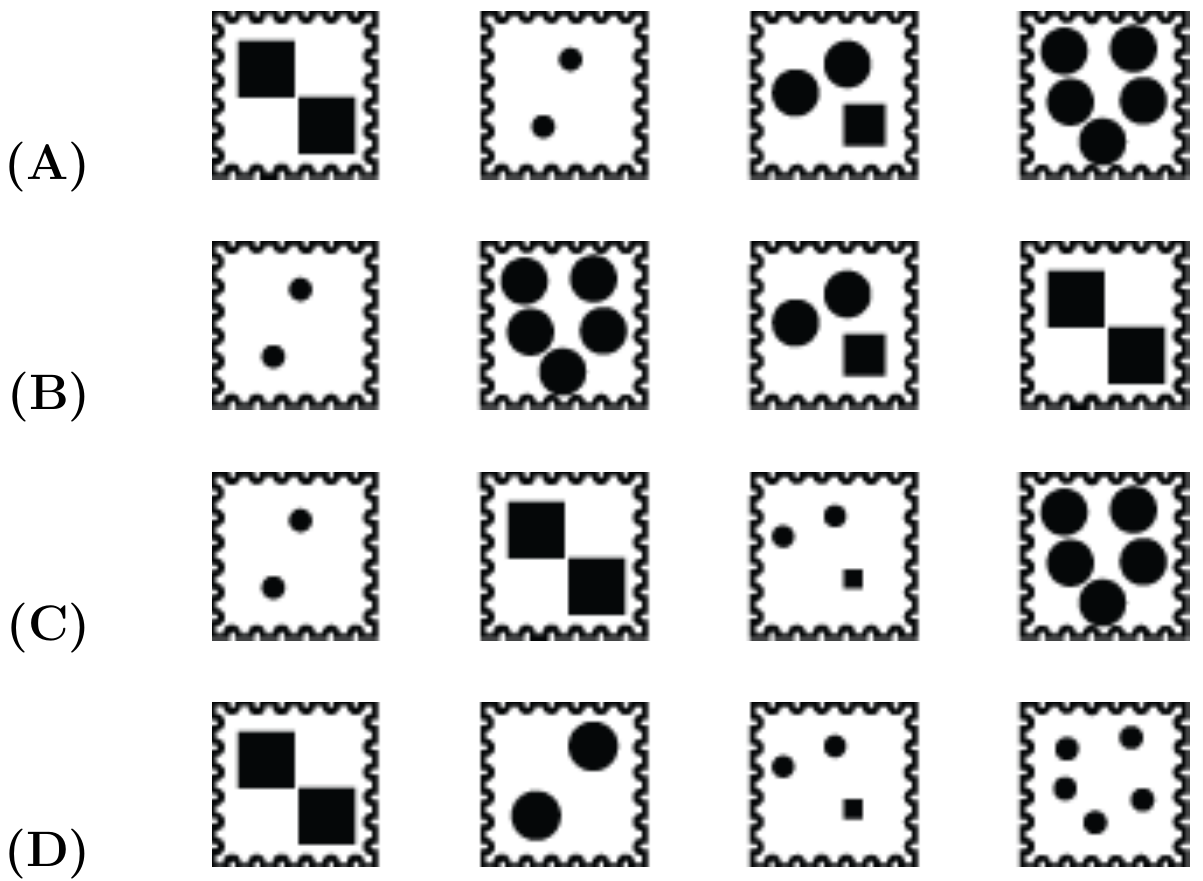
Which sequence below correctly fills gaps 1, 2, 3, 4, in that order?

Question illustration
  1. Sequence A
  2. Sequence B
  3. Sequence C
  4. Sequence D

Question 9

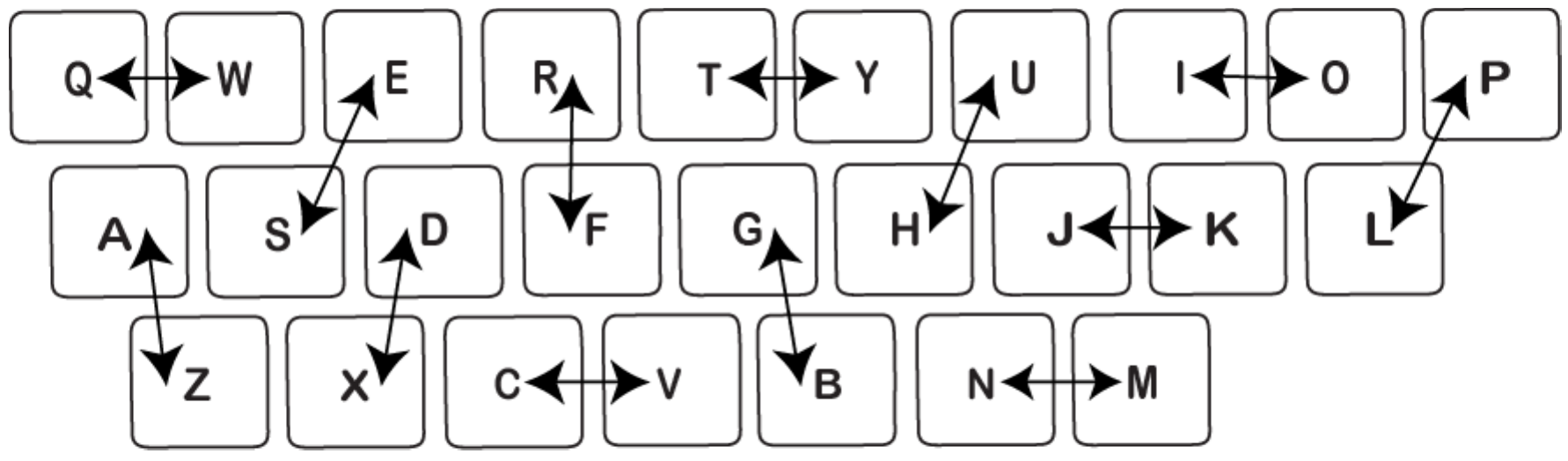
Jan has a special keyboard. Pressing a key displays the other letter linked to it by an arrow.

Question illustration

For example, pressing S displays E and pressing E displays S. Which keys must Jan press to display NOVFIGS?
  1. MOLDING
  2. MIRMAID
  3. MORNING
  4. MICROBE

Question 10

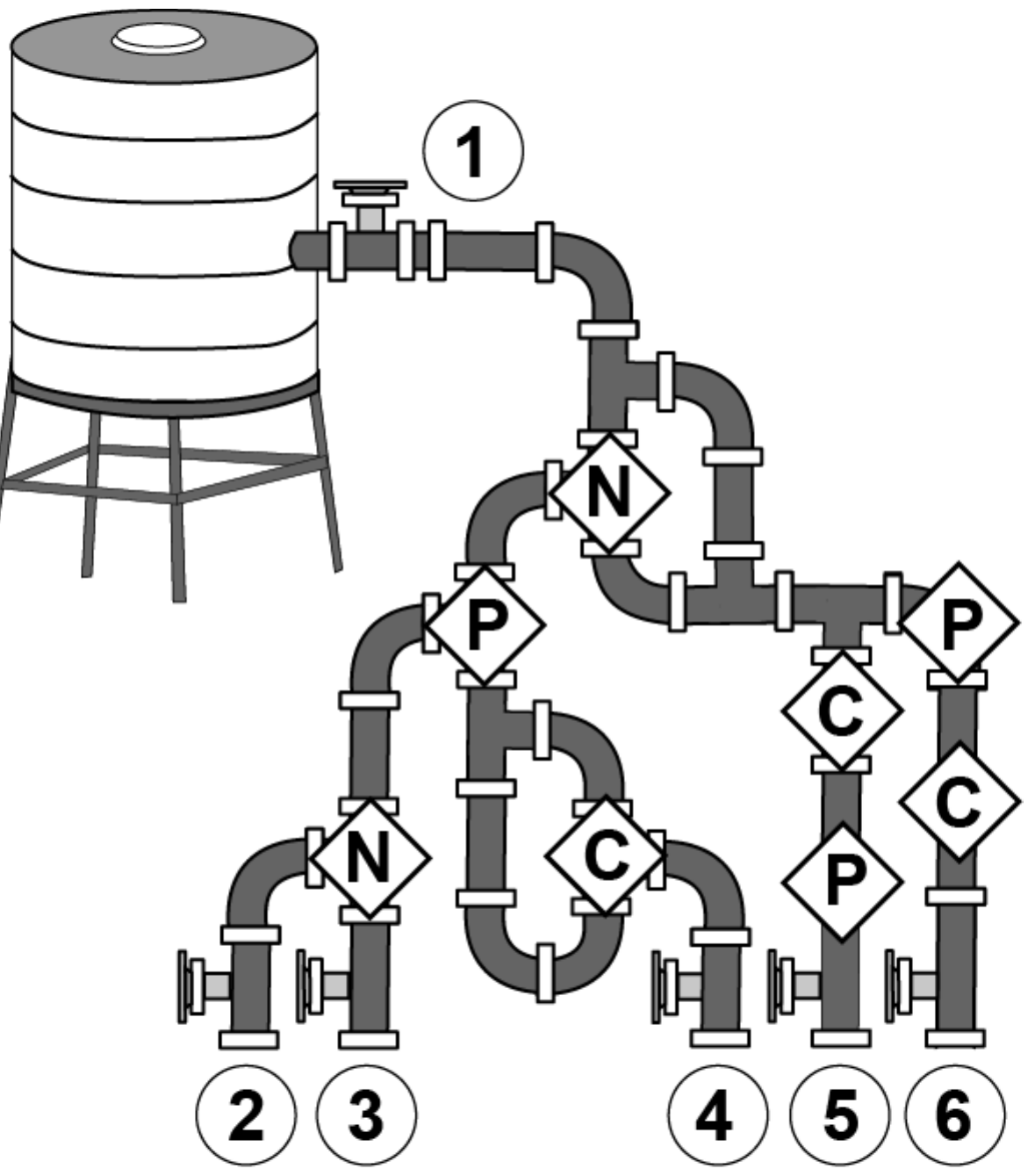
To clean the city’s water, beavers built the filter network shown below. For correct treatment, water must pass through filters N, P and C in that order.

Question illustration

Valve 1 is open and the others are closed. How many of valves 2–6 could be opened while guaranteeing correctly treated water at the resulting outlet?
  1. 1
  2. 2
  3. 4
  4. 5

Question 11

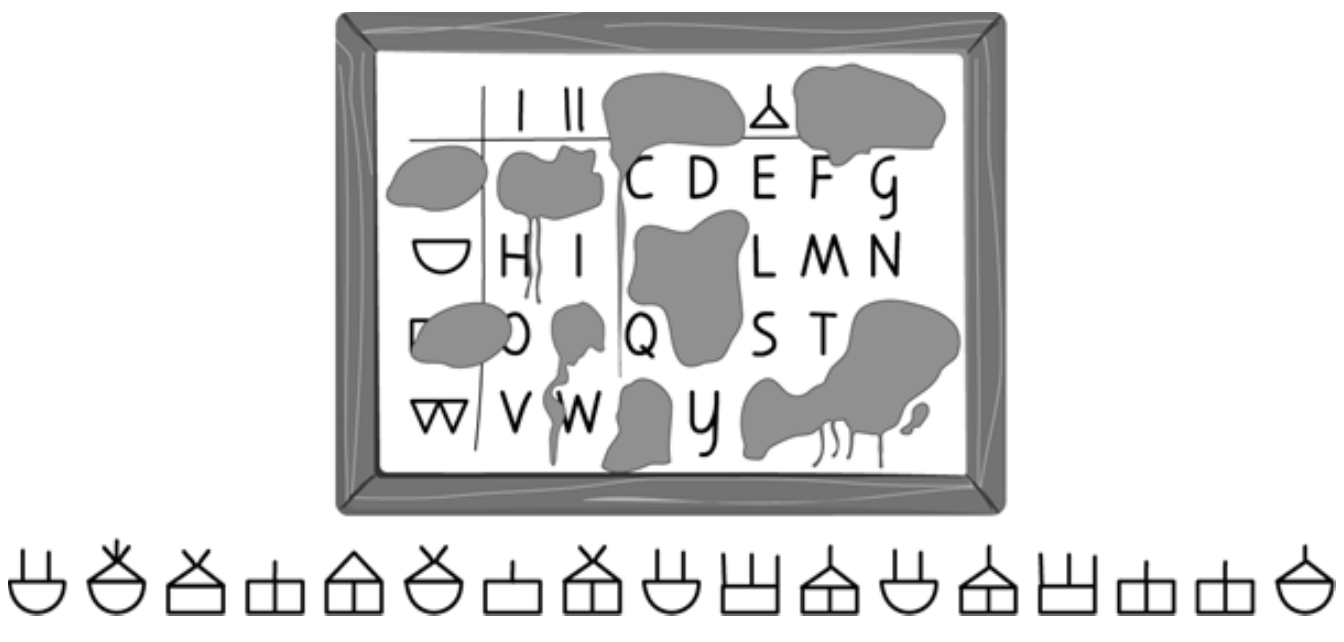
Beavers use the pictured table to encode letters as special symbols. Some entries have been covered. The table contains A, B, C, D, E, F, G, H, I, J, K, L, M, N, O, P, Q, R, S, T, U, V, W, X, Y, Z in order from left to right, then top to bottom.

Question illustration

What does the symbol message mean?
  1. INFORMATION SO COOL
  2. INFORMATICS IS COOL
  3. MATHEMATICS IS COOL
  4. INFORMATION IS COOL

Question 12

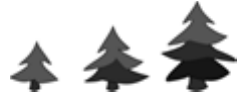
A beaver has nine fir trees of three types, three trees of each type. Trees of the same type have the same height; different types have different heights.

Question illustration

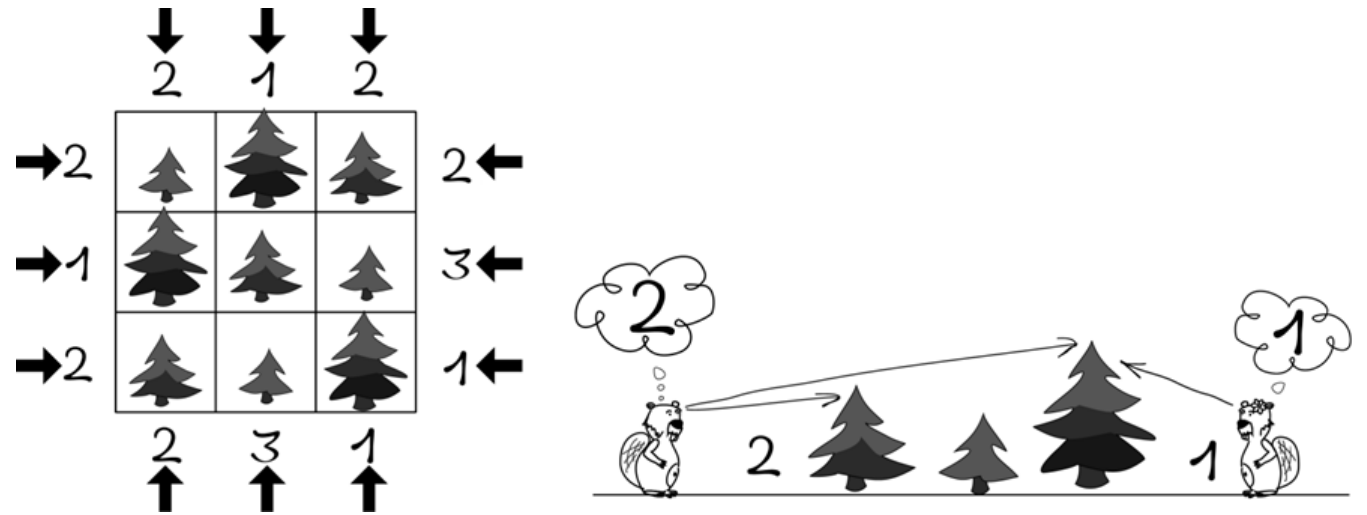
It plants them in a \(3\times 3\) garden so every row and column contains each type once. A sign at each end of every row and column gives the number of trees visible from there. A taller front tree hides shorter trees behind it. The example illustrates the rule.

Question illustration

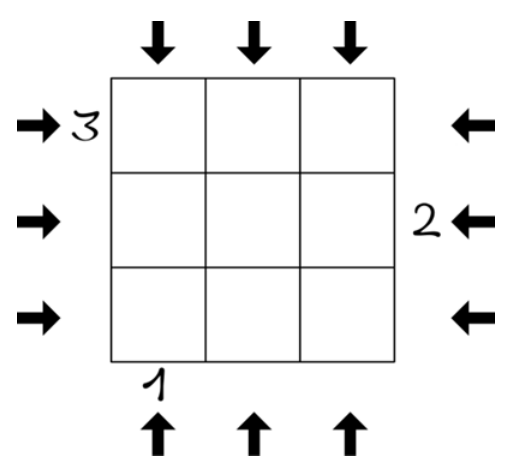
For the garden below, some signs are already given. What is the sum of all twelve signs after every sign is filled in?

Question illustration
  1. 18
  2. 22
  3. 24
  4. 36

Question 13

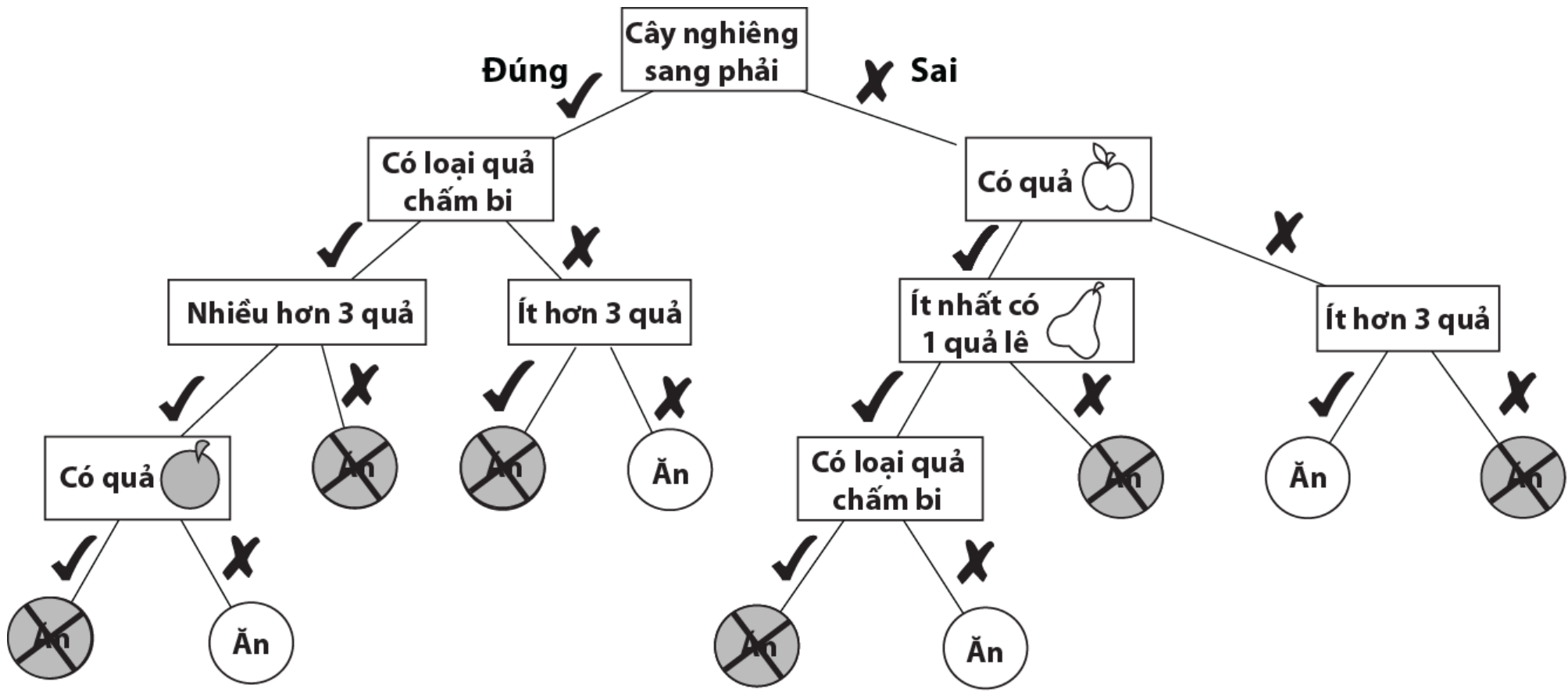
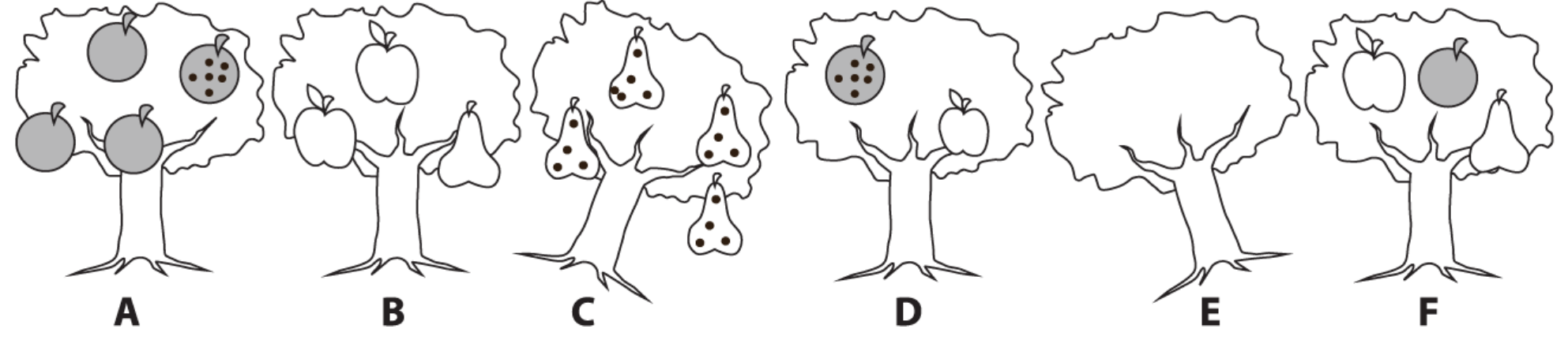
A hungry but choosy beaver uses this decision diagram to decide which tree to eat. Check marks mean true, crosses mean false; an uncrossed “Ăn” means eat and a crossed “Ăn” means do not eat.

Question illustration

English translation of the tests: “tree leans right”; “has dotted fruit”; “more than 3 fruits”; “less than 3 fruits”; “has the pictured grey round fruit”; “has an apple”; “has at least one pear”. Follow the indicated true/false branch at each test.

Question illustration

Which of trees A, B, C, D, E, F might the beaver eat?
  1. B, C, E, F
  2. A, B, C, F
  3. B, C, D, E
  4. B, C, D, E, F

Question 14

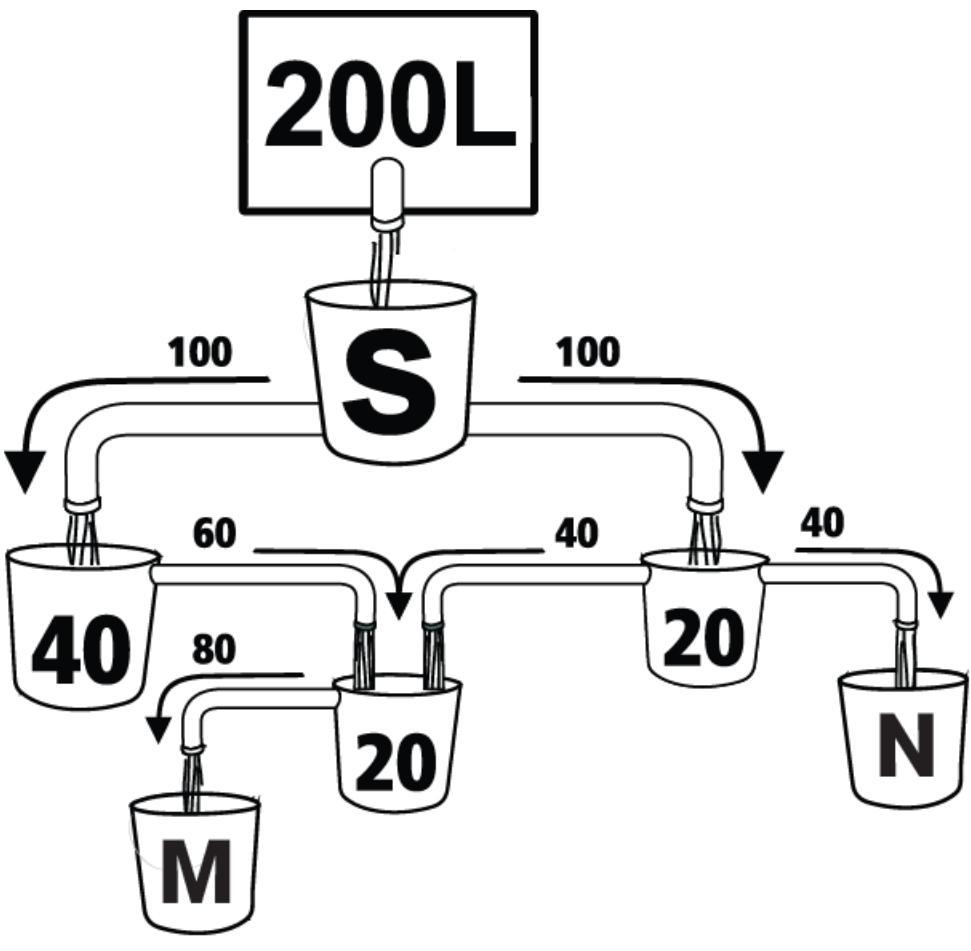
The beavers have a water-distribution system. Each bucket retains up to its labelled capacity, except terminal buckets M and N whose capacities are not specified. Any excess splits equally among its outgoing pipes and flows downward. In the example, the top bucket S ends empty, M holds 80 litres and N holds 40 litres; the other buckets end full with 40, 20 and 20 litres.

Question illustration

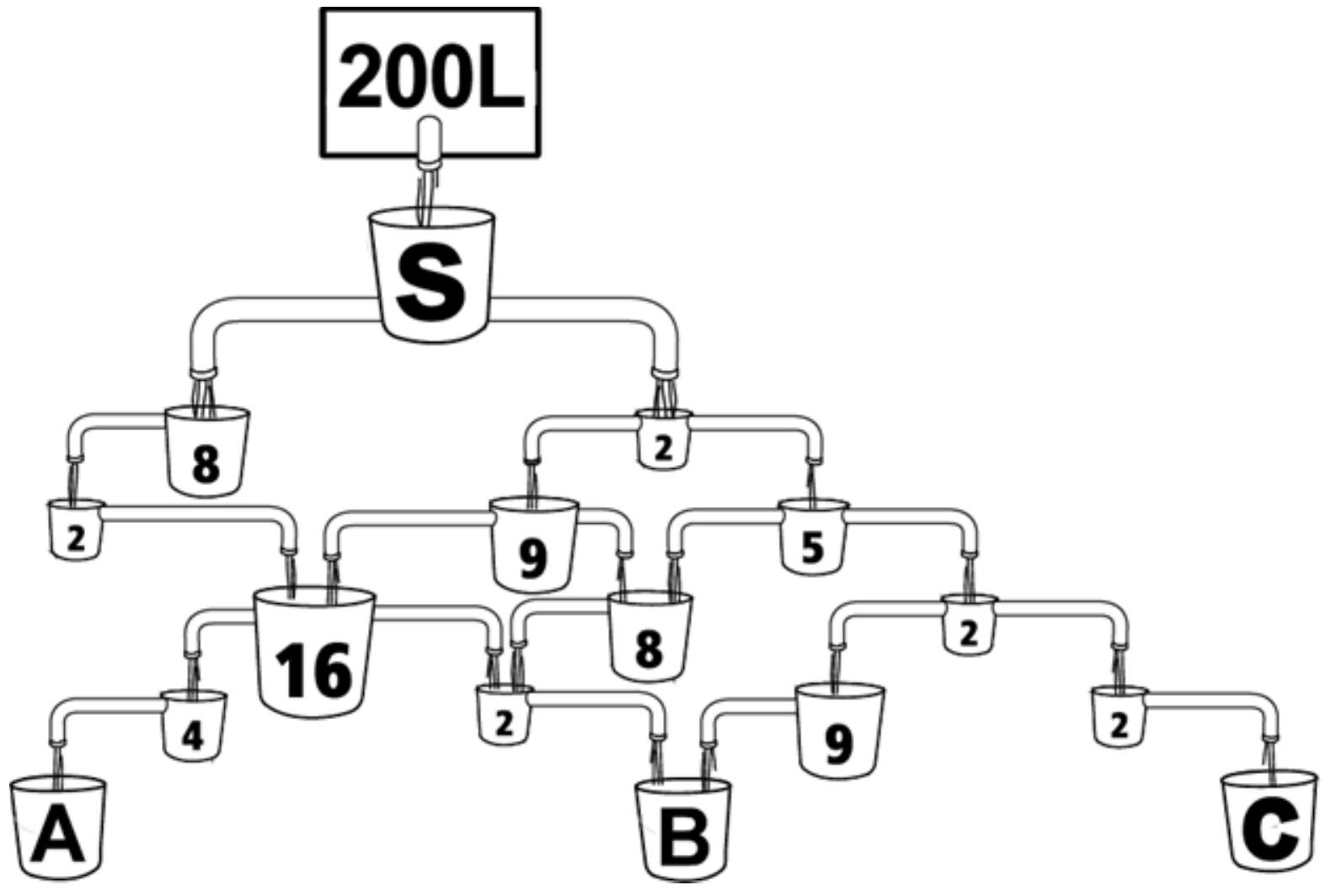
The beavers build the second system below and pour 200 litres into S. Initially all buckets are empty, and no water spills outside the system. How many litres are in bucket A when the water stops flowing?

Question illustration
  1. 65 litres
  2. 43 litres
  3. 100 litres
  4. 86 litres

Question 15

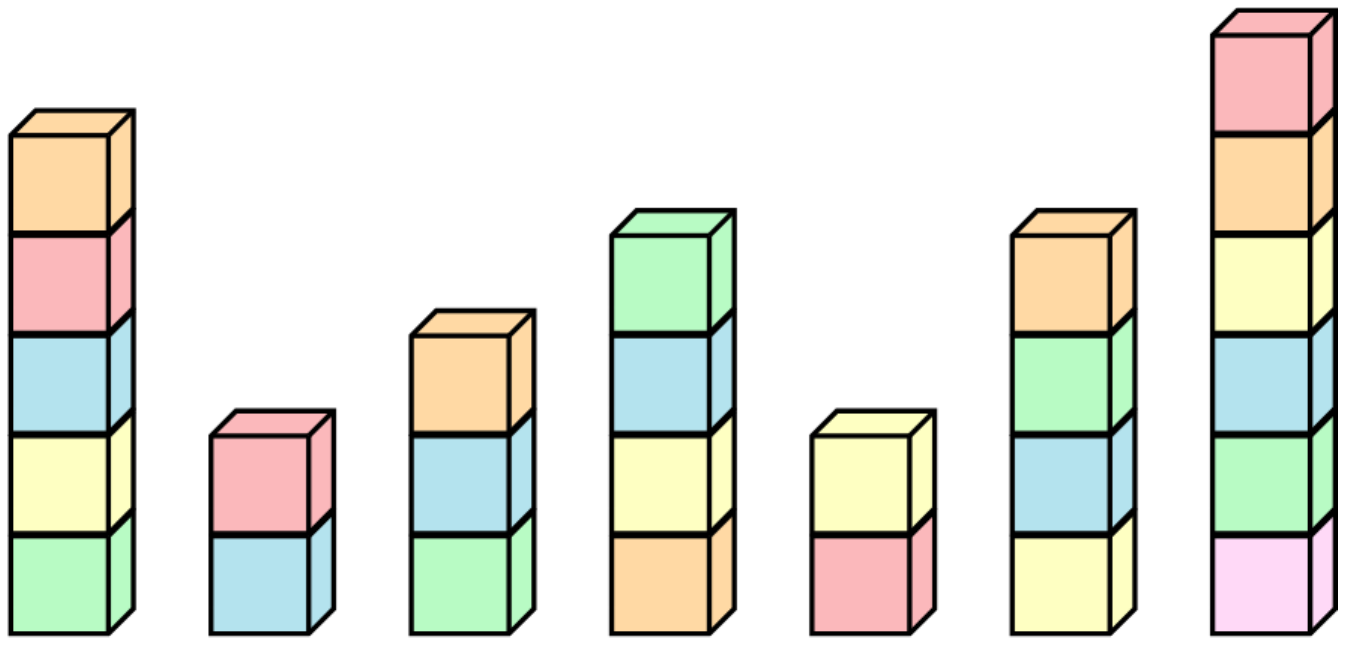
Alex builds seven towers from equal-sized wooden cubes, as shown.

Question illustration

To make their heights equal, Alex may add or remove cubes. Adding one cube or removing one cube counts as one move. For example, changing the leftmost tower to height 2 needs at least 3 moves (remove 3 cubes), while changing it to height 7 needs at least 2 moves (add 2). Moving a cube from one tower to another counts as two moves. What is the smallest number of moves needed to make all seven towers equally tall?
  1. 6
  2. 7
  3. 8
  4. 9