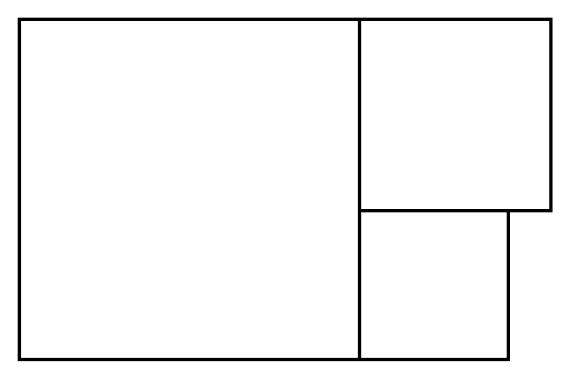
Three different squares are arranged as shown. The perimeter of the largest square is 36 cm. The area of the smallest square is $9\text{ cm}^2$. What is the perimeter of the medium-sized square?
Australia uses 160 million litres of petrol each day. There is enough petrol stored to last 60 days. How much more petrol does Australia need to buy to have enough stored for 90 days?
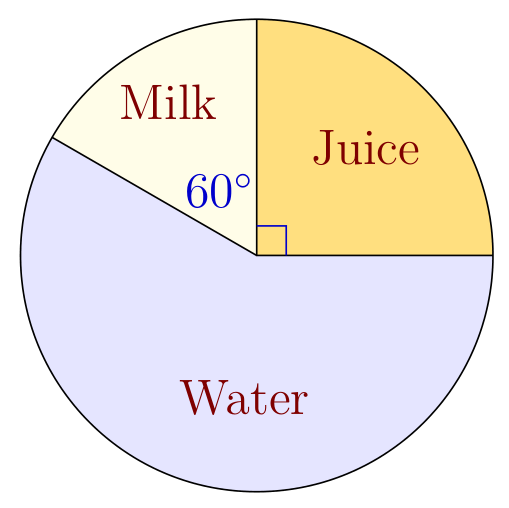
A number of students were asked about their favourite drink: juice, milk or water. This pie chart shows their answers. Eighty students chose milk. How many students chose juice?
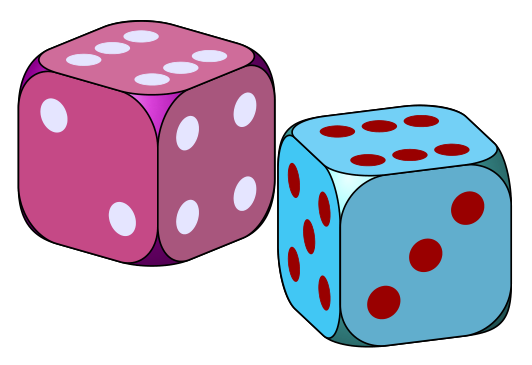
Standard dice have 1 and 6 opposite, 2 and 5 opposite and 3 and 4 opposite. I can position any dice to be able to see 1, 2 or 3 sides. What is the smallest number of dice I can arrange to see exactly 100 dots at once?
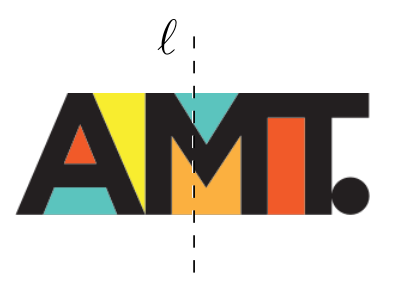
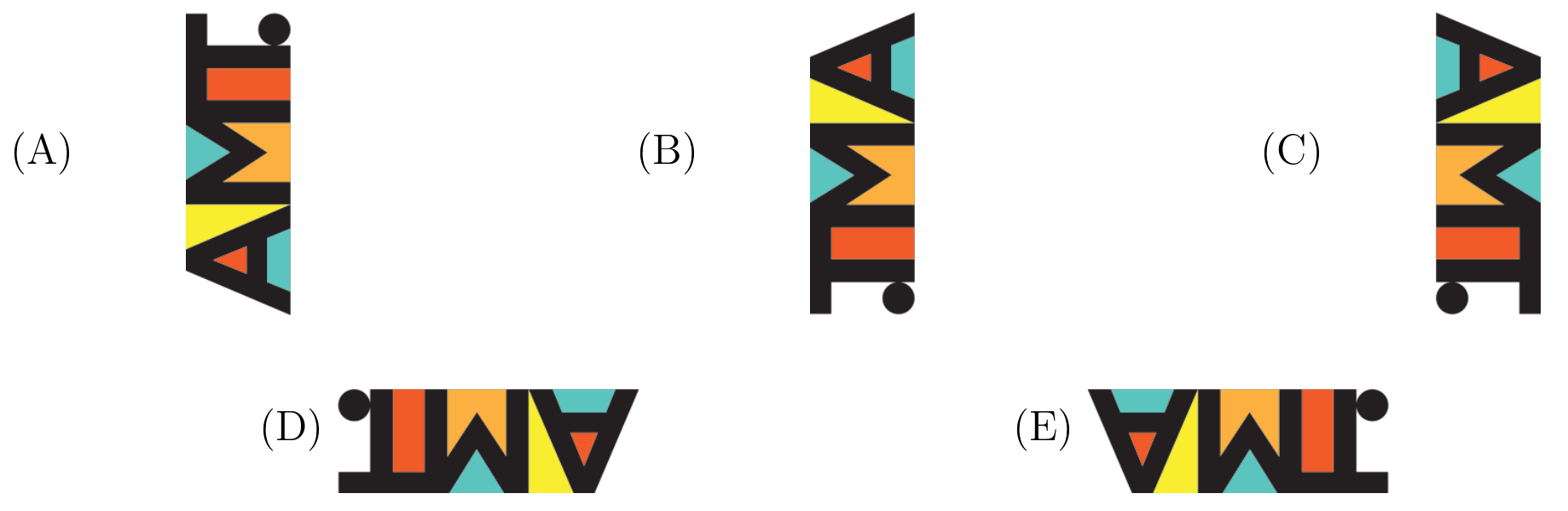
This logo is reflected in the vertical axis $\ell$ shown, rotated clockwise by $90^\circ$, then reflected in the vertical axis $\ell$ again. What does it look like after these three steps?
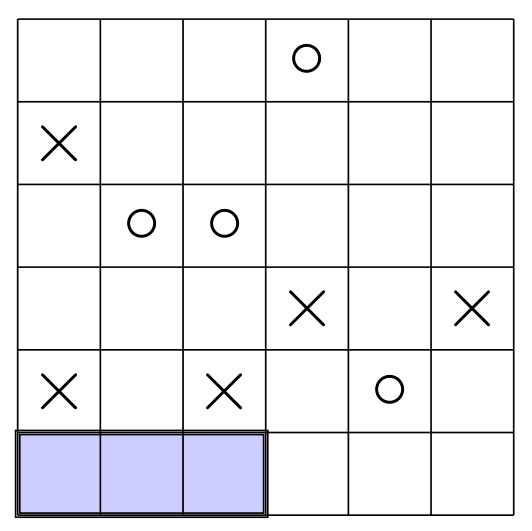
In this grid, fill each square with either $\times$ or $\circ$ following two rules. In each row and column there must be three of each symbol. There cannot be three consecutive squares with the same symbol in any row or column. When the puzzle is solved, what is the arrangement in the three shaded squares in the lower left?
Ash, Sash and Tash collect and swap monster trading cards. They meet to trade cards with each other. Ash trades 11 cards, Sash trades 8 and Tash trades 15. Each card is swapped exactly once with another card belonging to another person. Everyone ends up with the same number of cards they started with. How many cards does Sash swap with Tash?
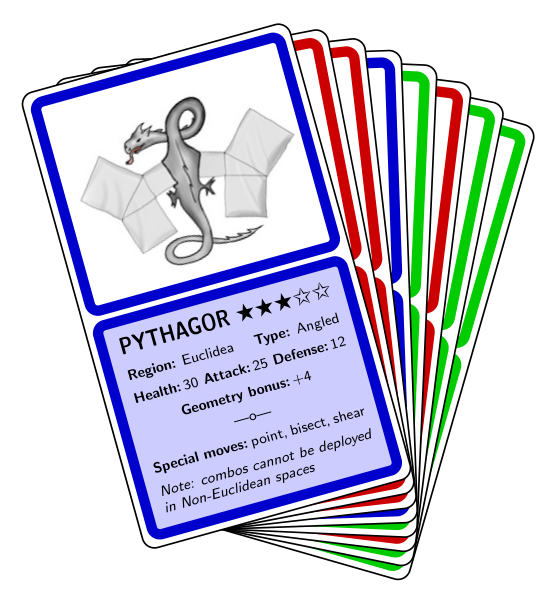
Decorative card text: PYTHAGOR (three filled stars, two empty stars); Region: Euclidea; Type: Angled; Health: 30; Attack: 25; Defense: 12; Geometry bonus: +4; Special moves: point, bisect, shear. Note: combos cannot be deployed in Non-Euclidean spaces.