A rectangular piece of land is 27 m long. Its width is two thirds of its length. Five ninths of the land’s area is used for flowers and one sixth for a walking path. The rest is used for a pond. Find the area of the pond.
A digital clock currently shows 20:30. After 20:30, the same four digits reappear for the first time at 23:00. How long from now will it be until those four digits appear for the second time?
Gasoline costs 6 dollars per litre. A car uses 8 litres for every 100 km. What is the greatest whole number of kilometres that can be covered with 200 dollars’ worth of gasoline?
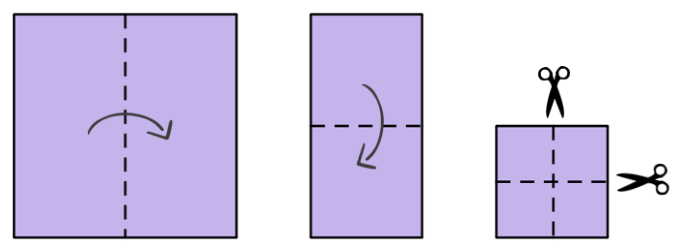
A teacher has a square piece of paper. She folds it in half twice, then cuts along the dotted lines as shown. How many pieces does she get after cutting?
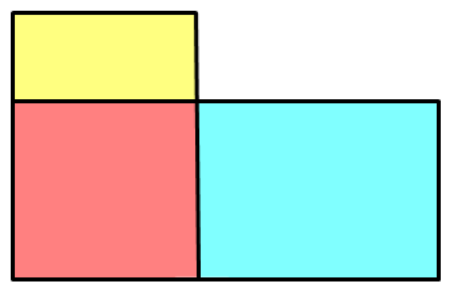
Anna has two rectangular pieces of paper with areas 24 cm² and 48 cm². She combines them with a square to form the figure shown, with total area 108 cm². Find the perimeter of the combined figure.
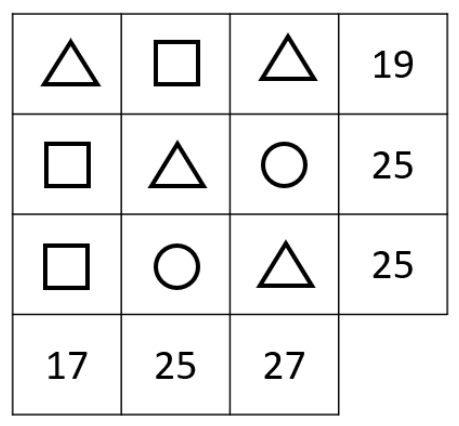
Each of three friends chooses two distinct digits from 0, 1, 3, 5, 7, 9 to make a two-digit number; no digit is chosen by two friends. Mike’s number is prime, Bob’s number is divisible by 6, and John’s number is divisible by 25. What is the greatest possible value of Mike’s number?
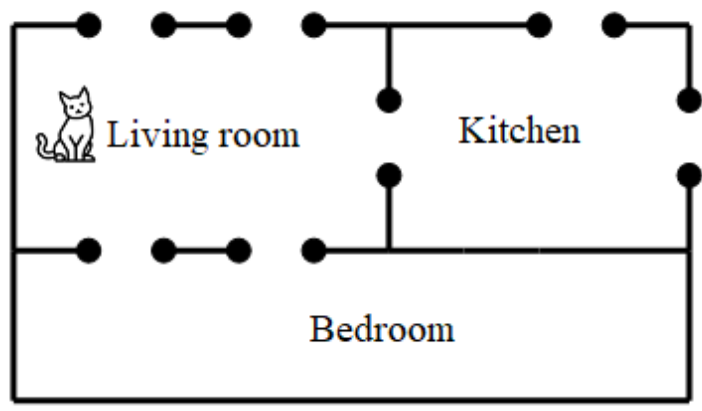
Kitty the cat lives in a three-room house. Every morning she goes from the living room to the kitchen to eat, then outside. Finally she goes to the bedroom without passing through the kitchen. She must use the doors shown on the plan. In how many ways can she complete this routine?
Editorial route convention: take the direct living-room-to-kitchen door, then a kitchen door directly outside; return through the living room to the bedroom, with no detours or repeated rooms within a stage. Choices differ by the doors used.
A basket contains 30 fruits: apples, bananas and mangoes. Grandma exchanges 6 apples for 3 bananas, then exchanges 2 bananas for 8 mangoes. There are now equal numbers of all three fruits. How many bananas were there at the beginning?
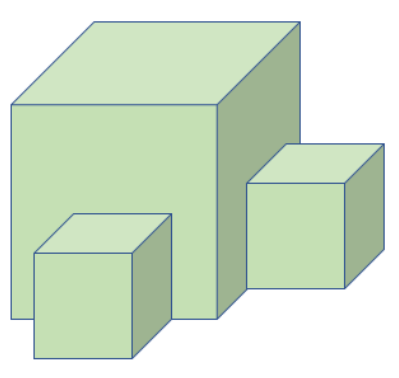
Two cubes of side 4 dm and one cube of side 8 dm are placed beside each other as shown. All exposed surfaces except the bottom are painted. Find the painted area.
While reading a book, Wendy reads one more page each day than on the preceding day. After four days she has read 150 pages. She finishes the book in exactly ten days. How many pages are in the book?
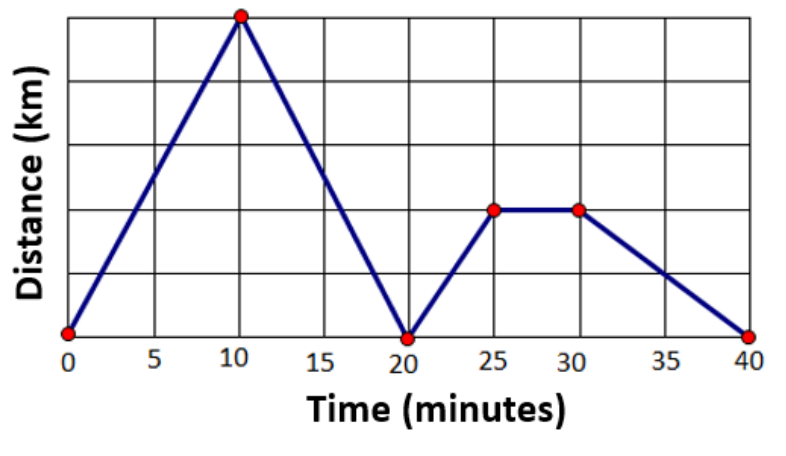
A man cycles to the park and back home, then walks to a coffee shop to buy a drink and walks home again. His distance from home is shown in the graph. How far is the park from his house if the average speed over the whole trip is 12.6 km/h?
Editorial convention: each outward and return leg follows a direct route, so distance travelled equals the corresponding change in distance from home. Equal vertical grid intervals represent equal distances. The whole elapsed time includes the stop.
A train has 21 carriages and carries 500 passengers. Every block of five adjacent carriages contains 120 passengers in total. How many passengers are in the middle carriage?
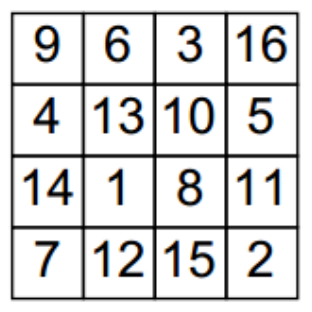
Two numbers in the 4 × 4 grid can be swapped to create a magic square, in which every row, every column and both main diagonals have the same sum. What is the sum of the two swapped numbers?