Question 12
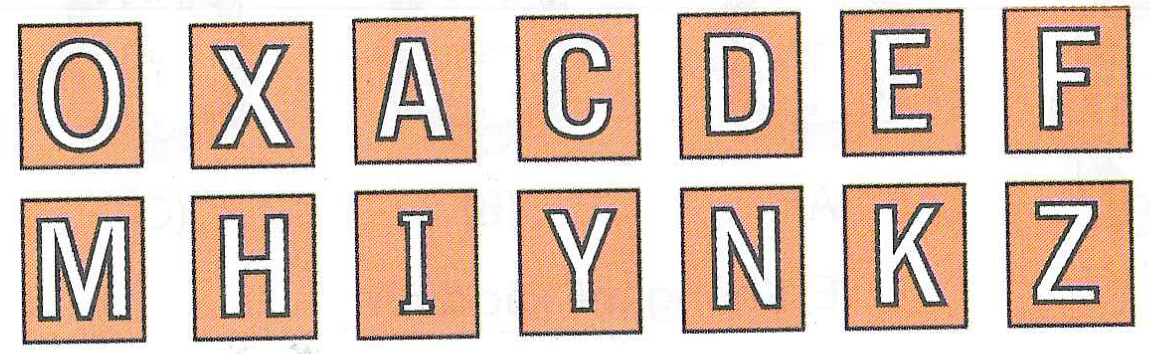
Chũn has the letter cards shown below.
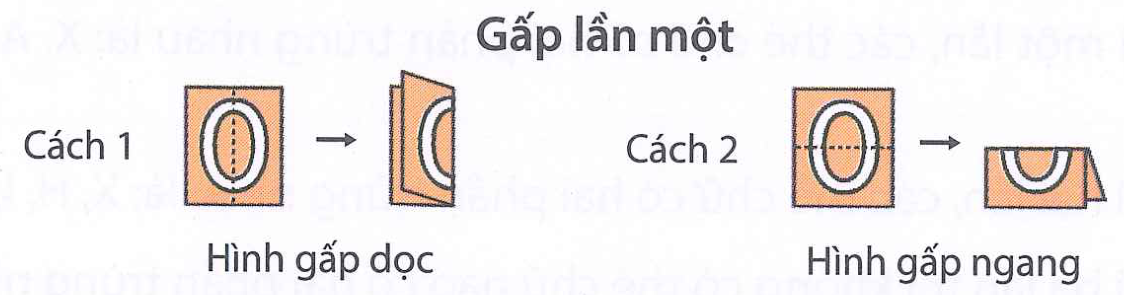
First, Chũn folds O in half and opens it. A crease divides O into two identical parts that coincide when folded together. There are two ways to fold it, as shown.
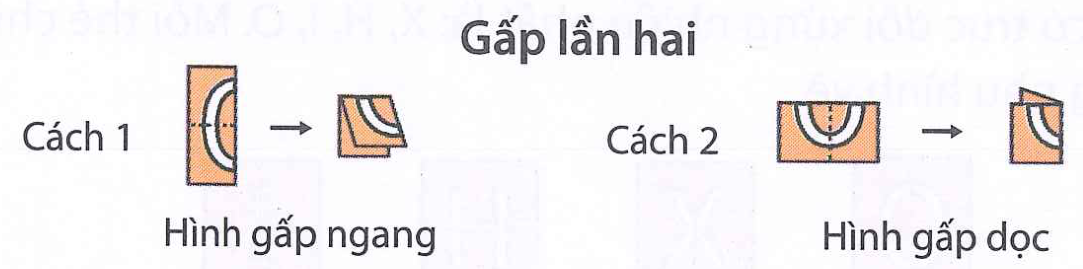
Chũn then folds it in half a second time; the two parts still coincide. A third fold no longer gives coincident parts.
1. Among Chũn’s cards:
– Which letters can be folded in half once, vertically or horizontally, with the two parts coinciding?
– Which can be folded in half twice with coincident parts?
– Which can be folded in half three times with coincident parts?
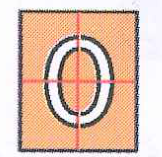
2. A fold line dividing a letter into two coincident parts is called an axis of symmetry. The two axes of O are drawn in red.
Among the cards shown:
– Which letters have an axis of symmetry?
– Which have the greatest number of axes? How many does each have? Identify those axes.
Figure labels: First fold, method 1 vertical and method 2 horizontal; second fold, method 1 horizontal and method 2 vertical.
First, Chũn folds O in half and opens it. A crease divides O into two identical parts that coincide when folded together. There are two ways to fold it, as shown.
Chũn then folds it in half a second time; the two parts still coincide. A third fold no longer gives coincident parts.
1. Among Chũn’s cards:
– Which letters can be folded in half once, vertically or horizontally, with the two parts coinciding?
– Which can be folded in half twice with coincident parts?
– Which can be folded in half three times with coincident parts?
2. A fold line dividing a letter into two coincident parts is called an axis of symmetry. The two axes of O are drawn in red.
Among the cards shown:
– Which letters have an axis of symmetry?
– Which have the greatest number of axes? How many does each have? Identify those axes.
Figure labels: First fold, method 1 vertical and method 2 horizontal; second fold, method 1 horizontal and method 2 vertical.